Warning: Graphic content.
A 65-year-old man convicted of raping and murdering a 14-year-old boy in 1987 will get two more passes for unescorted temporary absences from prison.
In a written decision dated Jan. 5, 2026, and provided to CP24, the Parole Board of Canada stated that Darren Scott Ray was granted a 72-hour pass earlier this month to visit a community-based residential facility (CBRF) in Oshawa, Ont., where he can become familiar with the facility, staff, and the community to support a gradual reintegration process.
That decision prompted Durham Regional Police to issue a community safety alert and caused concern among some community members.
In the decision, the board outlined the reasons why Ray was allowed to temporarily return to the community unsupervised.
“It is the Board’s opinion that you will not, by reoffending, present an undue risk to society during the absences,” the decision read.
“In the Board’s opinion, you also meet the other authorization requirements in that it is desirable for you to be absent from the penitentiary, your behaviour while under sentence does not preclude authorizing the absences, and a structured plan for the absences has been prepared.”
Two more 72-hour passes have been approved to be used during the next 12 months, according to the January decision.
The board noted that Ray perpetrated a “violent sexual assault” against 14-year-old Darren Pepin before murdering him nearly 40 years ago, an offence that is the “foremost aggravating factor” in the case.
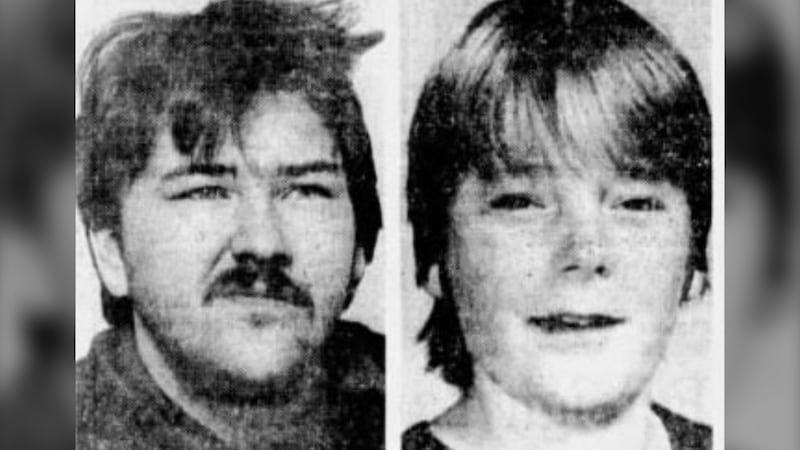
At the time of his death, Pepin, the board stated, was a “vulnerable” young man who had run away from home.
“You endangered him with risky behaviours that included restraining him, sexually assaulting him, strangling and cutting off his air, and disposing of his body in a very disturbing way,” the board wrote.
Pepin’s body was found wrapped in a blanket in the garbage room of Ray’s apartment building, the parole board said.
‘On a pathway to rehabilitation’
“It is undisputed that your index offending caused irreversible harm and would have adversely impacted other lives; Further, your prior criminal history reflects a problematic past that may have included deviant sexual behaviours,” the report read.
“You have elevated assessments for general, violent and sexual recidivism, and for intimate partner violence, and you remain a high risk / medium needs offender.”
The board also noted that Ray has “made measurable and observable gains in several domains.”
“Without overlooking such realities and assessments, the Board also finds that you are on a pathway to rehabilitation, have reconnected to your Indigenous roots, and have embraced its disciplines and lessons,” the decision read.
“You have received risk-related programming through the years and have made gains in your progress towards Correctional Plan objectives.”
The board pointed out that at his hearing, Ray was not “really able to discuss relevant aspects” of his history in “any depth,” while “skating lightly on pertinent areas such as your violence and aggression and sexual offending.”
“You continue to hold distortions about your sexual assault of the victim that included bondage, the infliction of pain and the use of ligatures, indicating to the Board that the sex was ‘consensual at the time, but no more,’” the report read.
“It is evident you were not attuned to the fact that the 14-year-old could not consent, and that even assuming minority were not an issue and there was consent, it could be withdrawn at any moment.”
The board added that he could not “tangibly outline any skills learned” about sexual reoffending and sexual interests.
“Rather, you indicated that this is not a problem, offering that you do not have urges or fantasies anymore, and your sex organs are no longer functioning. However, a person does not necessarily require functioning sexual organs to offend sexually,” the report added.
The board wrote that despite the “very violent index offence, violent acts against your ex-partner, and the instigation of violence against her boyfriends,” Ray described himself as a “non-violent person” and “minimized” violence towards his ex-partner, “deflected blame,” and did not “provide any insightful reflections around violence and aggression.”
“It is apparent to the Board that you need to delve deeper into these matters,” the decision read.

Avoiding children a condition of release
The board stated that Ray has lived in a minimum security facility since 2022 and has maintained his security rating since that time.
“You are currently assessed with ratings of low institutional adjustment, low escape risk, and low public safety risk. There is no information to suggest you are involved in the institutional subculture,” the decision read.
The board added that Ray has maintained institutional employment in different roles.
“You stated you have been working on being a better person. You have taken core programs. You have been actively involved in the Pathways program, with the Indigenous Department, with the Open-Door Fellowship (Salvation Army), with the Chaplaincy, with Psychology, and with Inmate groups,” the report read.
At his hearing, the board stated, Ray indicated his desire to stay away from young people and “risky situations.”
“You indicated you have learned to cook and bake, you like to help people, and when you feel stressed, you smudge and engage with nature,” the board wrote.
“You indicated you will stay out of trouble as you do not want to return to jail.”
According to the parole board, Ray has demonstrated “manageability, appropriate self-regulation, compliance with rules and expectations, cooperation with supervisors, and consequential thinking.”
“These qualities should stand you in good stead for any community access,” the report read.
Conditions Ray must abide by during the unescorted absences include avoiding all contact with children, abstaining from the us of drugs or alcohol, and avoiding any direct or indirect contact with the victim’s family.

