While skunks are active during the spring, they are also busy roaming neighbourhoods in the fall searching for food or a place to spend the winter.
They may end up wandering into your backyard at night, and if you have a dog, you’ll want to make sure your pet doesn’t get sprayed.
“The smell was really intense. It was almost like a cloud,” said Duncan Graham of Whitby, whose dog Stella, a German Shepherd, got sprayed about two weeks ago.
He said it was about 10 p.m. when he let Stella out in his backyard. Moments later he saw the skunk, but by then it was too late.

“She was only outside for about four seconds, maybe five, and I tried to get her back in. She came running back in, and it had been sprayed right on her face. Then she was rubbing her face on the floor, on the couch, in every room. She was in the bedroom, and my daughter was screaming, ‘What is going on?’” said Graham.
Graham said the smell from the skunk was extremely strong, and then his family wondered, “What do we do now?”
“I heard about tomato juice, so I thought, ‘Do we need to get tomato juice?” said Graham.
There have been many TV sitcoms over the years with a storyline of the family dog being sprayed and tomato juice being used to kill the stench. The dog is given a bath in tomato juice, but not only is it messy, but it doesn’t work.
According to researchers at Consumer Reports, tomato juice might mask the smell, but it won’t eliminate it.
Consumer Reports instead suggests keeping the dog outside so it doesn’t bring the odour indoors. Then, you’ll want to mix a half litre of three percent hydrogen peroxide, two tablespoons of baking soda, and a half teaspoon of liquid dish soap.
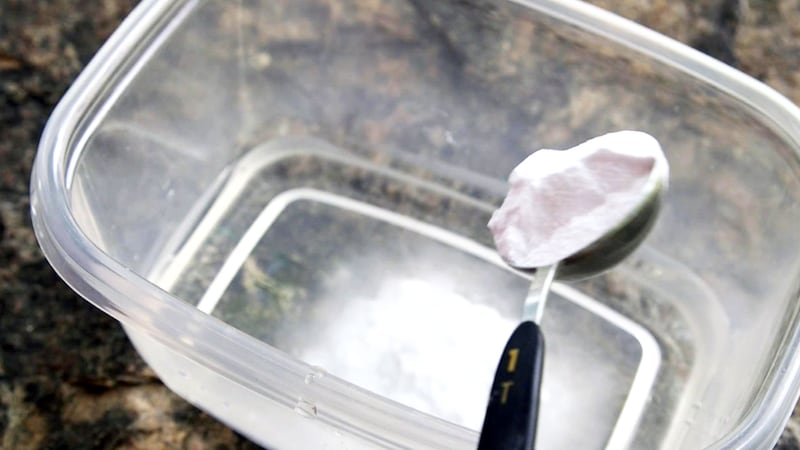
You’ll need to double these amounts for larger dogs, and a word of caution: make it right before you need it. Don’t make it in advance, as it could burst in a closed container.
Keep the mixture away from your pet’s eyes and mouth and then wash them with pet shampoo and rinse thoroughly.
Graham said his family went online and found a similar recipe to wash Stella with, and now the skunk smell is almost gone.
“I can still smell it on her head right now. It could last for two weeks or more,” said Graham.
He said Stella seems to have learned her lesson and saw a skunk again but this time kept her distance.
As for him, he is now double-checking the backyard before letting her out at night.
“I look outside now and turn on the lights, and I’m hesitant to put her out at night because maybe there is another skunk,” said Graham.
Skunks generally won’t spray people and will only do so if they’re startled. That’s why dogs get sprayed because they run up to them. If you have skunks around, keep your dog on a leash especially at night to avoid a smelly confrontation.

