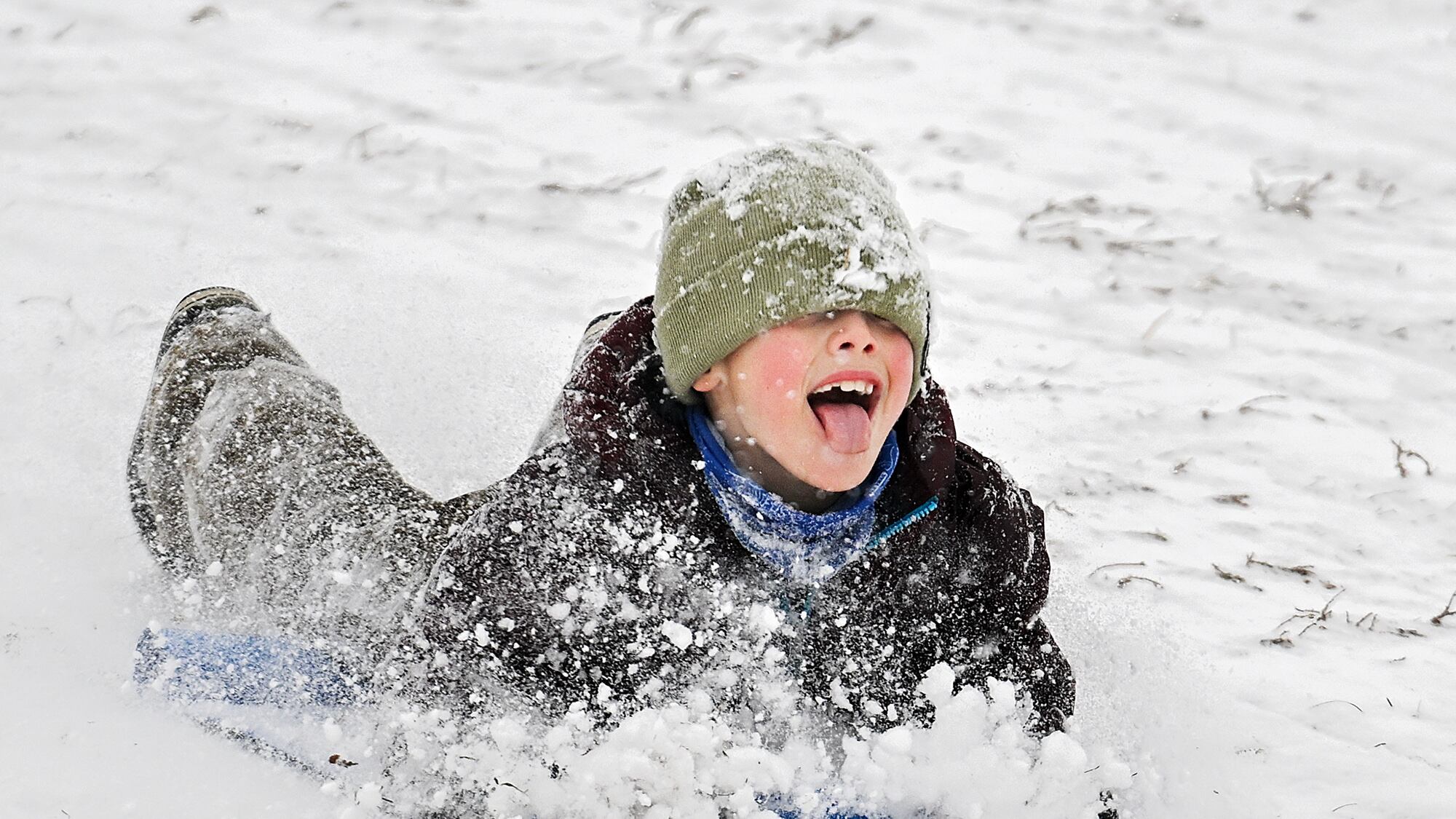
Of all the injuries children can get when tobogganing, head injuries are by far the most common, prompting concerns from a Hamilton hospital.
In January, McMaster Children’s Hospital (MCH) says several children were admitted after sledding into trees, which resulted in “significant trauma.”
“From toddlers to teens, kids are hurtling downhill on sleds wearing nothing but winter hats, leaving their heads unprotected if they crash or ram into an object, like a fence or tree,” the Hamilton Health Sciences (HHS) study reads, noting how head injuries are the most commonly seen sledding-related injury in the MCH emergency department.
The study revealed most injuries happen when children fall or crash into objects, primarily resulting in broken bones, scrapes and bruises, or involving the head.
Head injuries are “especially concerning,” the study says, as they can result in long-lasting brain damage or cognitive difficulties.
“I mean, kids ski and snowboard, and it’s now just routine that helmets are expected, so I think the same thing should happen for sledding and tobogganing,” Dr. April Kam, the division head of pediatric emergency medicine at MCH, told CP24 on Tuesday afternoon.
The study, helmed by Kam, launched during the pandemic when lockdown orders were widespread. Several winter activities were cancelled then, and the children’s hospital saw a dramatic rise in sledding injuries in its emergency department—higher than what was seen pre-pandemic.
Researchers reviewed medical records for 243 children, ranging from infancy to 17 years old, who were treated for sledding injuries between 2018 and 2022. The study shows there were fewer children sent to the emergency room during the pre-pandemic years compared to during and after.
There were 62 sledding injuries before the pandemic, tripling to 187 after the pandemic began. Kam says the numbers are now back to pre-pandemic levels, with head injuries continuing to be the most common.
“We see anything ranging from concussions to skull fractures to brain bleeds to internal abdominal injuries like splenic and liver lacerations and factures,” Kam said. “These kids are going at high speeds … and ending up at a fixed object, so we treat it like a trauma, almost like a high-velocity motor vehicle collision.”
Some children needed X-rays or CT scans, but the study notes the majority of injuries were treated without hospital admission.
More children required surgery too. In the pre-pandemic years, roughly 33 per cent underwent surgery, compared to the roughly 59 per cent that needed it during 2020 through 2022.
During the pandemic, children stayed in hospital longer for their sledding-related injuries or returned to the emergency department within a week of being injured. However, the study adds these differences seen pre- and post-pandemic are “not statistically significant.”
Who is most at risk?
The study determined that, of all the children injured, just shy of 54 per cent were male.
“We found that children between 6 and 10 years of age experienced the highest proportion of injuries, with head injuries being the most common site of injury,” researchers wrote, noting the average age was around eight-and-a-half.
The study notes these findings are consistent with previous studies, in that sledding-related head injuries are more likely to happen among younger children.
Should children stop sledding?
The study isn’t to say children should stop sledding—in fact, researchers point to how tobogganing helps children engage in physical activity and socialize with friends, which can ease anxiety and behavioural issues.
To safely go sledding, the Canadian Paediatric Society advises wearing a ski or hockey helmet, not a bicycle helmet, as bike helmets need to be replaced after one crash and are only tested up to -10 C.
The society also recommends sitting or kneeling on a sled versus lying down, as that can boost the risk of injury to the head, as well as opting for designated toboggan hills and avoiding crowded hills.
“If you’re not sort of sledding in a designated area, there are objects like trees, there’s fences and sometimes roads, so it’s important to be sliding down designated areas and making sure your kids are dressed warmly and wearing a properly fitted helmet,” Kam said.

