
A team of researchers at McMaster University may have unlocked the key to intercepting cancer cells before they reach the brain.
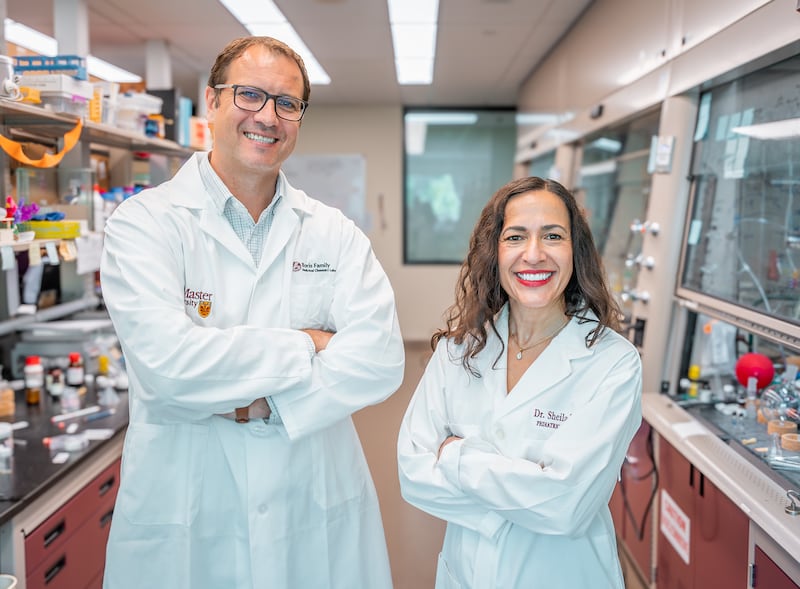
In a recently published study, Dr. Sheila Singh, a professor in McMaster’s Department of Surgery, and her team outlined the development of new drug candidates aimed at preventing metastatic brain cancer by targeting an enzyme that lung, breast, skin and other cancers use to spread.
Speaking with CTV News Toronto, Singh explained that the current treatment of the disease is largely palliative, with 90 per cent of patients dying within one year of diagnosis. Once cancer cells break through the blood-brain barrier, Singh says the disease starts to spread “constantly.”
“By the time you’ve detected one large one or several large ones (tumours), you’ve already lost the battle, because the brain is already ceded, and you can take one out surgically, but the others are going to crop up. It’s like whack a mole,” said Singh, who also serves as the head of the School of Cancer and Pharmaceutical Sciences and director of the Comprehensive Cancer Centre at King’s College London in the United Kingdom.
Beyond that, Singh said the only way to attack cancer that’s spread to the brain is whole brain radiation, which targets every cancer cell—but also every healthy cell.
“If you survive it, you’re going to survive it with cognitive problems. It’s the last thing you need if you’re already facing an almost incurable disease. You don’t need cognitive issues as you’re dying. It’s horrific.”
What is IMPDH2?
The new approach to preventing cancer spread to the brain is focused on an enzyme called inosine monophosphate dehydrogenase 2 (IMPDH2), one of two enzymes researchers say is “vital” to metastases.
Jakob Magolan is a professor of biochemistry and biomedical sciences at McMaster and the head of chemistry at Block Biosciences, the McMaster spin-out company leading the development of the drug candidates.
In an interview with CTV News Toronto, he outlined the differences and similarities between IMPDH2 and its counterpart IMPDH. While Magolan says the two are 84 per cent similar, cancer cells rely far more heavily on IMPDH2.
“IMPDH is everywhere all the time and is essential to your immune system. IMPDH2 is similar in function, but these cancer cells have learned to express a lot more of it, and it’s become essential to cancer cells, especially cells that are migrating,” the Boris Family Chair of Drug Discovery at McMaster said.
While IMPDH has been explored as a possible druggable target in previous cancer research, the side effects have been found to be “significant” as they inhibit both healthy and cancerous cells indiscriminately. But IMPDH2 is different as it’s not as prevalent in healthy tissue, which means it could be the answer to preventing brain metastases.
“Trying to develop a drug that only inhibits one but doesn’t inhibit the other is like trying to develop a key for two very similar locks, and you want to be able to open one door, but not open the other,” Magolan explained.
What’s next?
The research is still in the pre-clinical stage, but Magolan said his team has made almost 700 different molecules that could potentially be developed into a once-a-day pill for patients who have beaten their lung, breast or other type of cancer, and are looking to prevent brain metastasis.
While Magolan foresees it taking eight to 10 years before the drug is approved to be given to patients, Dr. Singh says she’s more optimistic about the timeline. She predicts the pill could could be available in as little as five years, as she highlighted the urgency for cancer survivors to prevent the disease’s spread to the brain.
“We’ve done so well in the past decade in developing new therapies that are effective in controlling lung cancer, in curing breast cancer. But the problem is there are still cells that could escape to the brain,” Dr. Singh said. “Once these patients get a brain metastasis, they’re all but cured of their primary cancer, but they’re going to die of their isolated brain metastasis, which is crazy.”

