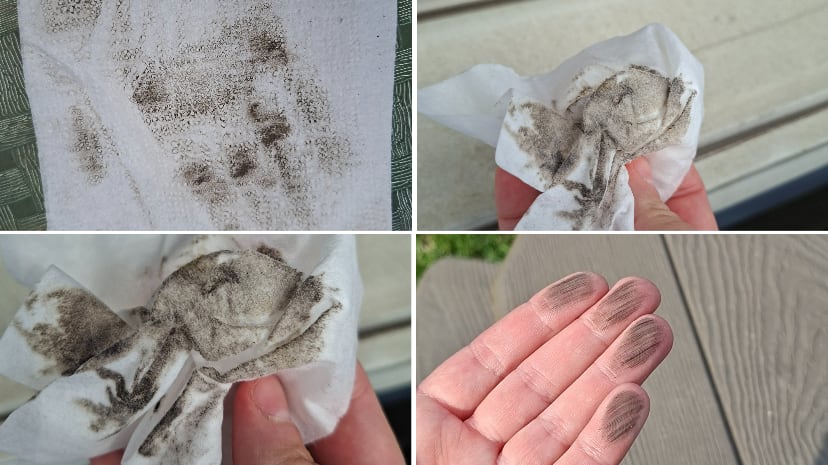
Black soot that fell across parts of Hamilton early last month “does not pose long-term health risks,” the city’s health unit said.
Hamilton Public Health revealed on Thursday the results of its assessment into the event which mainly impacted residents in the city’s north end.
“The emissions in early July were a short-term worsening of those Hamiltonians experience on a daily basis. This short-term event isn’t expected to have long-term health risks on its own,” Dr. Elizabeth Richardson, the city’s medical officer of health said in a news release.
“However, the event contributes to the existing burden on the airshed, particularly the disproportionate impacts experienced in the north end of Hamilton.”
The health unit noted that there was no increase in visits to the emergency department in relation to the soot, which caused some residents to experience itchy eyes, cough or sore throat.
“This indicates that the early July event did not result in short-term, acute health effects,” Hamilton Public Health said.
Over the July 4 weekend, residents across the Hamilton area reported a large buildup of soot, layering their homes, cars, patio furniture, and nearly everything left outside their homes. One resident told CTV News that the build-up was “all-encompassing” and that soot felt “so dirty and grimy.”
Earlier this week, the Ontario Ministry of the Environment, Conservation and Parks, which received 475 complaints about the event, announced that the primary source of the emissions was from Birla Carbon located in the city’s Bayfront Industrial Area.
The ministry said it has referred Birla for a formal investigation.
Hamilton Public Health said on Thursday that it reviewed air quality data, weather data and environmental sample results for its assessment and consulted toxicology experts.
The health unit shared that samples collected by the ministry mainly contained carbon with small amounts of sulphur and “very small amounts of mineral particles.”
“Although the identified materials can be toxic if individuals are exposed to high concentrations over a prolonged period, based on air quality data from the collection period and the environmental sample results, along with rain events that would reduce the amount of soot, Hamilton Public Health anticipates there were low levels of exposure during the early July event,” officials said in a statement.
With files from Joshua McGinnis

