Richard Weins, 80, has lived as an amputee for more than four decades, often enduring sleepless nights due to severe pain that has lasted long after the surgery to remove his leg.
Now, thanks to a first-of-its-kind in Ontario program offered by Hamilton General Hospital he says that he is sleeping through the night for the first time in decades.
“I had severe pain. It was unbelievable. It was getting to a time where I just couldn’t sleep,” he told CTV News.
Weins underwent surgery in 1985 to remove a leg after doctors discovered a rare cancer beneath his kneecap.
He said that he endured severe pain related to the amputation ever since then.
That changed when, at the recommendation of medical staff, Weins was introduced to a new treatment program for amputees experiencing debilitating pain.
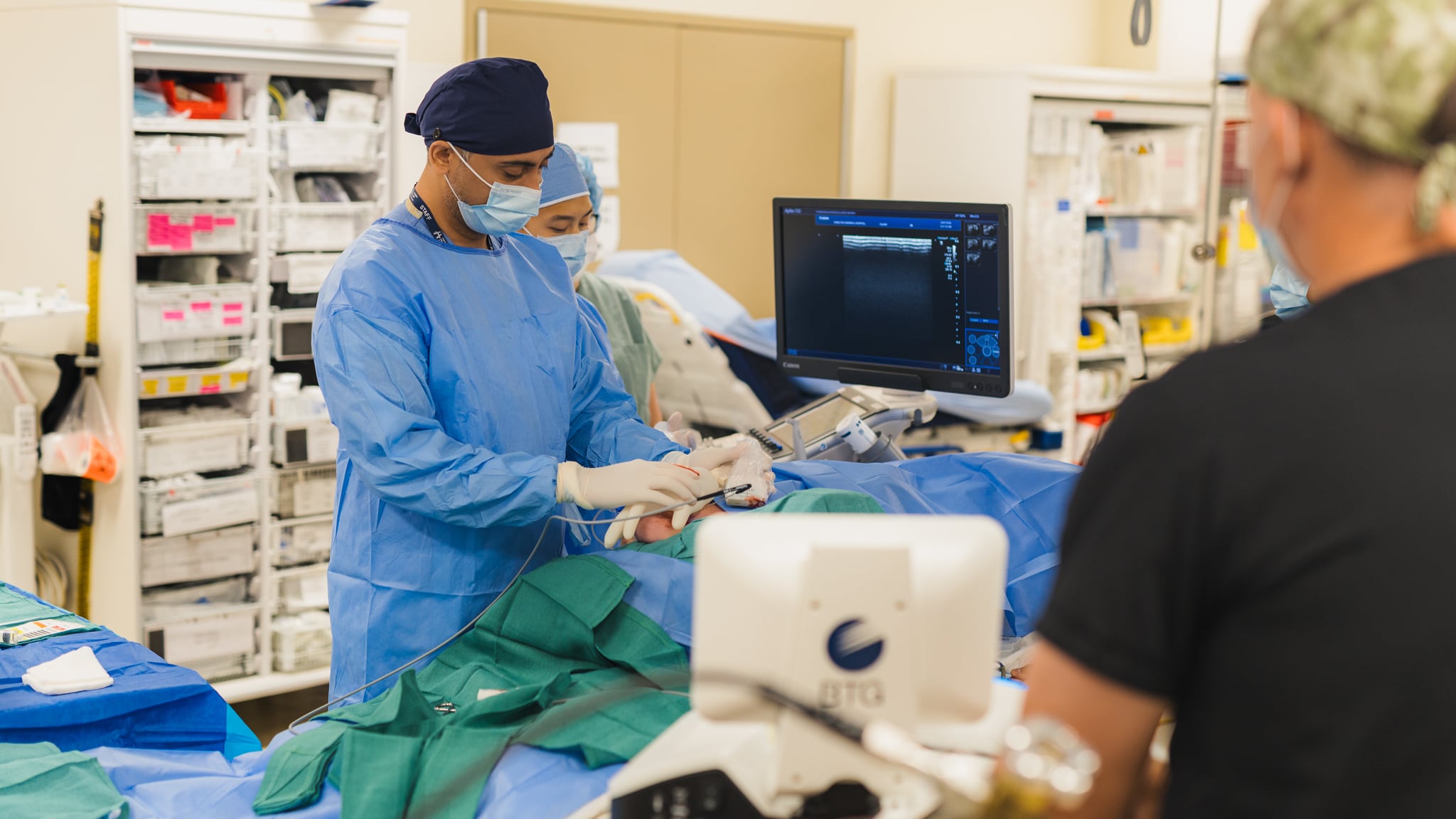
Cryoablation is a minimally invasive procedure that, according to Hamilton Health Sciences, can take about 20 minutes. The process involves an extremely cold probe to freeze the nerves causing pain at the amputation site. The probe is inserted through tiny cuts rather than a larger surgical incision.
“With our program of cryoablation, we’re able to basically decrease their pain and give them a better lifestyle,” said Dr. Zain Badar, an interventional radiologist at Hamilton General Hospital.
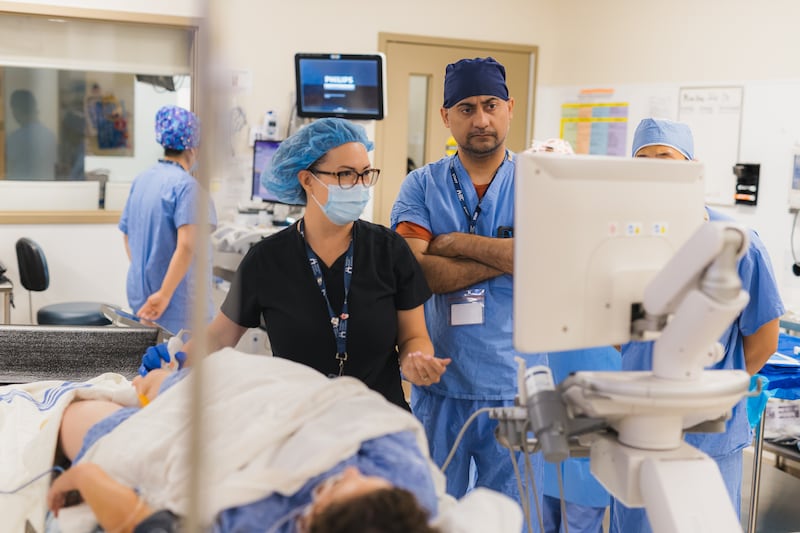
Cryoablation has been used for several years to treat cancer tumours and vascular malformations. Badar said the hospital began using the treatment for amputee patients after a colleague told him about patients who continued to suffer despite other treatments.
“Dr. Sharon Grad, a colleague of mine, said, ‘Zane, we have these patients. They’re in a lot of pain. I don’t know where else to send them,’” Badar said.
“Even with surgery, she wasn’t really having great feedback because the patient was still in pain.”
Badar began reviewing medical literature and cases from the United States and Japan. He concluded that the same cryoablation technology could be safely adapted to target painful neuromas, which are bundles of irritated nerve tissue that can develop after an amputation.
Ten months later, 35 patients have been treated through the new program at Hamilton General Hospital, including Weins.
Other surgeries and treatments have been used to manage pain in amputees but Badar said cryoablation can be less invasive and involve less recovery time.
According to Hamilton Health Sciences, the surgery has seen an 85 per cent success rate in “eliminating or significantly reducing pain and improving daily function.”
Despite losing his leg decades ago, Weins has remained active well into his 80s. He continues to work and runs his own machine company in Tillsonburg, Ont.
“Sometimes I feel like you learn to live with it at some point,” he said. “I’ve got a big shop here, a big RV building, and I work on stuff.”
But the treatment has given him something he had been missing for decades: sleep.
“I can sleep now. I’ve never slept like this. I haven’t slept like this in at least 30 years,” Weins said.
Asked whether he would recommend cryoablation to other amputees, Weins did not hesitate.
“I tell them to do it. To me, it’s 100 per cent,” he said. “I’m just lucky that this happened because I’m 80 and I’m still very active.”

