
The City of Mississauga says it has launched an investigation after a politician from Waterloo, who uses a motorized wheelchair and has visual impairment, waited almost three hours for a taxi ride.
Regional Coun. Chantal Huinink travelled to Etobicoke and Mississauga from April 13 to 15 to attend two different conferences.
She told CP24 she planned to take a taxi between the two places, as she would have difficulty navigating the public transit system between the two locations.
Councillor says she did due diligence
“And so, I did due diligence to contact several taxi companies in advance of travel. And I was surprised that all (of) them said to me, ‘No, no, no. You need to call an hour in advance and if there is one available in your area, I’ll send it to you’,” Huinink told CP24 during an interview on Thursday afternoon.
“I knew that wasn’t gonna work for me as I had only an hour to travel between conferences, so I connected with an accessibility services representative from the City of Toronto who was kind enough to arrange the first travel for me, but could not arrange the second one within the city of Mississauga, apparently, because that was out of her jurisdiction.”
Huinink required an accessible taxi to transport her from the conference site in Mississauga to the Square One Bus Terminal at 3:30 p.m. on April 15.
She said the person who drove her from Etobicoke to Mississauga said their company could handle that, as long as she called at 8 a.m. on the day she needed a ride.
Huinink said she did as instructed but was told she’d need to call back an hour before her trip.
“And I said, ‘Well, what do I do if you’re not available? and they said, ‘We’ll just call another company’,” she recounted.
Huinink said she called three companies around 8 a.m. to schedule her ride for that afternoon, but she said all of them told her to call for a ride an hour in advance.
The Waterloo councillor said when she did that, she was told that they were all unavailable.
“I’m not sure how you become fully booked, if you’re only allowing people to book an hour in advance. So that, to me, says that maybe the service doesn’t exist. In any case, it’s unreliable,” Huinink said.
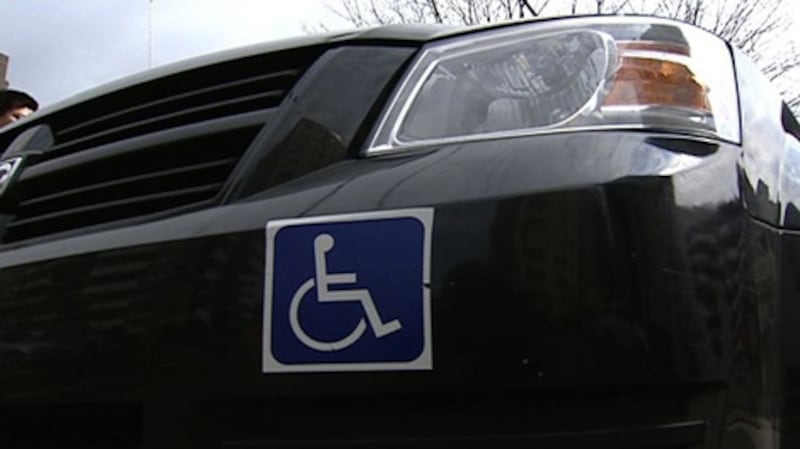
She said a friend was able to book an accessible taxi ride for her with another company for around two hours later, however she didn’t hear back from them.
Huinink said when she called the company 30 minutes before her scheduled ride, she was told they’d been trying to call her to come earlier but didn’t get through. Instead, they’d sent the driver to another fare, she said. It turned out the company had been calling the wrong number all along.
In the end, the taxi company sent over a driver in an accessible vehicle about 30 minutes later.
“If I had known that I would have been able to get a ride at 6:05 p.m. instead of 3:30, I would have planned for that. I would have let my (personal support worker) know and scheduled my subsequent things accordingly,” she said.
Huinink also said a number of the transportation companies she called demanded a $20 surcharge for an accessible taxi, which is illegal under the Accessibility for Ontarians with Disabilities Act.
Mississauga investigating incident
The City of Mississauga, meanwhile, said it is looking into the circumstances of what Huinink experienced to better ascertain what occurred.
“If a contravention of the City’s bylaws is identified, appropriate enforcement action will be taken,” the municipality told CP24 in an email.
“Taxi companies are not permitted to impose a surcharge specifically for providing an accessible vehicle. Under the (AODA) and the City of Mississauga’s applicable bylaws, fares for accessible service must be consistent with standard taxi rates.”
The city added that no recent changes have been made to its bylaws that would affect the availability or provision of accessible taxi services. While municipalities regulate and license taxi services, the city said the availability of accessible vehicles can vary depending on demand and supply.
The municipality said at this time, it does not require all taxi companies to operate accessible vehicles.

“The Public Vehicle Licensing Bylaw includes a requirement that, if brokerages are contacted for service and are unable to fulfill the request, they are expected to refer the call to another company that may be able to assist. However, availability of accessible vehicles across providers may be limited at certain times,” the City of Mississauga said.
Cognizant of the “importance of reliable and equitable access to transportation,” it said staff would review its current practice when it comes to accessible taxis and “examine whether additional measures may be appropriate to support improved access to accessible taxi services.”
“As part of the review, staff will conduct jurisdictional scans to look at how other municipalities handle these types of circumstances, keeping in mind the rapid pace of change in the taxi and ride-sharing spaces in recent years,” the City of Mississauga said.
“Residents and visitors who experience issues with taxi service in Mississauga are encouraged to call 311 so that concerns can be reviewed and investigated, including potential bylaw violations.”
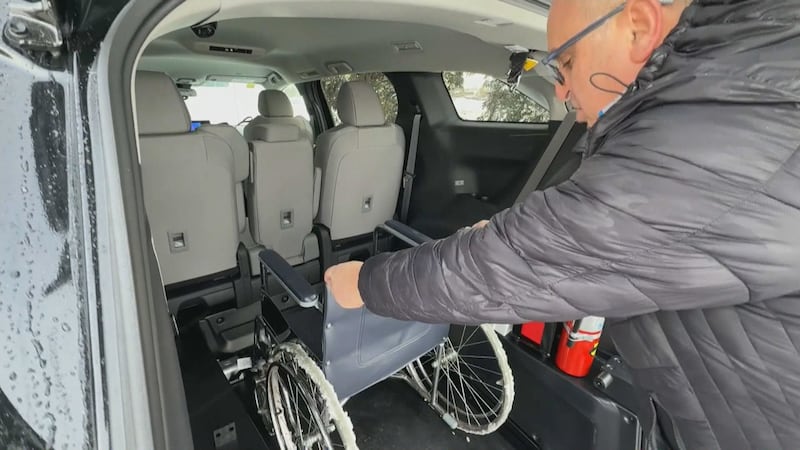
Accessible taxis are expensive: Huinink
Reflecting on her ordeal, Huinink said she realizes accessible vans cost more to both buy and repair, and wheelchair taxi brokers nationwide like to work with cities that will provide incentives or reimbursements to offset those costs. Waterloo, Huinink noted, has such a program in place.
One way to increase revenue with accessible vans, she added, is to ensure the service is reliable so people will use it.
“Because if you are sometimes available, sometimes not, that leads to people just not making plans, because they don’t know what to rely on,” she said, adding the taxi market has shifted a lot in recent years with the advent of rideshare services, which makes accessible taxis even more essential.
Speaking out to help others
Huinink said she decided to speak out about the importance of equitable transit for everyone because she has a platform that many people with disabilities do not have. It’s not about pointing the finger at any company in particular, she underlined.
“I think people don’t realize how vital transit is. You can’t get anywhere, you can’t be active in your community and your voice is more muted than it should be,” she said.
“In my view, accessible transportation services is key to all of the other social determinants of health. It’s a major link.”
The Waterloo politician said the reason this story is important is because it’s not an “impossible problem.”
“It is very possible to do better. … It’s a partnership between the residents, the taxi brokers, and the municipality itself,” she said, adding the City of Mississauga told her that it didn’t know the alleged accessible taxi price gouging was occurring and was thankful to have been made aware of the situation.
“And that, to me, says two things: I was really glad to bring my story forward, but I hope that in future, more residents of Mississauga will feel empowered to advocate for themselves as well,” she said.

