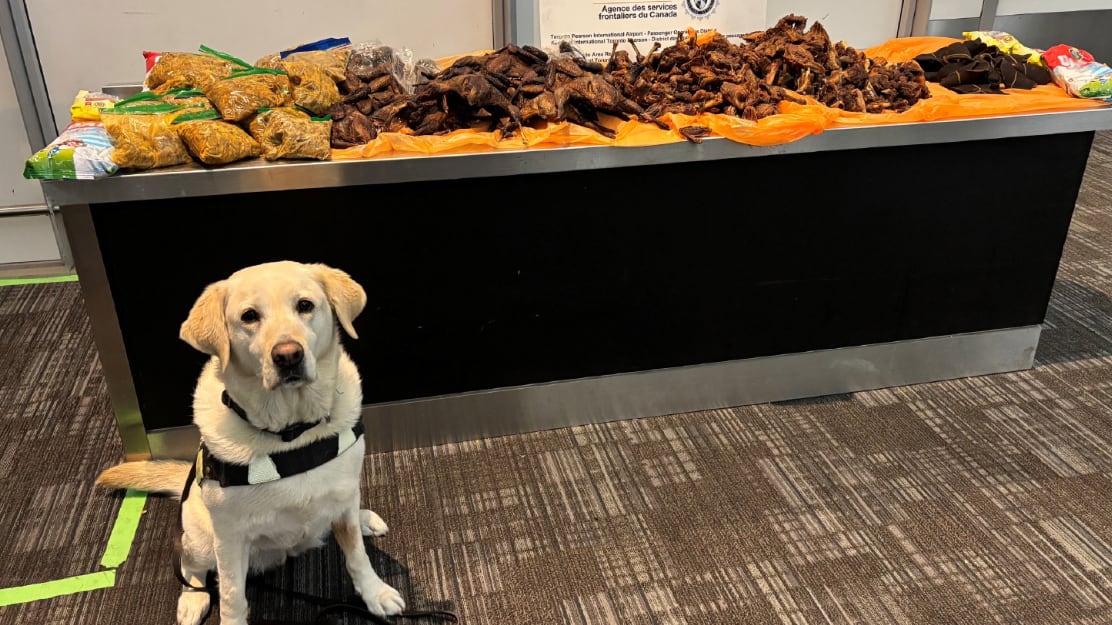
Detector dog Dharla recently intercepted 37.8 kilograms of undeclared food and animal products at Toronto Pearson International Airport, says Canada Border Services Agency (CBSA).
The goods, which a CBSA spokesperson said include undeclared chicken, guinea fowl, goat, cowhide, and powdered milk, came from a traveller who arrived at the airport on June 19 from Nigeria.
“The items were seized and the traveller was fined $1,300,” CBSA said in a post on X.
The agency clarified to CP24 that it issued the Administrative Monetary Penalty System fine for failing to declare the food products.
Dharla, the dog, has been working with the CBSA since March 2023. She is part of a team that is made up of dogs and Border Services Officers.
Together, they intercept drugs, guns, money and food, the CBSA said, adding that this enforcement approach reduces screening times for passengers, luggage and commercial shipments.
Food, plant, animal products must be declared at border: CBSA
Border services reminds travellers they are required by law to declare all food, plant, and animal products being brought into the country.
This includes live animals and animal products, such as cooked or raw meats, hides, skins, trophies, milk, fat, butter, cheese, eggs, fish, seafood, plant products like fruits, vegetables, seeds, nuts, trees, houseplants, wood (and wood products like furniture, carvings, and bark), firewood, roots, vines, herbs, flowers, insects, bulbs, and soil.
Those who fail to declare any of these products or to provide required paperwork for them could have their products seized, face a penalty up to $1,300, and/or prosecution.
“Inadmissible goods may be confiscated and disposed of, or ordered removed from Canada. Travellers may also be held responsible for any costs related to the disposal, quarantine, treatment or removal of these items from Canada,” CBSA said on its website.
Some of the most common items travellers fail to declare include homemade food, handmade crafts, like wooden items, firewood, cooked or cured meats, soil, bait for recreational fishing, plants used for homeopathic or medicinal purposes, milk products like butter, yogurt, and kefir, and fruits and vegetables.
“(They) may not realize the hazards associated with food, plant and animal products. These products may carry invasive species and diseases and may cause risks to Canada’s food supply, economy, environment and our health,” the agency said.

