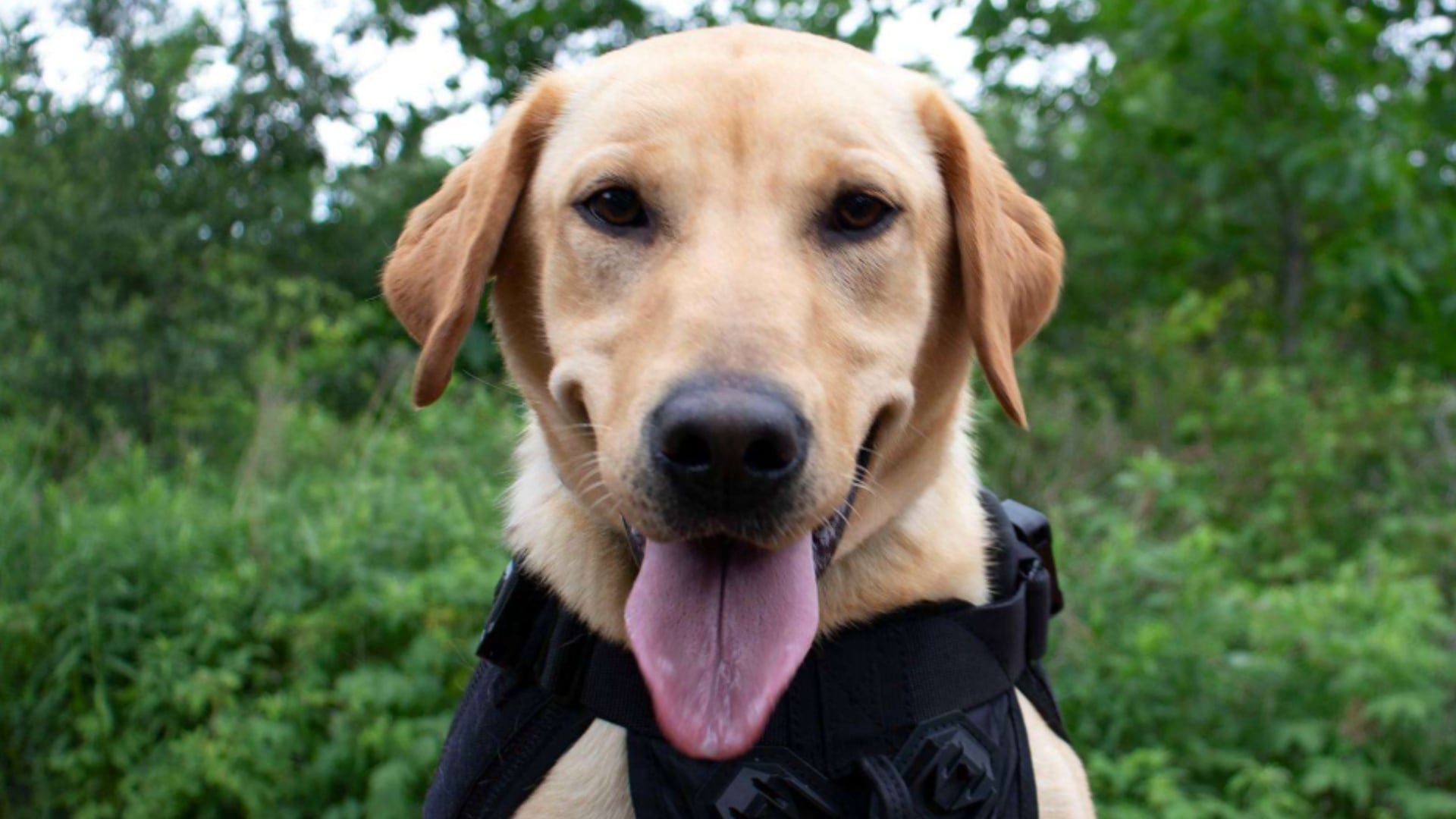
A two-year-old Labrador Retriever is sniffing out invasive species for the Credit Valley Conservation (CVC).
The Conservation Detection Dog program is the first of its kind to pilot in the province, which the conservation says can help with early detection of invasive species.
“As the name would suggest, that would mean detecting the species very early on when they arrive to the watershed,” Kate Hayes, senior manager of ecosystem restoration and stewardship with the Credit Valley Conservation, explained in an interview with CTV News Toronto.
Invasive species can pose critical threats to forests and local economies because of how quickly they can spread and wreak ecological degradation, according to the CVC. Across the country, these sorts of species can cost about $7.5 billion each year, impacting industries like agriculture, fisheries and infrastructure.
Tilly, the golden Labrador Retriever, has been trained to detect three invasive species so far: the Hemlock Woolly Adelgid, the Spotted Lanternfly, and the Swamp Crayfish.
“The Hemlock Woolly Adelgid is one we’ve been monitoring for quite some time now, probably eight or nine years, using staff and monitoring protocol. We’re able to cover about 40 per cent of our properties where we would expect that species to arrive,” Hayes said.
This particular species feeds on eastern hemlock trees, causing needle loss and branches to die before the tree dies entirely. With Tilly’s help, Hayes expects to detect more of these critters across their 2,800 hectares of land.
“We’re expecting it to be closer to 100 per cent coverage, partly because she’s able to access terrain that we can’t access, and also the speed at which she would cover area,” Hayes said.
It also helps that Tilly’s sense of smell is acutely more sensitive than the average person.
“It’s roughly 100,000 times more sensitive than (a) human being’s,” Hayes said.
Tilly has been working with the Credit Valley Conservation for the last three-to-four weeks, Hayes said, but she has been training for the job for about a year-and-a-half.
What was Tilly’s training like?
Antonio Pallotta, owner and head trainer of WorkingK9, tells CTV News Toronto their dogs are trained for law enforcement, military, and detection work like narcotics, explosives, and now, invasive species.
“That’s something that’s new. Basically, it’s still detection work, so it falls under the same training protocols, just the target odors are obviously different,” Pallotta said.
When they were tapped by Credit Valley Conservation for the pilot about a year and a half ago, Pallotta said Tilly was the right dog for the job because of her work ethic and outgoing nature. It also helps that she has a “strong appetite.”
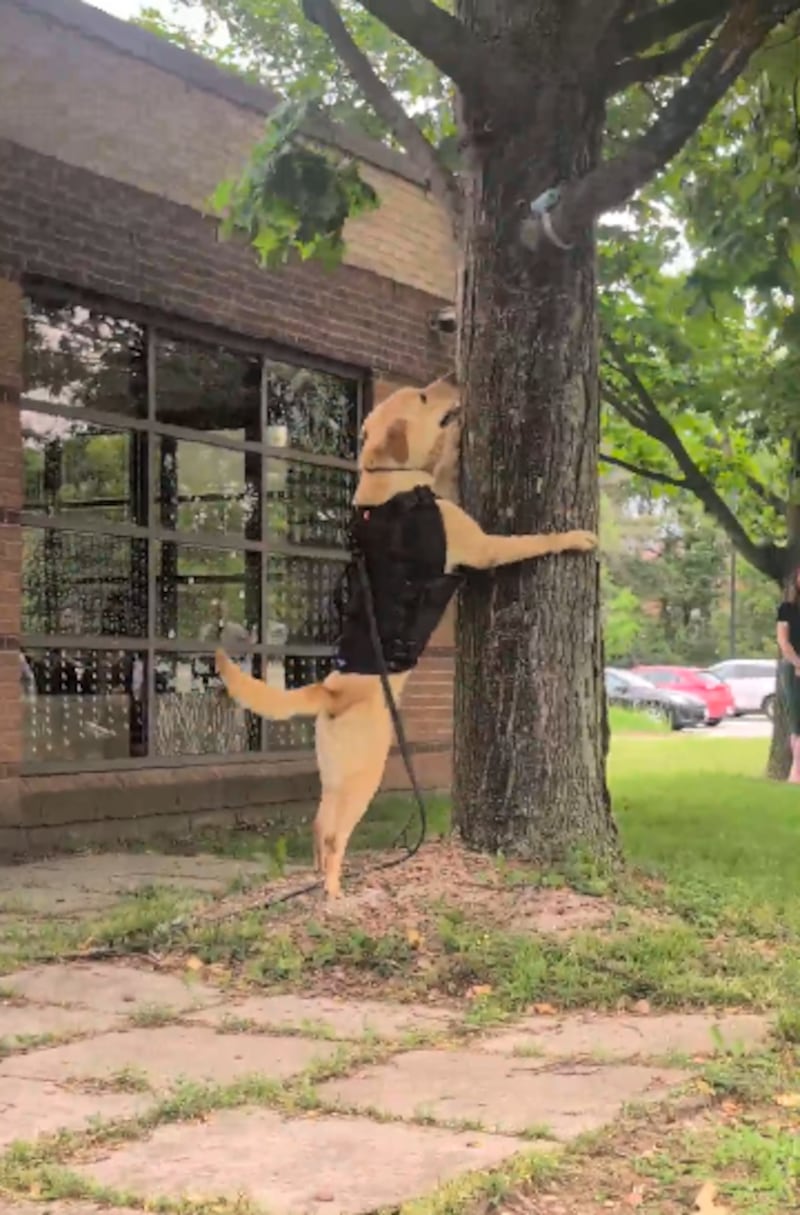
“We utilized her hunger and her desire to eat as a motivator in exchange for scenting behaviours,” Pallota said, adding how they essentially pay Tilly with food.
When WorkingK9 got Tilly from a breeder, she was about eight weeks old and got right into a regular training program with other law enforcement dogs. Pallotta said she had a four-day work schedule, where she would go through a routine of obedience, tracking, and detection training.
Tilly would then be exposed to the target odors of the invasive species she needs to sniff out, Pallotta said, placing those smells in a training box that allows her to be fed when she’s in the odor’s presence.
As soon as she had spent enough time with these smells Pallotta said they moved her into the “shell game,” where they place the target odor in one box out of a few, mix them around, and they test Tilly to find the correct box.
“We just add more boxes, more boxes, until she’s seeking out the box with the target odor, and then we set out distraction odors that smell similar but are not the same,” Pallotta said.
Pallotta says Tilly has an “exceptional nose” and has not faced any challenges in finding the right smells so far. The biggest hurdle she might face is the heat of the summer, as Pallotta explains dogs can’t regulate heat as well as humans can and it could impact her athleticism.
Tilly will be out with CVC handler staff starting detection work of red swamp crayfish, which Hayes says was first detected in Mississauga by a 15-year-old boy last year.
“We will have her out within the month, probably at the … two locations in Mississauga where red swamp crayfish have been detected,” Hayes said, adding by the fall she will likely move with her handler to the Hamilton area to sniff out hemlock woolly adelgids.
With the program still in its early stages, Hayes says they are not currently looking at adding more dogs. Tilly could also be trained to find more invasive species as new threats emerge.

