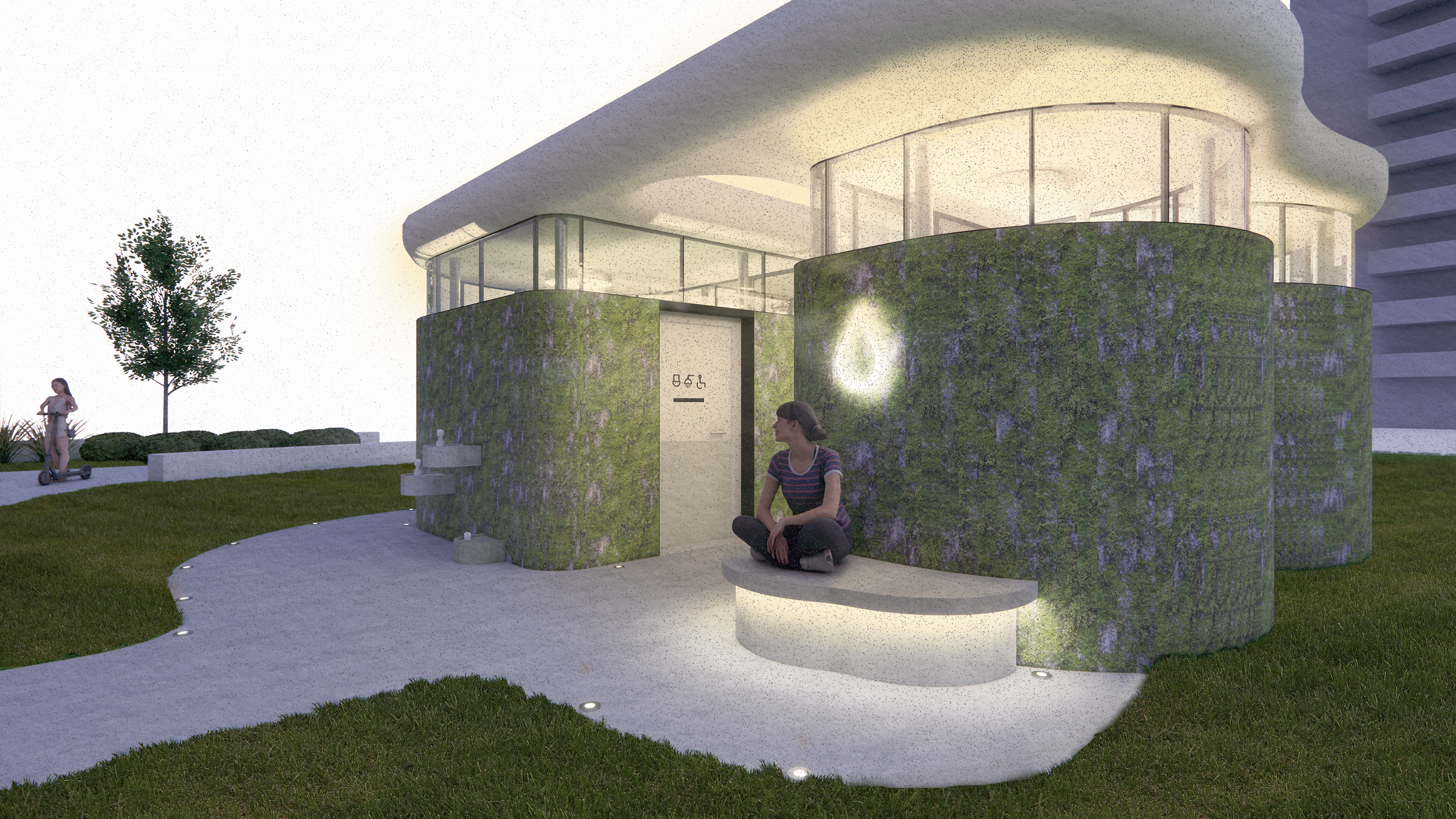
Two Hamilton-based architects are the winners of a public toilet design competition that aims to highlight the importance of inclusive, accessible, and sustainable restrooms.
Alea Reid and Petra Matar took the top spot in the TO the Loo Toronto toilet design challenge, which is meant to raise awareness about the need for a “robust public washroom network” in the city.
The Toronto Public Space Committee, which runs the global ideas contest, has been closely monitoring and researching the city’s public washroom facilities since 2021, when many were shuttered or left in disrepair due to the COVID-19 pandemic.
Cara Chellew, the committee’s co-ordinator, said lockdown really brought to light how important public washrooms are for many demographics, especially more vulnerable populations.
“There’s a lot of folks that are acutely affected by a lack of consistent, predictable washroom network,” she told CTV News Toronto.
“People with disabilities, people with chronic illness, Crohn’s and colitis, older people, people with young kids, delivery drivers, and gig workers that became a huge workforce over the pandemic.”
When many private establishments, like coffee shops and department stores, shut down during the pandemic, it meant there were even fewer places where people could use the restroom.
But Chellew pointed out that even when there are washrooms available at private establishments, some demographics might not be welcomed to use them.
“If you’re unhoused or even racialized folks, you can be refused washroom access,” she said.
This further amplified the reality that many in Toronto have long relied on the city to supply this type of infrastructure.
The competition asked contributors to submit designs that considered spatial justice, accessibility, sustainability, and cultural inclusion into a multi-user washroom hub and single-user washroom, which could be adaptable to different locations throughout the city.
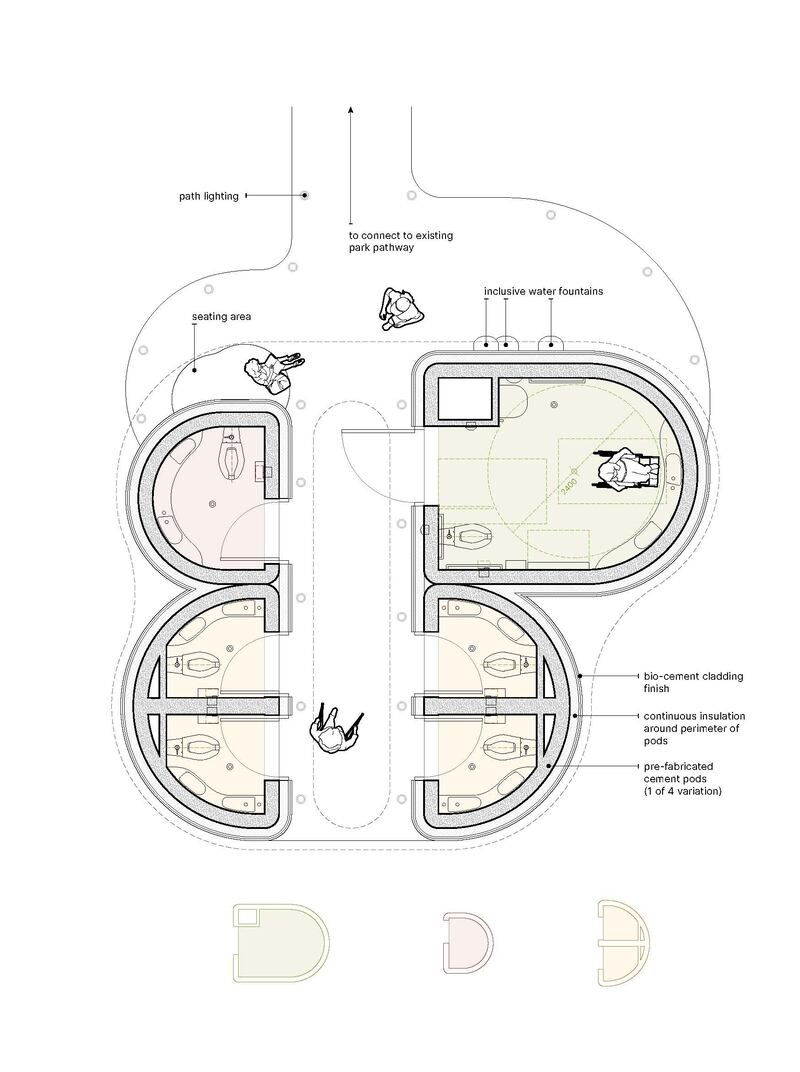
Matar and Reid, who both have experience designing public washrooms, said they were drawn to the competition because they wanted to push the envelope and think outside the box.
“We know that creating something that is useful and beautiful can become financially challenging for municipalities,” Matar said.
“So our idea was to create something that is scalar and modular, by creating those little pods.”
The duo considered how to create cost-effective toilets, opting to make them entirely out of concrete, including an interior finish with an epoxy coating that could easily be hosed down.
They also made the space welcoming and safe, incorporating natural elements like green roofs and biodiverse panels and including curved surfaces to help open up sight lines, eliminating areas for people to hide in, and making it more beneficial for those who are neurodiverse.
The facilities also include sound art in the corridor area to provide auditorial privacy for people using the washroom as well as a platform for people to share art, whether that’s music or stories.
“We can kind of push it to go beyond it just being this functional use and actually be something that people enjoy being around,” Reid said.
While the intention of the competition was to raise awareness around the importance of these types of facilities, and not to build the winning design, Toronto city council adopted a motion in March that will take a closer look at the city’s washroom facilities and future potential designs.

