A new trial has been ordered for three men convicted in the 2018 death of a 26-year-old engineer who prosecutors alleged was randomly shot and killed while visiting a friend in North Etobicoke.
On the night of March 16, 2018, Nnamdi Ogba, an electrical engineer from Brampton, was shot and killed after visiting a teammate on his soccer team who lived in an apartment building on Scarlettwood Court, located near Scarlett Road and Eglinton Avenue West.
Three men on trial for his murder were accused of randomly targeting someone to kill in the neighbourhood as part of an ongoing gang rivalry. They were found guilty of first-degree murder by a jury in March 2020.
But more than five years after the verdict, Ontario’s Court of Appeal has overturned the convictions of Trevaughan Miller, Abdullahi Mohamed and Abdirahman Islow, ordering a new trial on the grounds that there were “insurmountable” errors in the instructions the jury received regarding modes of participation.
“This was a very difficult trial, involving numerous complexities. Mr. Ogba cannot be forgotten in all of this. Nor can his family and friends, who have undoubtedly suffered tremendously since the night of his senseless death,” Associate Chief Justice Michal Fairburn, one of three judges on the panel, wrote in the decision, released this month.
“While justice does not demand a perfect trial, it does demand a fair trial…. so much of this trial was done right and justice was well-served. Yet on the fundamental point of modes of participation, the jury was not provided with the tools necessary to fairly execute on their task.”
The shooting was captured on video surveillance footage and was uncontested at trial.
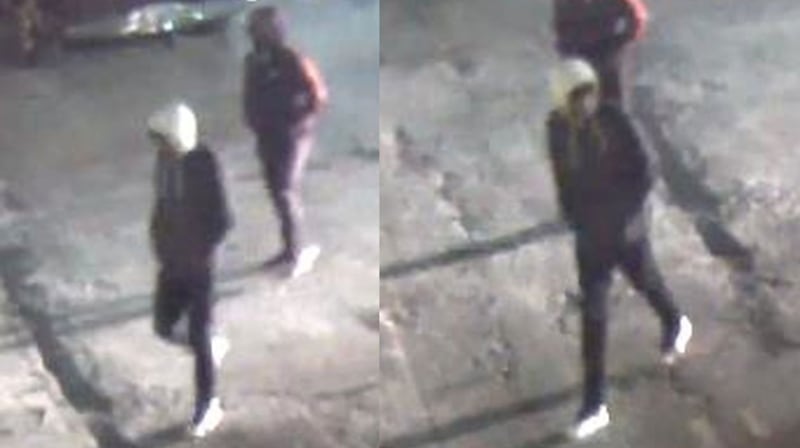
According to the decision, video footage captured that night showed the three accused arriving at Scartlettwood Court in a stolen car. Mohamed and Miller are seen getting out and walking toward an apartment complex.
Ogba is seen leaving the apartment building at the same time the two accused walk through the parking lot.
The video footage shows the two men approaching Ogba before several flashes of light are seen in quick succession. Miller and Mohamed are seen running back to a getaway vehicle, which was driven by Islow, who never exited the car during the incident.
During the trial, the Crown argued that all three men planned and executed the shooting in an effort to “send a message” to a rival gang by randomly targeting someone in enemy territory.
Mohamed, the only accused to testify at trial, admitted that he fired at the victim but claimed he had confused Ogba with someone who he said owed him money as part of a drug debt.
According to the court documents, during the trial, Mohamed said he fired one shot that was intentionally “high and wide,” intending only to scare the man who he thought owed him money.
He testified that his co-accused Trevaughan Miller also fired at the victim.
Ogba was struck by five of the nine bullets that were fired and his cause of death was a gunshot wound to the heart.
All three men were found guilty and subsequently sentenced to life in prison with no chance of parole for 25 years.
Fairburn said that despite assurances that the jurors would be given more instructions about “different ways of committing first-degree murder,” or lesser offences, “those instructions never came.”
“Therefore, the jury never received more detailed instructions on how to approach liability as an aider or as a participant in a common unlawful purpose, and they were left to deliberate only with what was originally provided to them,” he wrote in the decision.
Fairburn acknowledged the “difficult task” the trial judge faced at the time he was charging the jury in the case.
“Not only were the issues complex but the commencement of jury deliberations coincided with the onset of the COVID-19 pandemic in Ontario. The jury only started to deliberate on March 10, as worry about public health and safety was increasing and the world was starting to shut down,” Fairburn wrote.
“In fact, only a few days later, on March 15, 2020, the Superior Court announced that it was suspending all regular court operations on March 17, 2020 until further notice. In that context, there was a very real urgency to conclude the trial.”
The judge noted that it is possible that without “these pressures,” the errors would not have been made.
“With that said, and despite the obvious hard work that went into this charge and this trial by all of the justice participants involved, I have concluded that mistakes were made that simply cannot result in anything but a new trial.”

