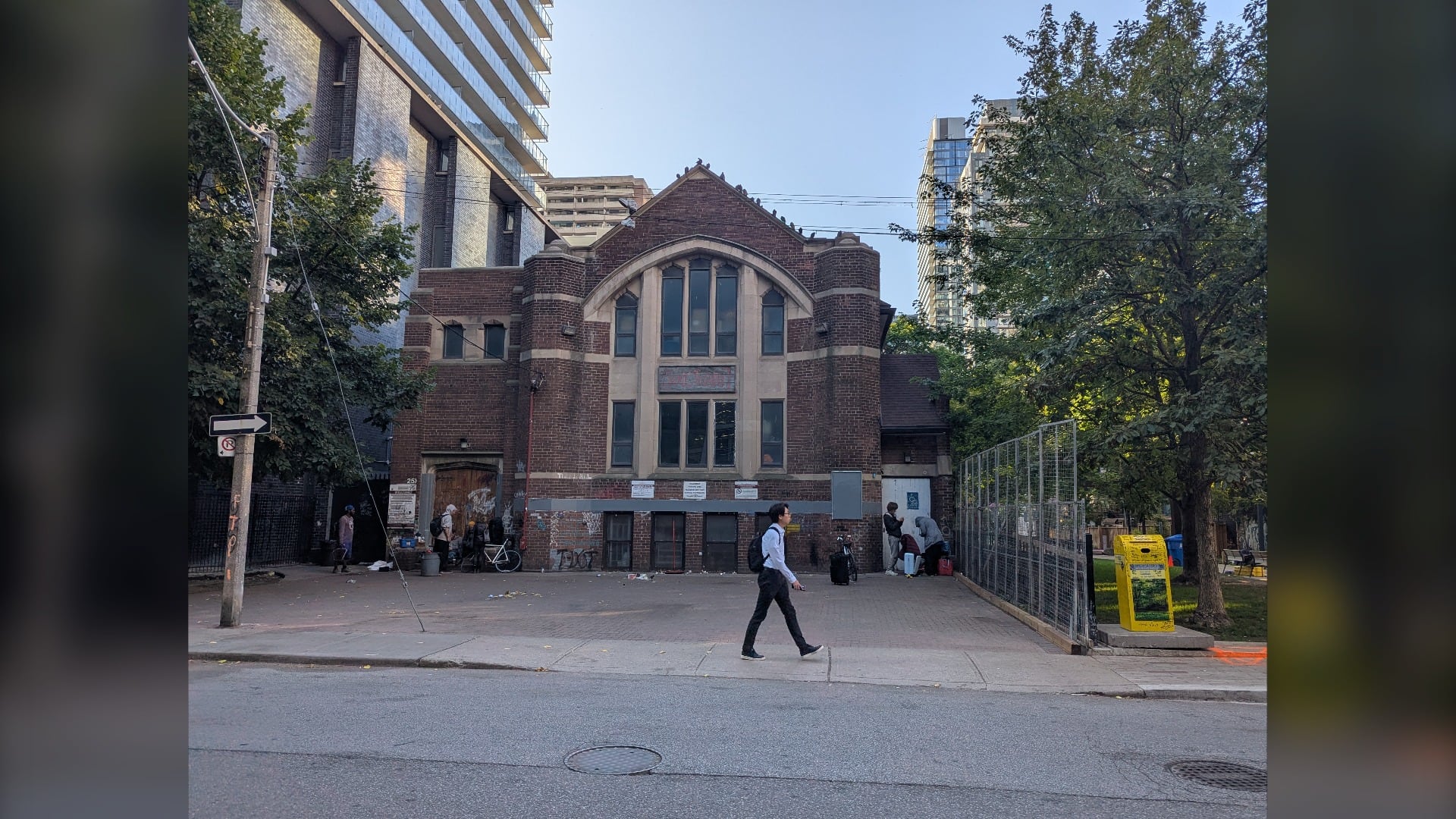
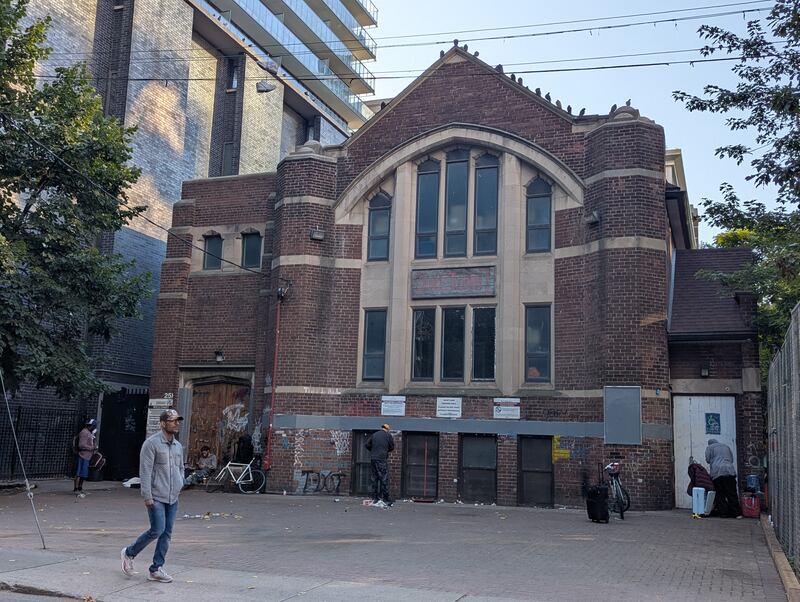
A downtown Toronto condominium corporation is suing its next-door neighbour, a church and drop-in centre that has served unhoused, underhoused, and marginalized people since 1992, for $2.3 million.
Toronto Standard Condominium Corporation No. 2058, the official name for the board of CASA Condos at 33 Charles St., filed a legal proceeding against Sanctuary Ministries Toronto, at 25 Charles St., just east of Yonge Street, earlier this month.
The board is alleging that Sanctuary has “permitted illegal, illicit, disruptive, interfering and egregious conduct to occur on its property,” leading to a reputation that the drop-in centre is a “free-for-all haven and/or destination for illegal and illicit activity.”
The statement of claim makes more than a dozen specific allegations regarding illegal activity on Sanctuary’s property that it says has sometimes led to the condo’s residents being subjected to “aggressive” and “violent” behaviour.
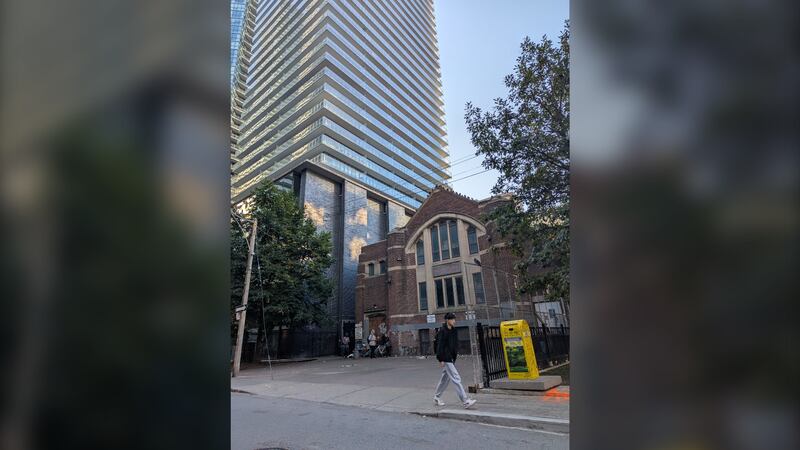
Aside from seeking more than $2 million in damages, the condo board wants the Ontario Superior Court of Justice to grant them an injunction to prohibit and restrain anyone who occupies or frequents Sanctuary from trespassing on their property, or causing, creating, or permitting any “nuisance that interferes with the use or enjoyment” of it by owners and residents.
This order is also looking to bar anyone who threatens, harasses, annoys, assaults, or abuses the 421-unit condo’s residents, workers, or others present from 33 Charles St.
Lastly, it is calling for Sanctuary to “maintain in good order and condition” its own property, and prevent the use of drugs and “violent, dangerous and disruptive conduct” there.
Condo board president says Sanctuary ‘not a good neighbour’
Earlier this week, Condo Board President Peter McDonald told CP24 that Sanctuary is “not a good neighbour,” calling the church it operates a “cult.”
“Personally, I don’t feel Sanctuary is a church. They’re in the business of helping enable homeless drug addicts,” said McDonald, who has lived in the building since it opened 15 years ago and has served on its board for that entire period.
“We knew going into this (that) it’s going to be a difficult situation because we’re suing a charity.”
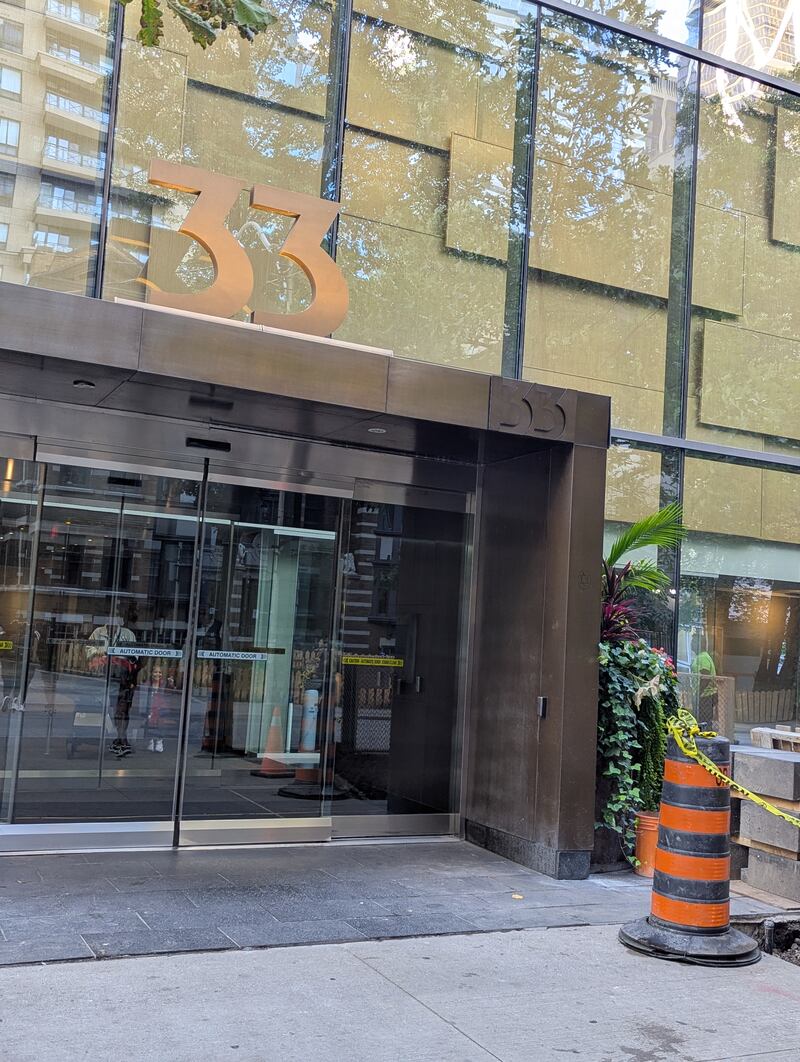
The condo board president went on to say that the residents of 33 Charles ultimately want improved safety in their neighbourhood.
“The number one issue is that people are afraid to walk along Charles Street,” McDonald said.
“We’re not against The Sanctuary. … What we want is a change in the way (it) operates.”
McDonald said the myriad problems they have with Sanctuary are more than a decade in the making and efforts to address them, which have involved hiring a lobbyist along with additional security, aren’t working.
The City of Toronto as well as Toronto Police Service both declined to comment further on the matter. Local councillor Chris Moise also has not responded to CP24’s requests for comment.
Sanctuary Ministries says it will defend itself against lawsuit
Sanctuary, meanwhile, said it is prepared to defend itself in court against the civil action and has retained a lawyer.
“Sanctuary, and the community we serve, are part of the neighbourhood and have been for decades. We’ve now been sued by the condominium next door because they feel inconvenienced by the homelessness that they see,” the charitable organization said in a written statement provided to CP24, adding that they’re “proud to serve the most marginalized in our community and will continue to do so.”
“A lawsuit won’t solve the housing crisis. We urge the condominium to drop the suit. If they don’t, we will defend against their allegations in Court.”
CASA Condos board ‘making a statement’ by filing lawsuit, says real estate lawyer
Long-time real estate lawyer Mark Weisleder, who does not represent either party, said while he agrees with the lawsuit in principle, proving in a court of law what is claimed within in it might be difficult.
Among other things, CASA Condos, in its statement of claim, says Sanctuary is engaging in and/or allowing “illegal, illicit, disruptive, interfering and egregious conduct to occur on its property,” open drug use and drug dealing/trafficking as well as alcohol consumption, which in turn is resulting in “repeated physical alterations, overdoses, harassing, threatening and violent conduct” towards condo residents, workers, and those on the abutting sidewalk.
“They’re throwing as much as they can at this. They want this problem to stop. … They’re making a statement by doing this (lawsuit),” said Weisleder, adding it’s a lot to expect a social service organization to monitor and control the actions of everyone who visits or frequents their property and surrounding area.
“I don’t think the intent at all of the church is to create this.”

Most of the allegations contained in the lawsuit pertain to alleged activity that the condo corporation claims is being allowed to take place on Sanctuary’s property.
However, the documents do also allege that the charity is “permitting and allowing” its clients to trespass onto the condominium’s property “to cause damage,” including by intentionally triggering fire alarms, removing cable and other infrastructure, and “causing damage to personal property of the condominium residents, including vehicles.”
In the statement of claim, lawyers for the condominium board say it has “repeatedly appealed” to Sanctuary to “take meaningful action” to no avail.
“This is not a simple lawsuit for a church. It would be interesting if it got to court,” he said.
Weisleder, a senior partner with the law firm Real Estate Lawyers.ca LLP, said the best way to minimize issues and mitigate problems would be for both parties to have an honest discussion.
Further, the real estate lawyer said buyers should exercise due diligence when purchasing a property and understand the conditions of the neighbourhood they’re moving into, as realtors are not required by law to disclose these kinds of details.
“This is life in the city. There’s benefits and there’s challenges,” said Weisleder, adding that a key reason why people sell is due to disputes with their neighbours.
Lawsuit is an ‘exercise in power and privilege’: planning professor
Luisa Sotomayor, an associate professor at the University of Toronto and the director of its planning program, said the lawsuit launched against Sanctuary is “wild, but not surprising.”
“We have residents of luxury condos redefining what it means to live downtown. … It’s clearly an exercise in power and privilege,” said Sotomayor.
“They want the location, the specific lifestyle but seeing poverty is not part of that equation. It doesn’t align with the gentrified aesthetic values.”

Sotomayor, who was previously the director of the CITY Institute at York University, added that Sanctuary has worked hard for decades to provide food, shelter, and dignity to vulnerable people and those efforts should be acknowledged by those in the community.
“Instead of recognizing this work, we have this condo board that is using that as a weapon and suing (this organization) for millions in damages and seeking an injunction,” she said.
“It’s a way of criminalizing homelessness. … This is a battle for who belongs.”
Sotomayor said that the “untrue and unfair depictions and generalizations” made in the lawsuit blame the failings of society and government policy on a church/social service organization, instead of taking into consideration the real roots of the problem.
“Sanctuary is 100 per cent not responsible for solving a city-wide housing crisis, gaps in services, and problems in society. They didn’t create these issues, they’re just responding to them,” she said, speculating that this legal action and the inevitable outcome of it are really an attempt to drive the Sanctuary Ministries out of the area.
“This kind of framing is really de-humanizing and it erases people trying to survive. … In a way, it’s classist tensions where you’re seeing property rights being played out against human rights.”
Sanctuary must now file a statement of defence or what is known as a Notice of Intent to Defend to the court, if it wishes to fight this lawsuit.

