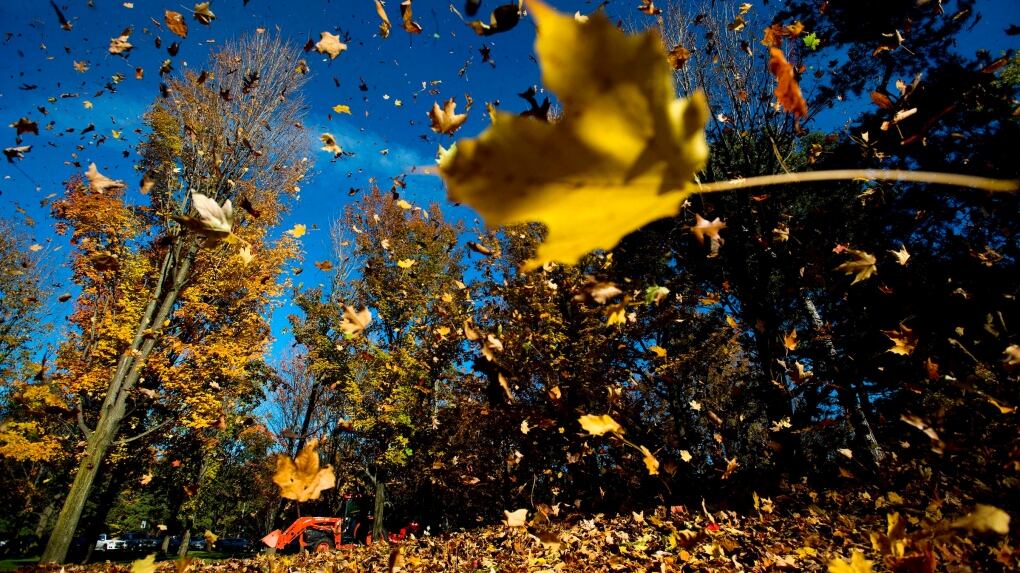
Many Torontonians look forward to the brilliant fall colours of changing tree leaves, which can be seen in swaths throughout the city’s streets, parks and trails.
But it seems that the familiar cycle is happening much sooner than its usual fall timeline, starting as early as July.
Experts confirm that you’re not seeing things—leaves on some trees are changing colours much earlier than they’re supposed to. And there’s several reasons why that’s happening.
Why are trees changing colour earlier in Toronto?
Sean Thomas is a professor of forestry at the University of Toronto. He says the phenomenon is a result of several reasons related to the environment, namely a combination of high temperatures and lack of rain.
“From the tree’s perspective, high temperatures are driving transpiration from the tree leaves, and if the water supply is not keeping up with that, you can have drought without necessarily having really low soil moisture,” he told CTV News Toronto.
Transpiration is when water vapour is released, usually from the pores of a plant, into the atmosphere.
The trend of changing leaves earlier in the season doesn’t impact every tree, all at once. It tends to happen in the outer parts of a tree’s crown, since there’s a longer path that the water has to travel out to. Additionally, the root system in one area will supply one part of the tree – what is known as sectionality - so if there’s a dry spot in one part of the soil, it will lead to dieback—when a tree starts to die from the tips of its leaves - in one particular part of the tree.
Thomas also notes that other things can contribute to leaves changing colours, like damage to branches by squirrels or other critters. However, extreme heat doesn’t help with these circumstances either.
“It’s a common response to drought conditions because the water supply of the trees doesn’t get mixed,” he said. “It’s individual parts of the roots that correspond to individual branches.”
Marcus Maddalena, nature reserve manager with Ontario Nature, says leaves changing colours earlier in the season is a normal reaction for trees to have.
“It’s standard that they would drop their leaves early in response to prolonged drought conditions through the summer, but climate change is often making some of these extreme weather events more frequent, less predictable and more intense,” he said. “The larger concern is that if you see drought in successive years, it can ultimately lead to some of these trees dying.”
He said most of Southern Ontario has been subject to drought conditions this summer, though they haven’t been quite as intense as in Toronto. However, the trend of leaves turning earlier isn’t exclusive to the city.
“Because this is so intertwined with climate change, the whole province is being impacted,” Maddalena said.
Are some trees more susceptible to early leaves changing?
Trees differ greatly when it comes to how tolerant they are to drought, Thomas explains.
Sugar maples, for example, aren’t tolerant of drought, while honey locusts, which are one of the most planted trees in the downtown area, are quite drought tolerant.
He said that the city is planting more trees that can better sustain drought.
“They’re anticipating climate change impacts and the effects of the urban heat island and episodic drought, to have trees that are more resilient,” Thomas said.
The heat island effect is when urban areas experience higher temperatures than rural areas, as a result of infrastructure like roads and paved areas.
Kentucky coffeetree is another tree that’s being planted a lot in the downtown core, which is a Southern species that is better equipped to sustain drought.
For the past two years, Thomas and the city of Toronto have been working on a pilot project aimed at improving soil conditions with biofertilizers and biochar, charcoal made from organic waste materials prepared as a soil amendment, on more than 500 trees throughout the city. This will ultimately help make trees more resilient.
What is a ‘normal’ time of year for leaves to change?
When it comes to a healthy time of year for leaves to start changing, Thomas says early fall is typically when it’s expected.
“In the city we usually see peak fall foliage more in October and there were individual trees that were turning in August,” he said. “Having a lot of fall foliage already in mid-September is quite early for the city.”
It’s also not unheard of in recent years for warm temperatures to cause delays in the change of leaves, pushing it back as far as November.
“Just within the last 10 years, the year-to-year variation has been quite extreme,” said Thomas.
The perfect “recipe” for good fall foliage includes not having drought conditions, high levels of light and cooler temperatures, ideally a bit above freezing, he added.
City of Toronto wants feedback on trees
Toronto residents can play a roll in the future of the city’s trees and how they’re managed. A survey by the City of Toronto is looking for feedback on how to strengthen tree protection through bylaws, which are meant to enhance enforcement, support climate and housing goals, promote equity and engagement and improve cost recovery. The online survey is in place until Sept. 24.

