The conditions in Toronto’s shelters are “inadequate and inhumane” for people with disabilities and must be improved immediately, say the organizers of a new campaign called Shelter is for Every Body.
On Tuesday, the Shelter Housing and Justice Network (SHJN) along with the Toronto Underhoused and Homeless Union (TUHU), held a news conference at Toronto City Hall that called on the city to take “concrete action to prevent more death as winter approaches.”
Specifically, the groups want the City of Toronto to conduct a full accessibility audit of its shelter services by March 1, 2026 and establish plans for improving them.
They’re also calling on the city to immediately replace the 1,000 shelter beds and respite spaces it closed since last winter by Nov. 1 and to ensure they’re accessible and usable for physically disabled people, with surge capacity for extreme weather conditions.
Lastly, they want the City of Toronto to convene an intergovernmental task force to coordinate an effective response, also by Nov. 1, in collaboration with people with lived experience, to ensure the first two demands are met and plans are put in place to rapidly build social housing.
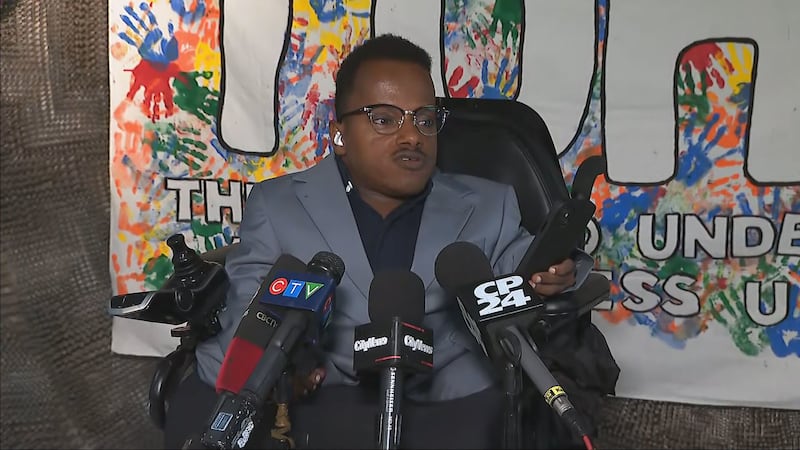
Ali Adan, a former journalist from Somalia and disability rights activist, has osteogenesis imperfecta, a genetic condition that makes his bones brittle and prone to breaking.
A TUHU member, Adan spoke about his experiences staying at a city-run shelter in June 2024.
“When I finally arrived in Toronto, I was hopeful that things will go different, that accessibility here would mean I could participate fully without barriers. But when I entered a reception shelter, I found the same struggle,” he shared.
“The shelter was described as accessible, yet when I entered, when I tried to use the washroom, it was impossible for me. The bedroom also did not meet my needs.”
Adan said accessibility is not “one size fits all” and that it can vary depending on an individual’s needs and abilities, adding this effort must also include having staff who understand the diversity of disabilities and who listen to those who use the city’s shelters.
Toronto’s shelters ‘create another layer of exclusion,’ says former client
“Shelter is meant to provide safety and dignity, but for many people with disabilities, they create another layer of exclusion. Toronto has a chance to do better,” Adan said.
“Accessibility must mean more than one word on paper. It must mean that every person, newcomer, refugee, Canadian-born with or without disability, can find safety and dignity and belonging in our city’s shelters.”
Lynn Walker and Asil Lavoie, also of TUHU, both shared similar experiences of not being able to properly access Toronto’s shelters and of being made to feel that their special needs were a burden to staff at them.
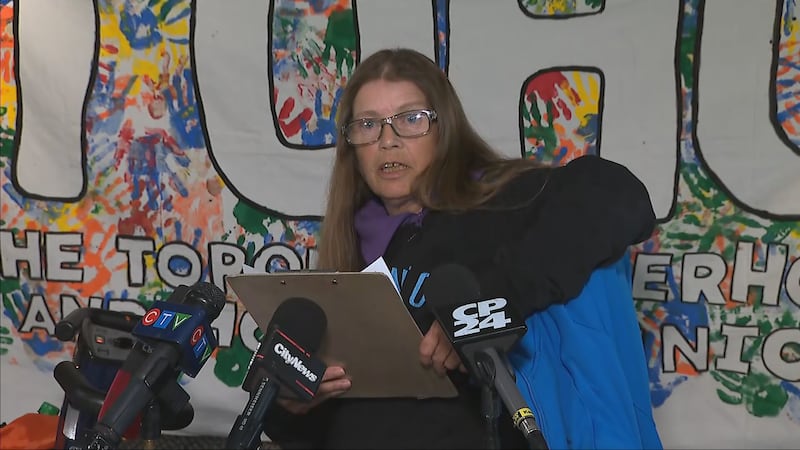
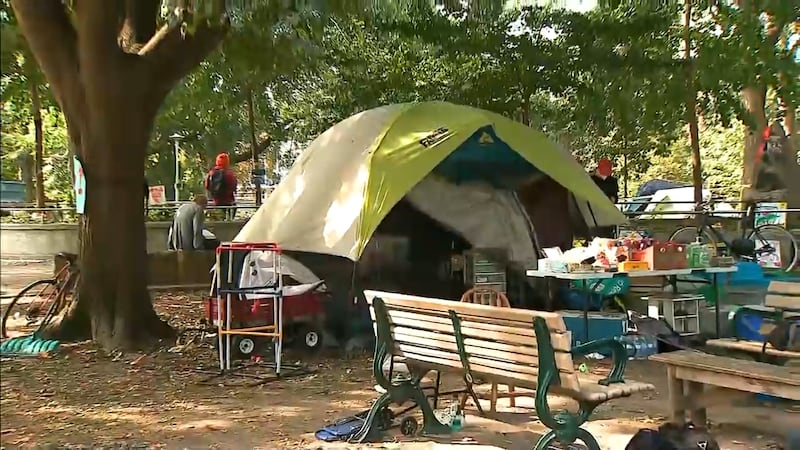
Walker, who stayed in an encampment downtown for 25 months but is now living in an apartment in Scarborough, said she prefers to stay outside rather than in a shelter where her disabilities are “invisible.”
She uses a mobility scooter to get around and said she struggles with pain throughout her body and often has seizures.
“The longer I am awake, the worse the pain gets. Walking, reaching, sitting, or standing increases the pain as the day goes on,” Walker said.
A member of the SHJN/TUHU’s winter disability planning committee, she said she has frequently encountered city-run shelters that don’t have ramps, functional automatic doors, or working elevators.
“Everybody deserves to be seen, disabled or not. Everybody deserves to live with dignity, disabled or not. Everybody deserves accessible shelter, disabled or not. Everybody deserves to have the resources they need, disabled or not. Everybody deserves autonomy, disabled or not,” Walker said, urging everyone to “show compassion, dignity and respect … and take the time to learn about living in a shelter with disabilities and the many barriers that exist.”
“Staff in shelters treat people as if we are not disabled. They dehumanize us. Instead of treating us with compassion, dignity and respect, some staff act like getting you something that you need is a big job deal. They give you the runaround.”
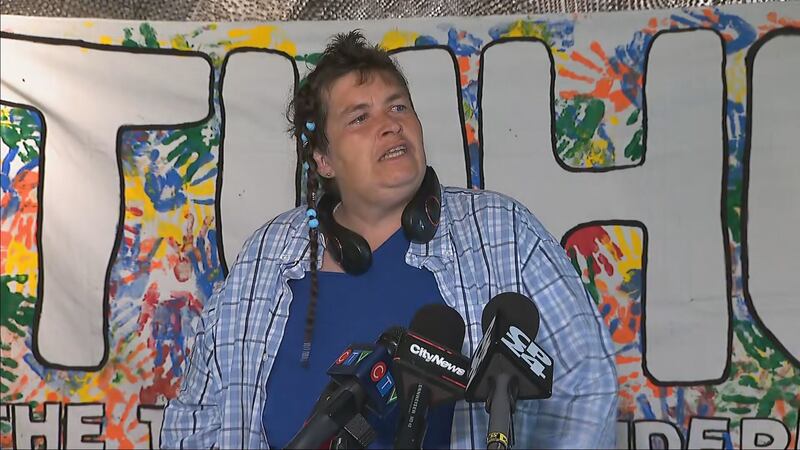
Lavoie, who has struggled off and on with homelessness for 35 years and is currently staying at a city shelter, lives with MS, fibromyalgia, and PTSD and gets around with the help of a walker.
“People with disabilities, like myself, are often treated as if our needs are extra burdens,” she shared, pointing to her eight-month-long request for a hose and grip bar for her shower.
She also noted that the small door frame in her washroom makes it impossible to bring her mobility device inside and increases her risk of falling and being injured.
“This is what it’s like for people experiencing homelessness who are at the mercy of a shelter system that is not built for them. It is truly exhausting and defeating to keep trying to fight for the simplest thing. Think of what that does to someone’s mental health, to their energy, to their confidence,” she said, adding when she brought her concerns to management she was met with “little awareness or compassion.”
“Staff seem to be completely ignorant to our struggles. It feels as though people are not allowed to be disabled in the shelter system.” Lavoie said it makes no sense that funding continues to flow to a system that refuses to make even the “simplest modification.”
“I am a volunteer. I have worked for non-profit organization. I have watched out for my friends and taken care of people. I am a human and yet I feel like I am constantly fighting for myself and for my friends to experience basic dignity. I deserve to be clean without risking my safety. Enough is enough,” she said.
Earlier this year, SHJN and TUHU released a 46-page report that advocates for systemic changes to address the housing and homelessness emergency in Toronto, with a specific focus on the needs of disabled unhoused people.
Titled Dignity and Housing for All: Demanding an End to the Dehumanization of Disabled Unhoused People, it argues that “current policies and systems are inadequate, dehumanizing, and disproportionately affect marginalized groups, especially those with disabilities.”
The group presented this report to the city during a news conference at that time and say they were told that the mayor would meet with the, but say they have yet to hear back.
Mayor says Toronto ‘committed to addressing homelessness’
In a statement provided to CP24, Chow’s press secretary said the mayor is “committed to addressing homelessness, that is why the City is building new shelters, more affordable housing and introducing new rules to prevent evictions.”
“The City of Toronto’s 10-year shelter capital infrastructure strategy will improve the shelter system, building up to 20 new sites by 2033,” Braman Thillainathan wrote, adding that they will arrange a meeting with both organizations.
“Staff are actively improving accessibility features to existing shelters as they undergo major renovation, including the addition of elevators and ramps.”
Shelter system a ‘disaster’: outreach worker/advocate
“The shelter system is a disaster,” said Greg Cook, a longtime outreach worker and SHJN member, who noted that in August an average of 120 people per day were told there was no room for them in the system.
“It is dehumanizing. The city must make sure it is accessible for everybody.”
Cook said inaccessible shelters mean that people’s human rights aren’t being met.
“City Hall has abandoned 1000s upon 1000s, banishing them to another cold winter, which is fast approaching. Banishing them because as a city we are unwilling to meet people’s accessibility needs,” he said.
“This structural violence, alongside government rhetoric that is often hateful towards unhoused people, helps to engender a culture of hate and violence that targets unhoused people.”
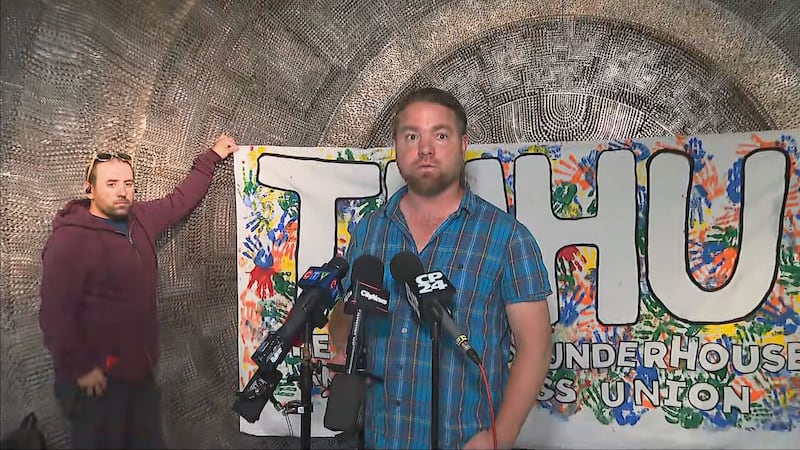
Homelessness in Toronto has more than doubled since 2021, according to latest Street Needs Assessment, which found that long-term, coordinated strategies are needed to address homelessness in the city.
Advocates say this is especially true for disabled unhoused community members due to the “inaccessibility, dehumanization and disregard” that is “built into the shelter and housing systems, where people are often required to advocate tirelessly for their most basic needs to be met.”
“City-run shelters and services must be designed for everybody. Action must be taken immediately to prevent more death and injury this winter and year-round, and to invest in meaningful long-term solutions that are sustainable, dignified and humane for all residents, including disabled unhoused people,” SHJN/TUHU said in a release.
The City of Toronto, meanwhile, has put in place a five-year plan to make the city more accessible in accordance with its obligations under the Accessibility for Ontarians with Disabilities Act. Earlier this year, advocates, however, criticized the province for its failure to meet these requirements by Jan. 1, 2025.
With files from CTV News Toronto’s Allison Hurst and CP24’s Andrew Brennan

