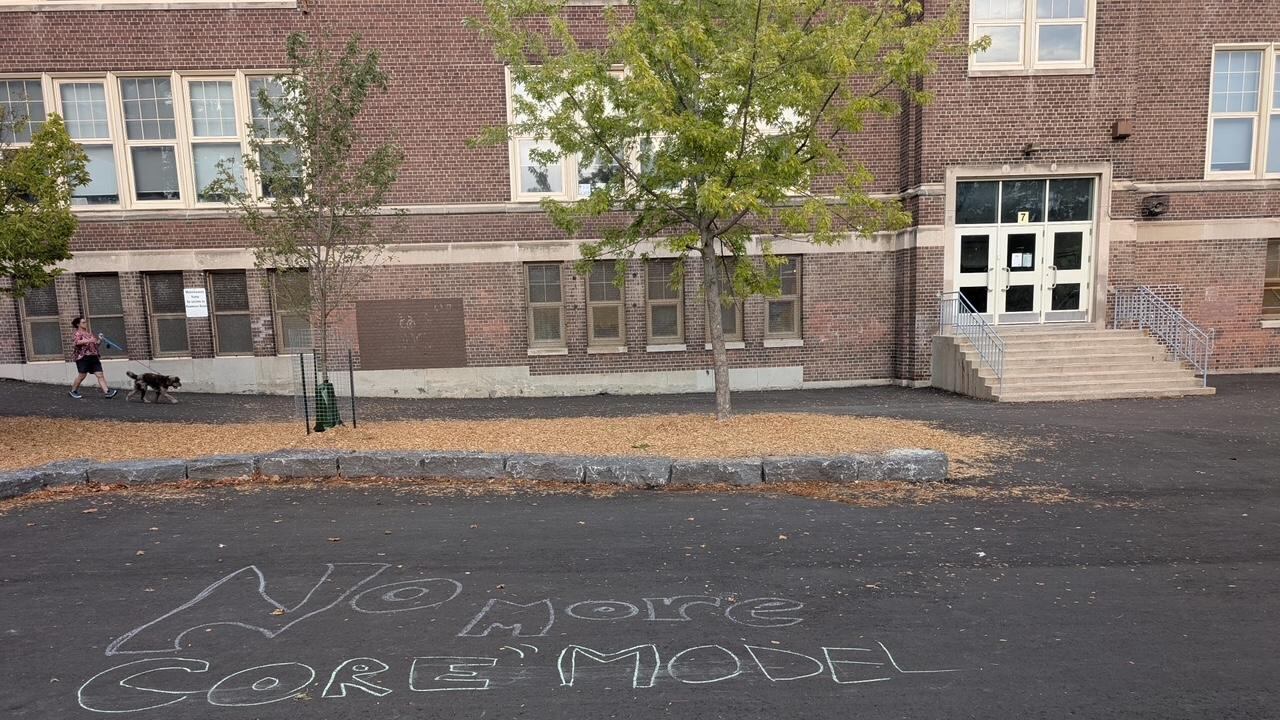
Parents with children attending a school in Toronto’s east end say the teaching model for some grades was abruptly abandoned in mid-September, forcing teachers to brush-up on topics they haven’t taught in a while and temporarily leaving student extracurricular activities in limbo.
Bowmore Jr. and Sr. Public School, located near Gerrard Street and Woodbine Avenue, previously used a “rotary” model where teachers taught specific subjects and students were rotated between classes.
But on Sept. 12, parents received a notice that all students in Grade 7 and Grade 8 would be moving to a “core” model effective immediately wherein teachers would be expected to teach a range of subjects to the same cohort of students.
The change, parents say, came without adequate warning and has negatively impacted the quality of education being provided by the school.
“This model that Bowmore was using, I’m going to refer to as a co-teaching model. We had the teachers partnering together, teaching their specialized subjects and rotating the children between the classes so that each of them could play to their different strengths in the subject,” Emily Boffa, whose son is enrolled in Grade 7 at the school and was among those affected, told CTV News Toronto in an interview on Wednesday.
“It was a bit of a shock to us because we had not been informed properly about this change. We knew that the model worked very, very well and so to hear it was changing all of a sudden, we didn’t understand.”
The Toronto District School Board (TDSB) told CTV News Toronto this “core” model is used widely across the district, calling it “the standard approach” for Kindergarten to Grade 8.
TDSB spokesperson Ryan Bird said the decision to shift learning models was actually “made at the end of last school year in consultation with the school staffing committee, and then shared with staff and school council, along with the rational for the change.”
However, some parents say they only learned of the change earlier this month.
Jenn Engels has a daughter currently enrolled in the Grade 7 French immersion program at Bowmore.
Engels said there was “very sparse” attendance at the school council meeting in May, as it is optional for parents. Both Boffa and Engels said about 30 people attended that meeting and of the parents that did attend, it was unclear what was happening with the upcoming school year with regards to the changing teaching models.
“Parents left that meeting not feeling certain of where things stood, either feeling like teachers still had discretion as to what they would choose or that this was still being hammered out and that this was not a done deal,” Engels said.
Boffa and Engels feel this type of announcement warranted a community engagement meeting, as they say this was a significant change to their children’s learning experience.
“This is a practice that’s been at the school for 20-plus years. It is beloved by students, teachers, parents—no one in our school community wants this and there was no proper consultation about it,” Engels said. “I don’t think they can very honestly come back and say, ‘We consulted the school community.’ That is not a fair statement.”
In an email sent to parents on Sept. 12, obtained by CTV News Toronto, the school’s principal explained the rationale to transition to this new model, pointing to how this decision was previously discussed in May and saying Bowmore’s top priority, like any other school, is to ensure the “well-being, academic success, and happiness of every child.”
“The decision to select the core model was based on a combination of instructional, equity-based, and organizational factors. This model is also recommended by the board because rotary models can create additional complexities in timetabling and implementation,” officials wrote.
The email said that with the new model students would have consistent instruction in foundational subjects from one teacher and that they would gain more instructional time since they won’t have to transition between homerooms, which school officials said amounted to 50 to 70 minutes of lost time per week.
Hundreds of students and parents signed a petition imploring school board officials to reconsider the change. About 45 parents also rallied outside the school on Monday.
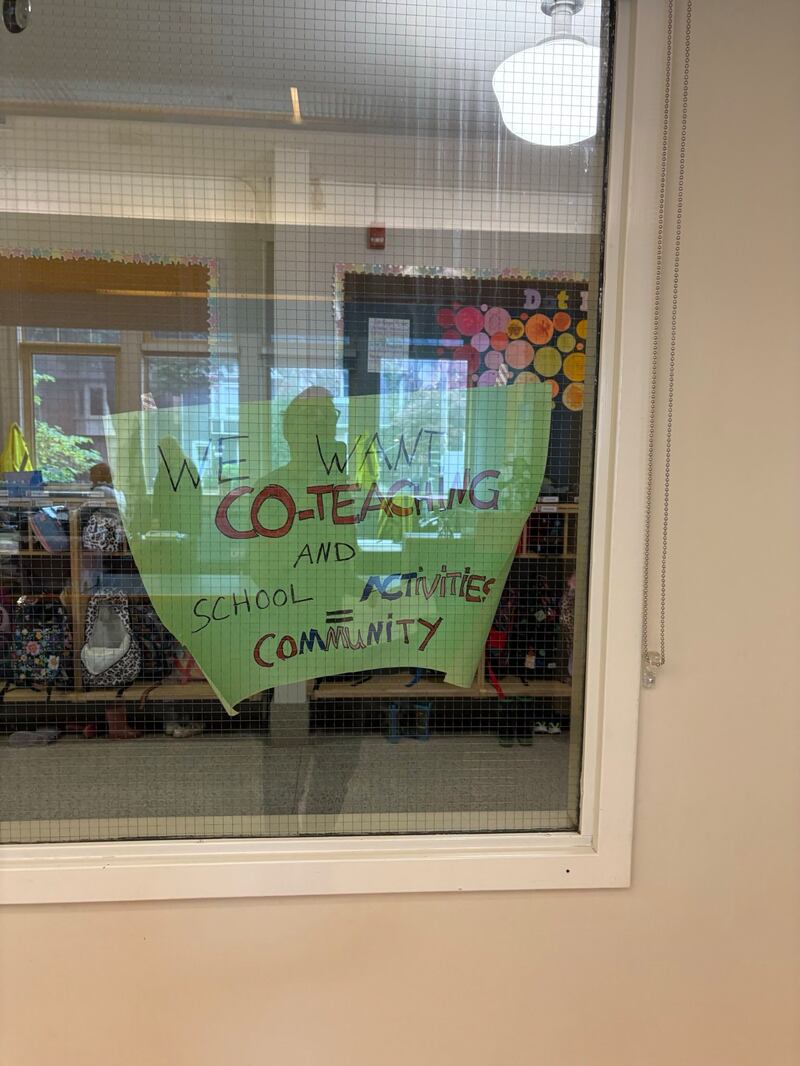
One of the student-led petitions, obtained by CTV News Toronto, demanded a return to the rotary model and the restoration of extracurriculars—like the school’s leadership program, and cross-country and football teams— which it said were initially put on hold due to the change. The TDSB said extra-curricular activities resumed Monday.
“This change would be a huge upset to the Bowmore community and would only make students and parents unhappy. In the end, many students will be separated, and it won’t affect just our classes, but everyone else’s,” the petition reads. “We were happy without this change, so why try to fix what hasn’t been broken?”
A week later, on Sept. 19, the school sent another email out to parents regarding their decision, which now highlighted student safety as one of the three key priorities for this change—a factor that was not illustrated outright in their previous messaging about their rationale.
In this email, obtained by CTV News Toronto, the school principal said their analysis of “Safe and Caring Schools incident reports indicated that incidents of student safety increased during frequent transitions” between classrooms, adding the core model would strengthen classroom stability and provide safer learning conditions for Bowmore’s students.
“To me, it felt like they didn’t have a leg to stand on and they were trying to hit parents with issues that are, of course, going to be more resonant,” Engels said. “That, I don’t think, gave anyone confidence that this is a real issue.”
Another student-led petition noted how “easy” it is for them to switch between classes.
“You just grab your stuff and go next door,” the letter, written by the Grade 7 French Immersion class, reads.
“Kids are really upset. We don’t understand why this has to happen when no one is agreeing with it and everything seemed to be working great the way it was.”
Boffa said it feels like parents have been getting “inconsistent” reasoning from the school since they’ve all voiced their concerns about these changes.
“We’ve tried to put forward solutions of, ‘Hey, well, why don’t the teachers change classes instead of the students and then you have your solution? It’s a win-win.’ But it just is not being listened to,” Boffa said. “To hear us out and partner with us, instead of just kind of dictating and shutting us out, is really what we want.”
The parents, at minimum, want to have a community meeting with the school about this shifting rationale to get some transparency from the school about why this change was made, though ultimately they want their children to go back to the rotary model.
“I just wish the school would take responsible use of the good resources that they have, including these fine teachers who have the specialized knowledge and use them to provide that good, high-quality level of education that our kids deserve,” Boffa said. “Our children deserve good schooling in preparation for high school, that’s what they deserve.”

