A supervised consumption site in Toronto’s west end has lost its provincial funding and will be closing its doors within 30 days.
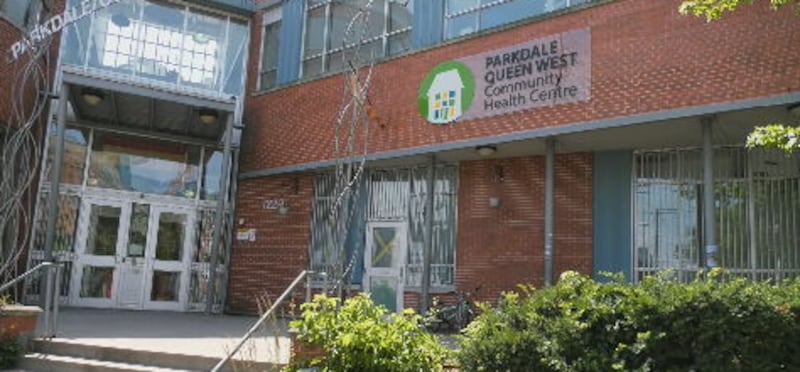
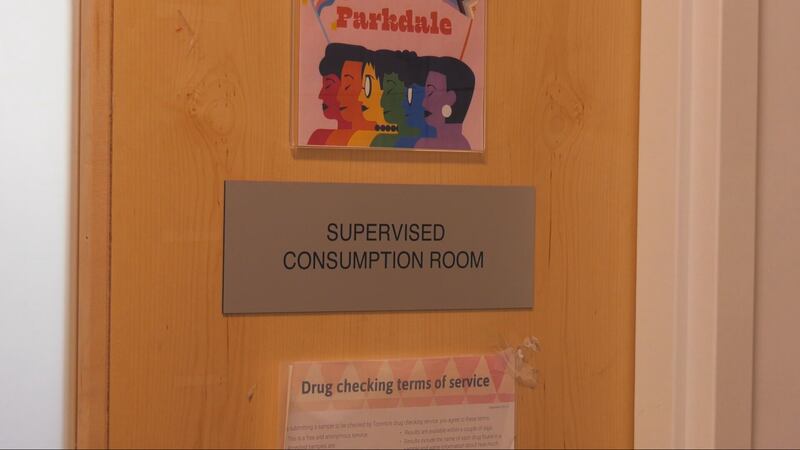
The program, known as a Consumption and Treatment Service (CTS), is located in Parkdale at 1229 Queen St. W., just west of Dufferin Street.
Operated by the Parkdale Queen West Community Health Centre (PQWCHC), this site has operated for more than seven years and served more than 900 unique clients in 2024 alone. It is the only service in the west end of the city providing supervised drug consumption.
Angela Robertson, PQWCHC’s executive director, said they’re “devastated” by this news, adding that staff have shed “lots of tears” since they were notified by the province last Thursday.
The non-profit said the provincial government cited its goal of developing a system of care that “prioritizes community safety” as the reason for terminating the funding.
The $1.150 million PQWCHC receives annually for this CTS site will end on Nov. 22, Robertson said, adding discussions are now underway to possibly transfer those funds to treatment and recovery services until the fiscal year ends on March 31.
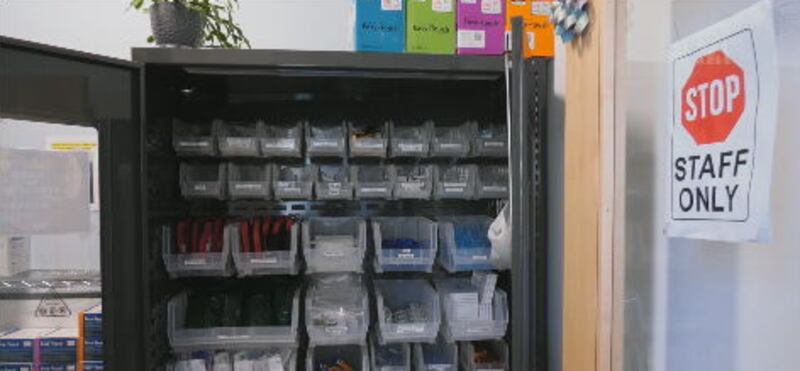
And while PQWCHC has a federal exemption allowing it to operate supervised consumption services until 2028, trying to scramble to raise the funds needed to run the Parkdale SCS site independently is an insurmountable challenge, she told CP24 on Monday afternoon.
“We don’t have the ability to fundraise a million dollars overnight,” Robertson said, adding they’re also unclear at this point what kind of conditions the provincial and federal governments will impose, making it impossible for PQWCHC to operate such a service on their own.
She said the province’s decision is short sighted.
“(It) does not make drug use disappear — it simply forces people back into parks, public washrooms, shelters and sidewalks, with nowhere to safely use drugs and nowhere to dispose of drug use equipment,” Robertson said in an Oct. 27 news release.
“We know that harm reduction services are often a gateway to long-term recovery. Without them, some of our most vulnerable will be pushed into greater danger, and the very issues that concern our neighbours — overdoses, discarded equipment, and public drug use — will increase, not decline.”
New law saw 10 SCS sites close in Ontario
The Parkdale supervised consumption site is one of only a handful of remaining provincially funded CTS locations in the province.
Earlier this year, four other supervised consumption services in Toronto were forced to close amid new provincial legislation that banned them from operating within 200 metres of a school or childcare centre. One of those sites was PQWCHC’s downtown location at 168 Bathurst St.
A fifth Toronto SCS program, Kensington Market Overdose Prevention Site operated by The Neighbourhood Group and funded by donations, remains open pending the outcome of an injunction that has temporarily allowed SCSs across Ontario slated for closure to continue operating.
In total, 10 such sites in Ontario were closed under the provisions of the Community Care and Recovery Act.
In place of SCSs, the provincial government is shifting to a more abstinence-based model and is investing nearly $550 million to open 28 new Homelessness and Addiction Recovery Treatment (HART) hubs across Ontario.
HART hubs not enough, says PQWCHC
Robertson added that while her organization supports the province’s plan to develop HART Hubs, they do not replace or “justify abandoning” community-based harm reduction and supervised consumption services “where people actually live.”
“We need both, along with the supportive housing and wrap-around care that the government itself says is required. Closing a life-saving service without offering an alternative may initially satisfy those who see it as a problem, but the impact of this decision will cost lives, heighten community tensions, and deepen the inequities our province is already struggling to contain,” she said.
Jones calls hubs a ‘pathway to treatment’
Speaking with reporters following an unrelated news conference on Monday morning, Ontario Minister of Health Sylvia Jones said the province wants to “offer people pathways to treatment, pathways out of addictions.”
“And so, the money that was being spent at a consumption site, essentially ensuring that people continue to use deadly drugs is actually being transferred to a HART hub that’s going to give people hope and a pathway out,” she said.
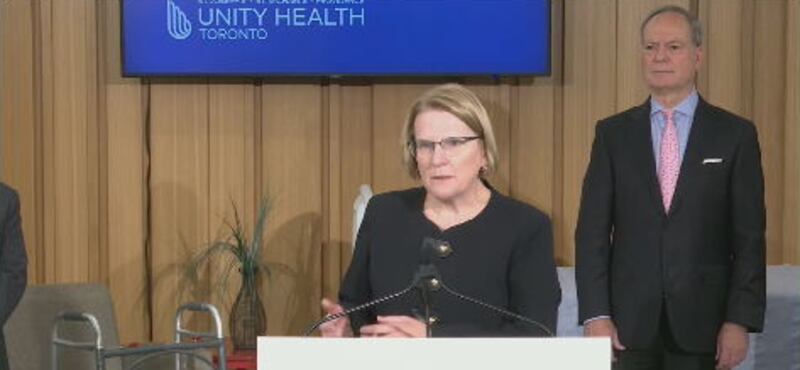
In an email to CP24, Jones’ press secretary Ema Popovic said the decision to terminate funding for the Parkdale SCS comes “in response to concerns about increased crime impacting public safety, including an over 50 per cent increase in break-and-enters.”
This data, it should be noted, is in reference to break-and-enters recorded by Toronto Police Service and is based on approximately a one-mile radius around PQWCHC.
Popovic also confirmed that this annual funding that is being cut will be “transferred to operate treatment and recovery programs.”
“Our government is taking action to expand mental health and addictions services, giving more people pathways to break the tragic cycle of addiction,” she said, pointing to the province’s $550 million investment HART hubs in addition to “new, comprehensive mental health and addiction support.”
“Since HART Hubs opened on April 1st, 2025, data from the Chief Coroner has shown a 41 per cent decrease in opioid-related deaths. Calls for overdoses to the Central Ambulance Communication Centre have also decreased by 50 per cent, compared to the same period last year.”
To date, 14 HART hubs have opened across Ontario, including four in Toronto, which transitioned from supervised consumption sites.
Advocates denounce decision
The Harm Reduction Advocacy Collective and Toronto Overdose Prevention Society, which set up and operate Toronto’s first unsanctioned overdose prevention site at Moss Park in 2017, are denouncing the province’s decision, saying it is “part of a continuing and concerted attack on supervised consumption sites and harm reduction services across Ontario by the Ford government.”
“It is now clear that the Ford Government intends to slowly close all supervised consumption sites in the province, despite clear evidence that these sites save lives and are not associated with crime. We demand that the Ford government reverse this deadly decision, and restore funding to these lifesaving services immediately,” they said in a joint statement, adding the provincial government’s attempt to close this site will have “profoundly negative repercussions on the Parkdale community.”
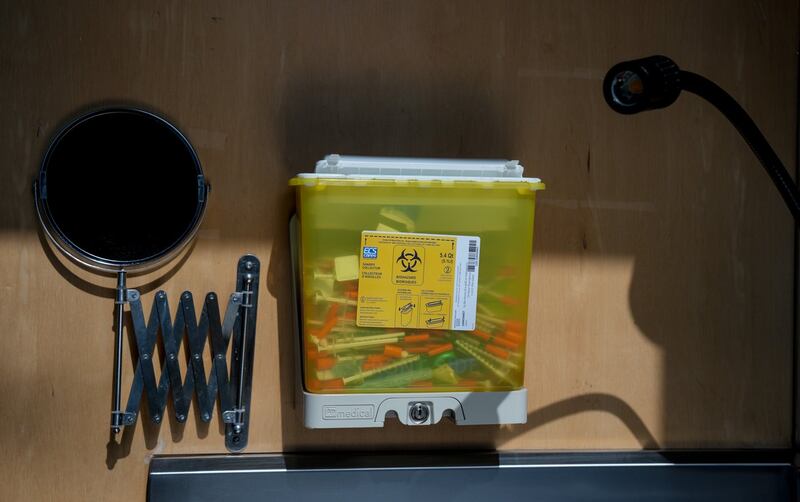
“Between March 2020 and May 2024, Parkdale SCS saw 14,409 visits, made 11,678 referrals to outside community services and reversed a total of 819 overdoses, each representing a precious life saved. Parkdale SCS is a pillar of support in the west end Toronto community, offering not only consumption services but reduces public drug use, while also providing much-needed low-barrier health care, pathways to resources and treatment, drug-checking services and a place to discard drug use equipment,” the groups said.
“The removal of Parkdale SCS will be a devastating blow to the community and will put further strain on emergency services, hospital emergency departments, and other surrounding community services that are already operating on dwindling budgets and with high need.”
HIV Legal Network ‘horrified’ by news
The HIV Legal Network is also condemning the government for pulling the funding for the Parkdale site, saying they’re “horrified” by this news.
“People will die or suffer preventable injuries because of this decision. The government knows well that it is trampling on the health and human rights of its own constituents,” it said in a release.
The network went on to say that the government knew closing SCSs (earlier this year) would “put immense pressure” on the remaining ones, “a reality which has come to fruition over the past six months.”
“The government is now using this pressure that they knowingly created to justify dismantling additional life-saving services in the province by deploying their power over social and health services: funding,” it charged, adding that PQWCHC’s CTS will “not be the last site to be targeted in this way if this decision stands.”
“They already used it to limit access to needle and syringe programs despite more than three decades of experience proving that such programs prevent HIV and hepatitis C transmission. It is unjustifiable to force sites to privately fundraise to stay open. Health care is the province’s responsibility, and Canada’s highest court has recognized that SCS are health care that saves lives.”
The HIV Legal Network is demanding that Parkdale’s CTS remain open and that the Community Care and Recovery Act be repealed.
“We demand that the Government of Ontario safeguard and protect the health and lives of all Ontarians at a times when the province is experiencing preventable toxic drug deaths and injury alongside a crisis of homelessness,” it said.

