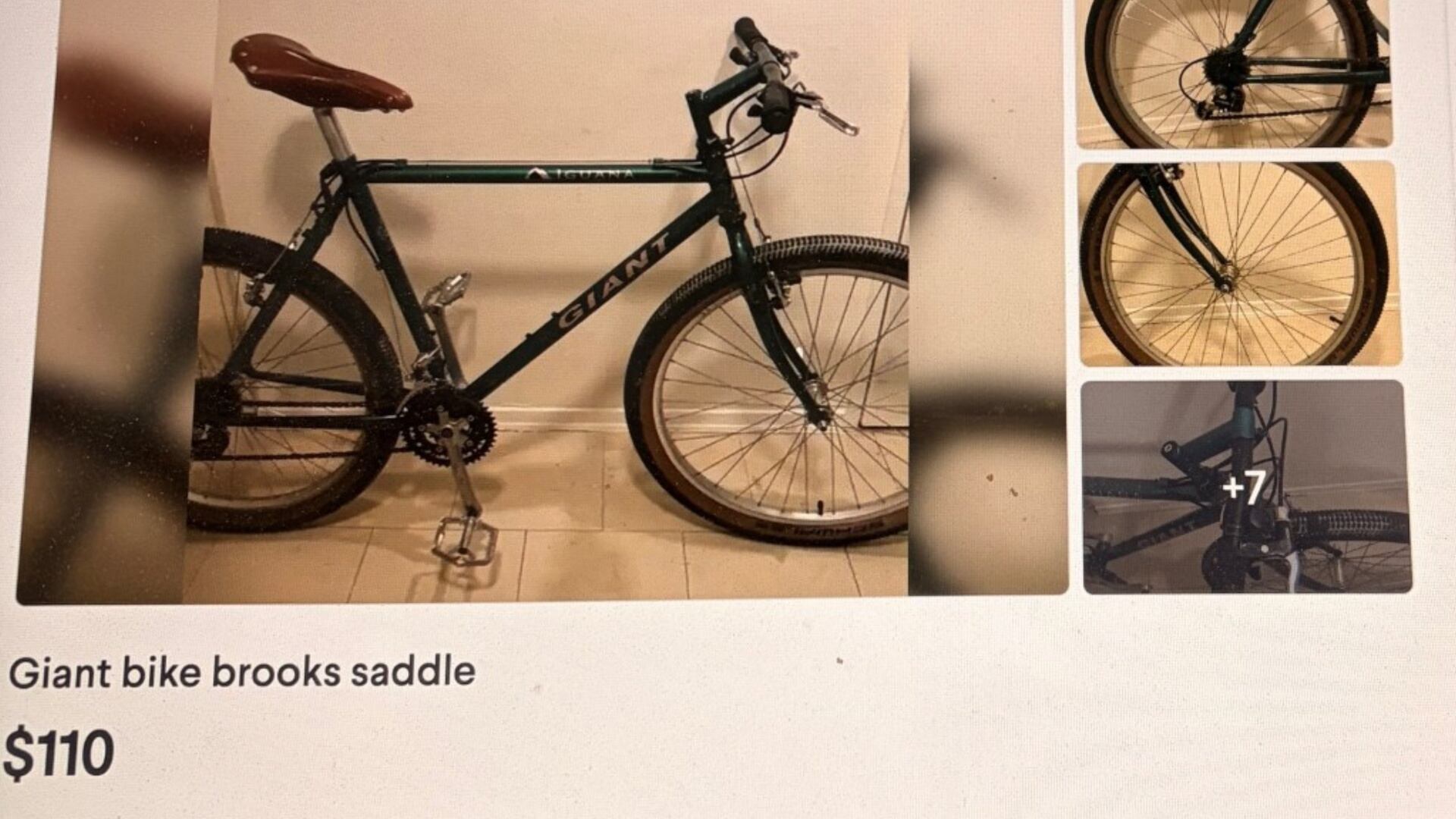
A woman recently managed to get her stolen bike back after it was listed on Kijiji within days of it being taken from the University of Toronto campus, but police and cycling advocates say they would not recommend taking matters into your own hands, as tempting as it may be.
Liz Sully, 38, said she parked her bicycle at Bloor Street and Spadina Avenue, close to Spadina Station, on Nov. 21.
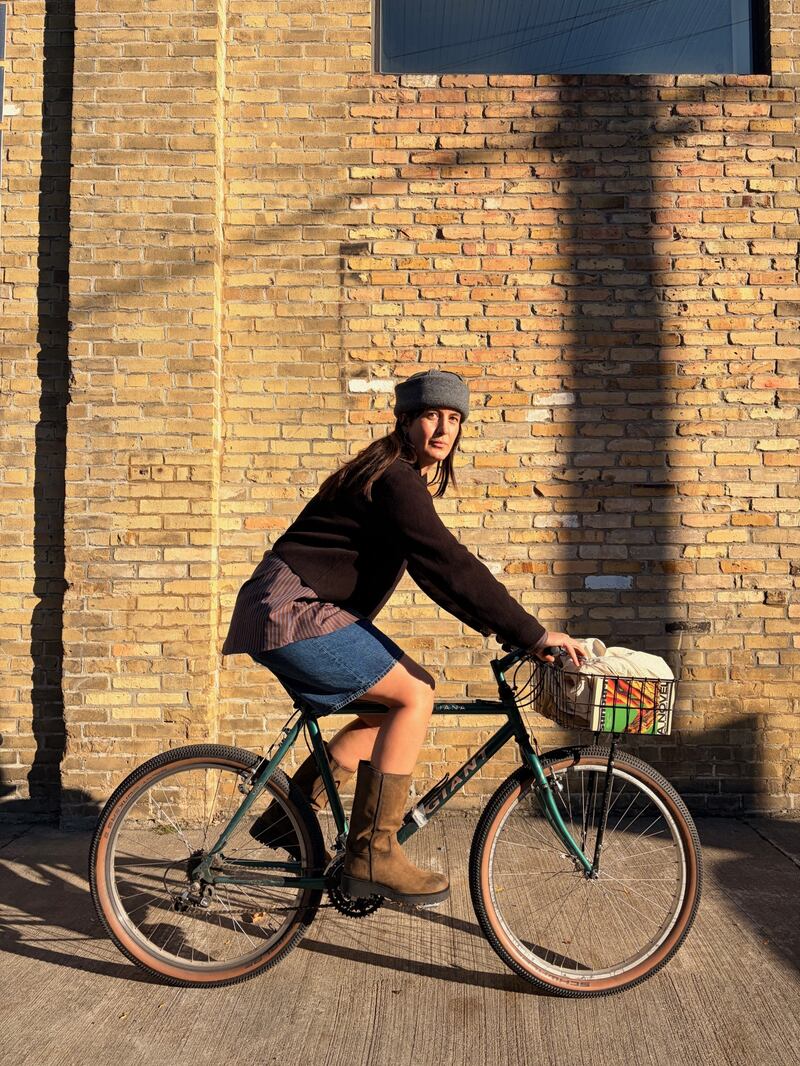
Sully uses the distinctive teal Giant Iguana bicycle as her primary mode of transportation due to a tendency to suffer from motion sickness on public transit.
But when she walked back to where her bike was parked, Sully said she saw her lock had been sawed off and the bike was gone.
“I was bummed and just sort of slowly walked myself home in like a melancholic state,” Sully told CTV News Toronto in an interview Wednesday. “There’s not a lot you can do.”
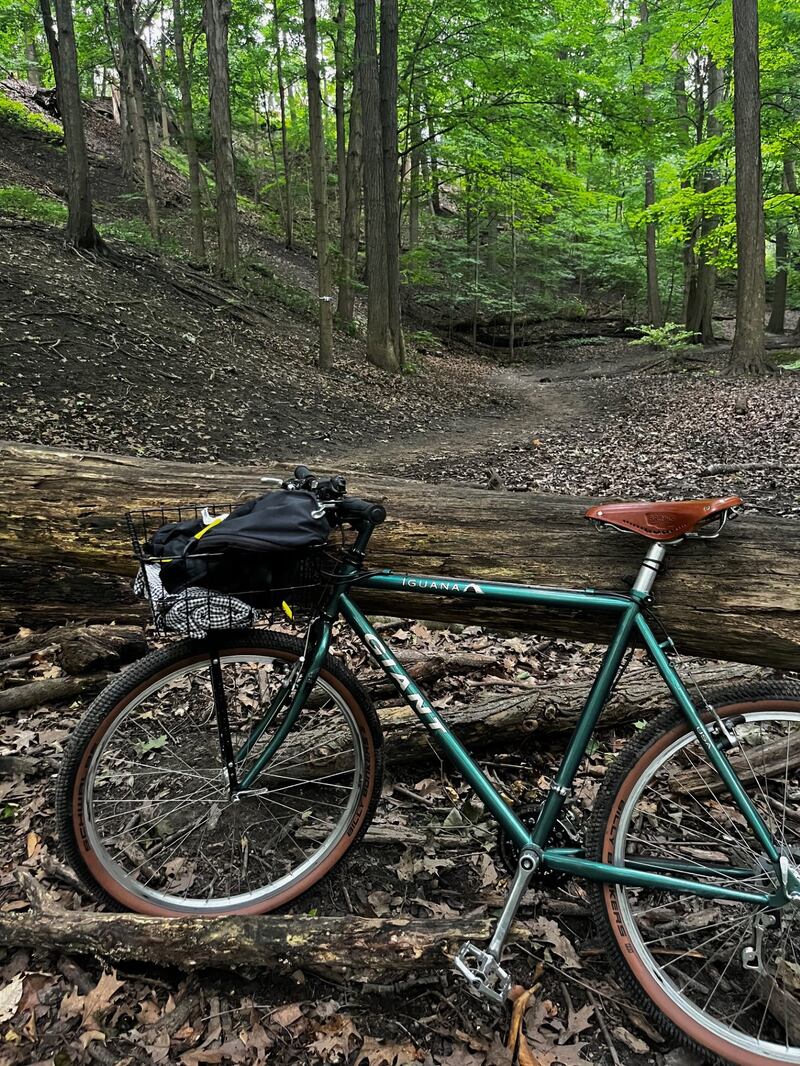
Except for posting on social media, asking for local cyclists to keep on the lookout.
“I know it’s a commodity and an inanimate object but … it’s a really reliable mode of transportation in the city,” Sully said. “I think like a bike to a cyclist is like a horse to a cowboy, or something. There’s a personal bond.”
Sully poured through Facebook Marketplace and Kijiji listings in the days that followed, and during her lunch hour on Monday, she noticed her bike up for sale on Kijiji for around $110. The price was a steal, as the cost of her bike’s saddle alone costs around $200.
“I couldn’t believe how odd my luck was, because it seems pretty foolish to try to sell it so close to when you just stolen it,” Sully said.
After mulling over what her next steps should be, Sully contacted the seller, pretending to be naïve about the bike and eventually arranged to meet with him at a gas station located at Jarvis and Wellesley streets.
When she met with the seller, Sully said she posed as a potential buyer and asked him a couple of questions, including if she could take the bike for a test ride.
When he agreed that she could, Sully hopped on the bike and didn’t look back.
“I jumped on the bike, and I rode it away,” she said. “I sort of got a safe distance that I felt I had gotten out of his range and messaged him, said, ‘You’ve stolen my bike and I’ve got it back.’”
Not an isolated detour, but a stop along a repeating circuit
Sully’s story is just another in a line of incidents in which cyclists have scoured online marketplaces for their stolen bikes.
Michael Longfield, executive director of Cycle Toronto, said it was unsurprising to hear of a cyclist taking matters into their own hands to retrieve their bike, noting how a couple of his friends had recently done the same thing when one of their bikes were stolen.
Though he doesn’t recommend the approach, Longfield said he can understand where cyclists like Sully are coming from.
“I do think a lot of it comes down with feelings of frustration and hopelessness around how the police sort of treat these issues or concerns, or even just people having concerns about approaching the police in the first place,” Longfield said.
Data from Toronto police’s public safety data portal reveals there have been a total of 2,062 of reported bicycle-related thefts in the city this year—a roughly 21 per cent decline from 2024. The highest number of reported cases seen in Toronto in the last decade was in 2018, with 4,004 thefts.
A spokesperson for the Toronto Police Service said officers urge cyclists to immediately report their stolen bike to the authorities.
“If you find it listed for sale on an online marketplace, you should not arrange a meeting with a seller to try to get your bike back,” TPS’ Stephanie Miceli said in a statement. “You should take note of the online ad details and contact the assigned investigator to provide that information for officers to follow up on.”
Sully said she had filed a report with police when her bike was initially stolen but never heard a response. She says she also reported the seller on Kijiji.
CTV News Toronto contacted Kijiji but did not hear a response.
Police confirmed they are investigating but did not provide specifics on what investigative steps have been taken.
Dave Shellnutt is a lawyer who represents injured cyclists across the province. He tells CTV News Toronto he has heard of cyclists paying the seller for their bike back, understanding that the thief is likely down on their luck, without calling the cops, and has also heard of incidents where more aggressive tactics are employed.
“I personally advise against this kind of approach—the ‘gotcha’ approach,” Shellnutt said. “These kinds of situations can really spiral out of control. You may be trying to get your bike back, but end up with a broken jaw, and that’s just not worth it.”
What can be done to curb bike thefts?
Outside of investing in the right bike lock (or two) and parking it so it is not the easiest target for thieves, Longfield says the city could invest in the right infrastructure to provide secure parking and partner with organizations who will work hard to retrieve stolen bikes.
He pointed to 529 Garage, a reporting and recovery network allowing bike owners to register their bikes with identifying details, that has had success in Vancouver, as it had seen a 43 per cent reduction in theft since it was introduced a decade ago. That said, city council approved a motion in 2021 for 529 Garage to meet with the Toronto Police Service to demonstrate how their app “deters and eliminates bike theft.”
Longfield also pointed to how the city passed a motion to create more residential parking spaces for cargo bikes, but said there hasn’t been a lot of inroads on that front.
“From Cycle Toronto’s perspective, we spend a lot of time talking about infrastructure in terms of safe and connected bikeways, but secure bike parking and people feeling there’s accountability when things get stolen is a key part of that is well,” Longfield said. “And I think that’s something that the city is very much collectively failing on right now.”
To completely address the issue, Shellnutt says several things would need to change as it is a deep-rooted systemic issue.
“We can target the root causes of theft and things like that, and that is having access to jobs, unstable housing, rising costs, all this stuff, those are playing into it,” Shellnutt said.
“So, if we’re going to put money into something, it shouldn’t be police programs to get people’s bikes back, it should be programs that help people and not have to resort to criminality.”

