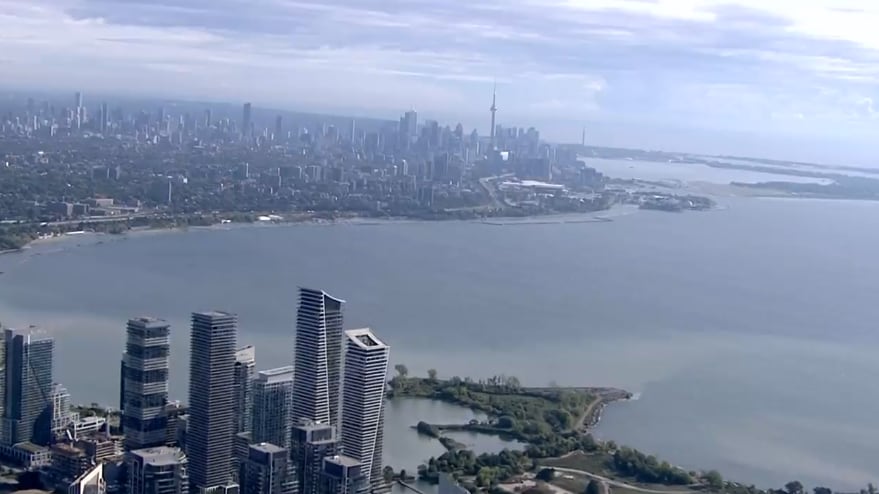
Toronto’s waterfront needs to have a stronger transit and mobility network to fully reach its economic potential and prevent gridlock, a new report says.
The Toronto Region Board of Trade released its report called the Power of Connection on Thursday, stating government investment in connectivity is key to unlocking the waterfront’s full potential.
“Toronto is sitting on valuable economic engine, the waterfront, but people simply can’t move around,” senior director Saad Usmani told CTV News Toronto. “It supports more than 100,000 jobs, attracts 18 million visitors annually, contributes 13 billion dollars to GDP but the basics of mobility infrastructure for that growth just isn’t there.”
“Growth without mobility is just more gridlock and you need a better-connected waterfront to better deliver benefits to businesses, workers, residents and visitors alike.”
Several projects are lined up for the waterfront in Toronto, including the Port Lands initiative, which is projected to deliver 75,000 new homes, 130,000 residents, and 50,000 jobs by 2040. Other developments include Ontario Place redevelopment, a new Science Centre, a Thermea waterpark and wellness centre, an amphitheatre upgrade, and a new marina.

Usmani said that drawing people to the waterfront is only half the challenge, ensuring they can actually get there is just as critical.
“Growth without mobility is gridlock, and gridlock is an economic threat,” Usmani said. “It would mean that the waterfront does not actually see its full potential, that we don’t see the kind of level of visitors that we would like to see come to the waterfront because they can’t get there.”
The report highlights six actions for businesses and all levels of government to improve mobility infrastructure in the area.
Here’s what they are:
Secure funding for Waterfront East Transit
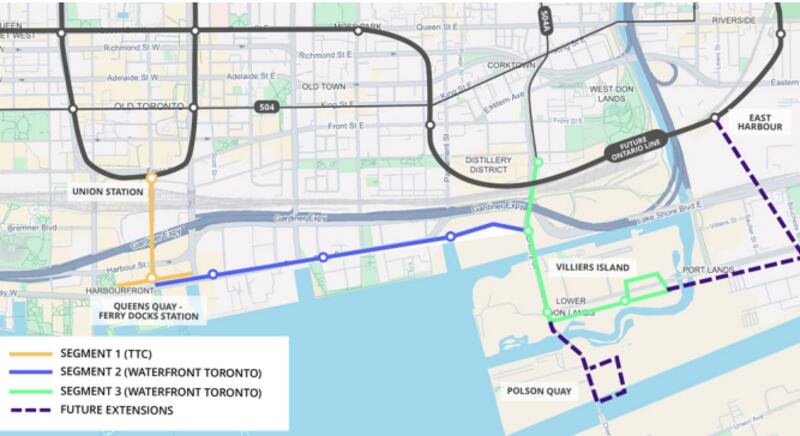
The report states that there needs to be a federal and provincial funding to deliver the Waterfront East transit line to enable rapid population and visitor growth for the easter waterfront.
According to the report, the Waterfront East Transit is a proposed streetcar route that would replace most of the TTC’s 114 bus route, extending across the eastern waterfront and connecting Queens Quay to Ookwemin Minising.
The City of Toronto has formally requested both the provincial and federal governments to provide funding for Waterfront East Transit, the report added.
“What it really needs is the funding to be able to deliver the line and get people to the eastern part of the waterfront,” Usmani said.
Prioritize future transit-priority implementation on Bathurst and Dufferin
The report states that there needs to be prioritization of future implementation plans enhancing transit speeds and connectivity north of Bloor Street West on Bathurst Street and Dufferin Street. It also states that interim, the city needs to focus on transit-priority measures to improve service reliability for FIFA 2026.
While the bus priority lanes on Bathurst and Dufferin streets would be a great benefit to the efficacy of north-south transit connectivity to the western waterfront, the report notes future transit enhancements north of Bloor Street West will be “crucial for intersecting them with other east-west transit connections.”
“Making these connections to the western waterfront faster, easier, and accessible to a larger portion of the city is vital to ensuring the success of the attractions slated for the waterfront well beyond FIFA,” the report reads.
Enhance connections to key areas of activity
The report says the city needs to establish dedicated transit links that enhance connectivity between major waterfront destinations, including Billy Bishop Airport, and the rest of the waterfront and the city.
“While planned and proposed transit initiatives will help improve connectivity, key nodes of activity including Billy Bishop Airport and major attractions have limited connectivity to the rest of the waterfront,” the report states.
“Future plans must consider enhanced connections to key areas of activity along the waterfront that are currently inadequately serviced by public transit.”
Expand and improve access to the PATH Network
The Power of Connection report says there needs to be cost-sharing frameworks between public entities and private property owners to extend PATH connection east and west along the waterfront, while improving public signage and access at street level.
“The PATH offers a convenient pedestrian access option, being both insulated from the weather and grade-level traffic, providing a pleasant, climate-controlled, safe, and efficient means of walking downtown at any time of year,” the report said.
“It is particularly valuable for its connection to Union Station, allowing pedestrians moving south from Union to bypass the Gardiner safely and quickly.”
Invest in under Gardiner transformation initiatives
The report states there needs to be municipal and provincial capital investments, alongside private partners, to transform the spaces below the Gardiner Expressway into safer, more connected, and welcoming pedestrian cycling corridors.
“People don’t have to dread having to cross the Gardiner because you know you have an easy accessible way to get to the waterfront,” Usmani said.
Enable and scale water-based transit
According to the report, supporting water-based transit is key, including water taxis, sea buses and hovercraft services through regulatory coordination, accommodating infrastructure and innovative partnerships.
The report states that using water transit options along the Toronto waterfront would give travellers an option to bypass “road-bound congestion.”
Usmani said other major cities worldwide have invested and launched water-based mobility systems that have proven successful, including Vancouver’s SeaBus, which carries around 16,000 weekday passengers across Burrard Inlet.
He named the Toronto SeaBus and the Hoverlink Ontario project, which would connect downtown Toronto to the Niagara region in a 30-minute trip, as promising proposals that could really change how people get to the waterfront.
“We need to look at what we could do to support those services through regulatory coordination, infrastructure and also partnerships to actually enable those to come to life,” he said. “It’s about unlocking the water to move from one part of the region to come to another.”

