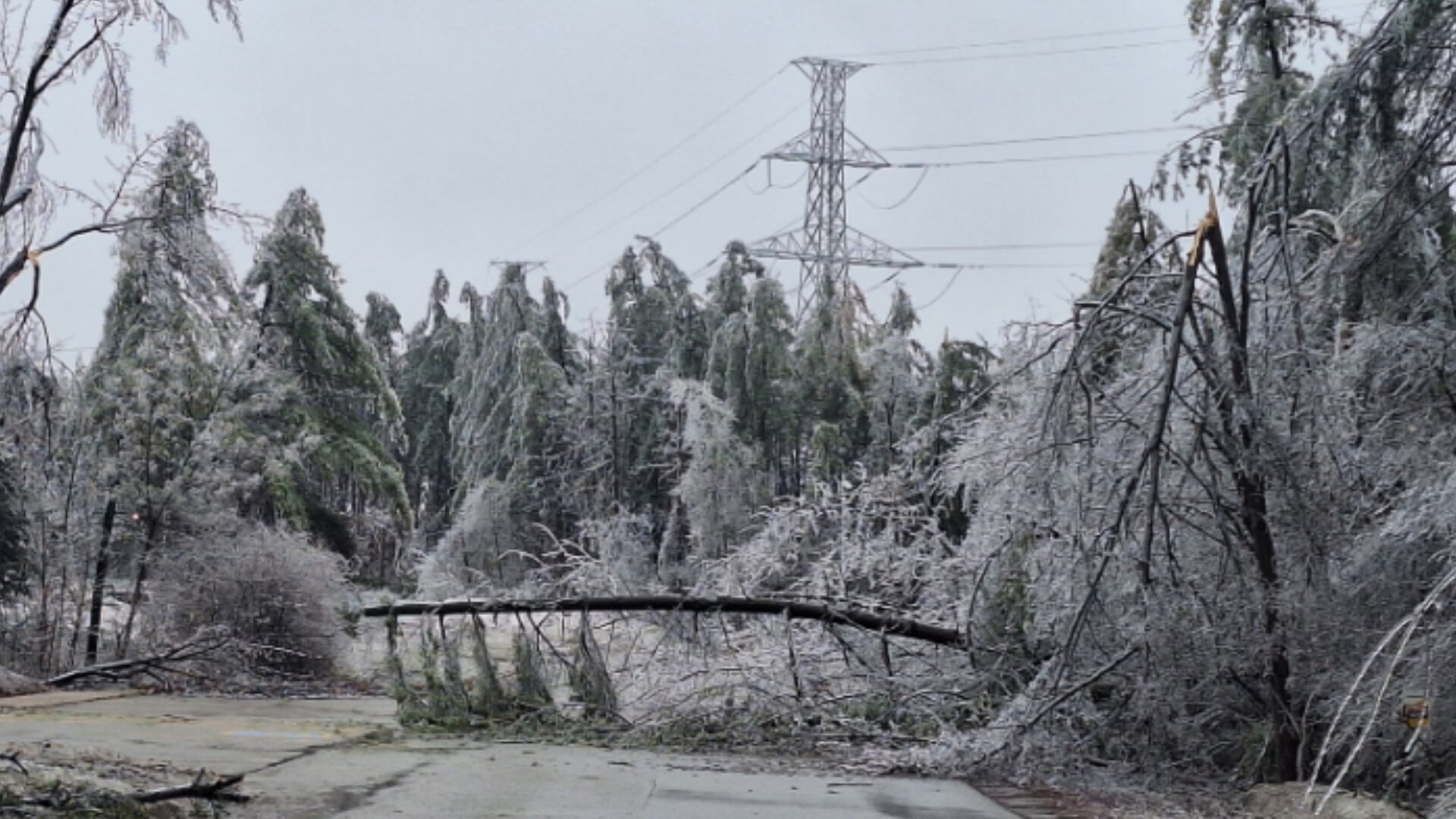
Trees don’t actually explode in the cold, but sometimes, they can sound like they are.
The phenomenon, formally called frost cracks, can happen when there is a sudden drop in temperature.
When the weather abruptly shifts, the quick freeze can impact some trees, causing them to split abruptly in the middle.
“When temperatures drop very quickly, the sap inside of a tree can freeze because frozen sap expands, it puts pressure on the tree from the inside,” Val Deziel, director of restoration ecology and research at Forest Canada, told CTV News Toronto on Friday.
“At the same time, the outer bark cools and contracts faster than the inner wood. This mixture of internal pressure and uneven cooling can cause the trunk to suddenly split.”
Some meteorologists outside of the United States warned Midwesterners to brace themselves for “exploding trees,” but there will likely not be wooden shrapnel flying around as Toronto plunges into a deep freeze this weekend with temperatures that could feel as cold as -33 with the wind chill.
“There are cases where that formation of a crack can be sudden and make noise, you’ll hear a crack,” Sean Thomas, professor in forestry at the University of Toronto, explained.
This can happen more in trees with heart rot, which causes decay at the centre of the trunk. These kinds of trees have a lot of moisture built up in that decaying tissue, according to Thomas.
“The outer part of the tree is basically a tube of live material and in the trees, they’re adapted to low winter temperatures. They’ll extract the water from their woody tissues to prevent this kind of damage, but that inner tissue is dead,” Thomas said.
“It’s very much like a pipe with water in it, and then you can have quite a violent kind of event if that suddenly is freezing up and that the tree ruptures, much like a frozen pipe would.”
Frost cracks are more frequent in deciduous trees, particularly those with thinner barks like birch or maple.
As Ontario braces for extreme cold, Deziel says it’s possible frost crack could happen with trees across the province.
“Certainly, frost cracks can happen anywhere there’s sudden temperature drops like this,” Deziel said. “They can look dramatic (but) a lot of trees survive without intervention. In spring, they often begin to heal naturally.”
While the Ministry of Natural Resources says it doesn’t track or receive reports of “exploding trees,” it adds these trees do not pose a public safety risk as they are not “explosive events.”
Environment Canada issued a yellow warning for Toronto on Friday due to “bitterly cold” conditions.
Outside of a deep chill freezing the whole of the province, CP24 Meteorologist Bill Coulter forecasts around 20 centimetres of snow could fall in Toronto starting Sunday through Monday.

