What started off as a symbolic gesture by Premier Doug Ford to show his displeasure with a whisky company’s decision to move jobs out of Ontario has turned into a parable about the complexity of un-baking a cake when it comes to free trade.
The spat involving Diageo – the U.K.-based corporation that makes Crown Royal whisky – began last summer in Ontario, but ended up spilling over into Manitoba and Quebec.
Months later, Ontario is threatening to pull Crown Royal from LCBO shelves and the war of words continues. Here’s how it happened.
The booze
First introduced in 1939 by then Seagram president Edgar Bronfman to commemorate the royal tour of Canada by King George VI and Queen Elizabeth, Crown Royal quickly became an iconic Canadian brand.
Easily distinguished by the classic regal purple bag with gold stitching, the blended whisky was only made available for sale in the U.S. in 1960.
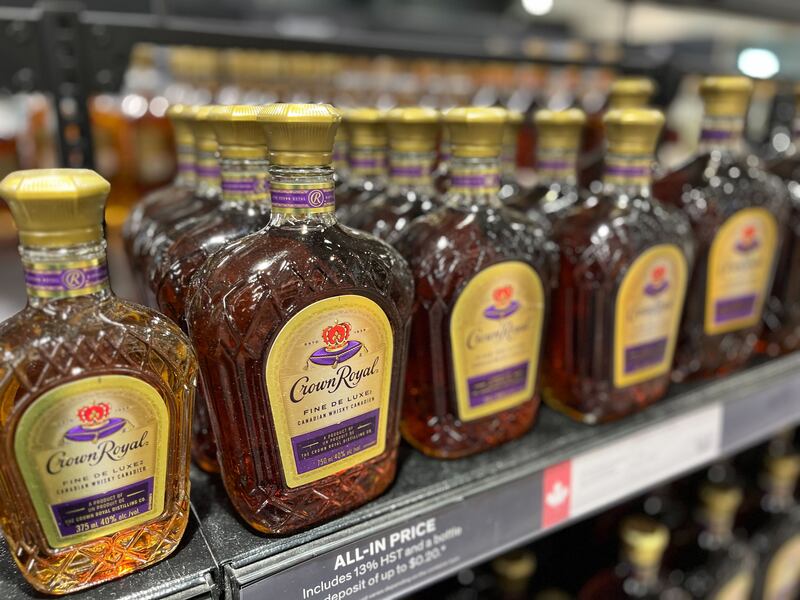
Seagram’s beverage division, including Crown Royal, was sold to Diageo in 2000.
The brand has continued to enjoy a successful shelf life, even being named whisky of the year in 2015.
The axe
Diageo announced back in August that it would be shuttering its Amherstburg, Ont., bottling facility and moving the work to the U.S., affecting around 200 jobs.
The move came amid U.S. President Donald Trump’s tariff threats, though the company maintained it was taking the decision because it was “crucial to improving the efficiency and resiliency of our supply chain network” rather than the tariff threats.
Diageo said the product would continue to be mashed, distilled, and aged in Canada.
The big pour
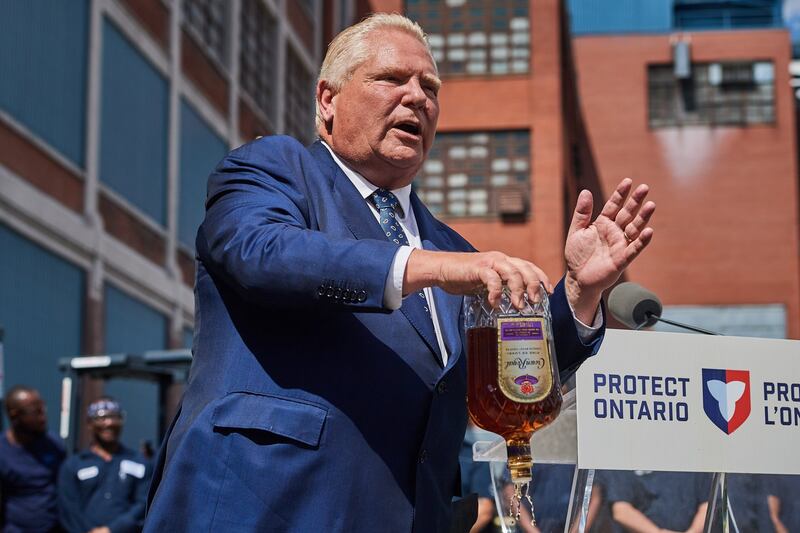
Furious about the move, Ontario Premier Doug Ford made his displeasure known in a fiery diatribe to reporters days later, during which he poured out a bottle of the iconic whisky to let the company know what he thought of the decision.
Ford declared the company was “about as dumb as a bag of hammers for doing this,” pointing out that Diageo does around $740 million worth of business with Ontario each year, making the province their largest North American customer.
He said at the time he’d consider pulling Crown Royal from LCBO shelves, but not before the plant closes in February.
The Manitoba connection
As it turns out, pulling the brand from LCBO shelves in support of Canadian workers is more complicated than expected. While the product was blended and bottled in Amherstburg, Ont., it is still distilled and mashed in Manitoba.
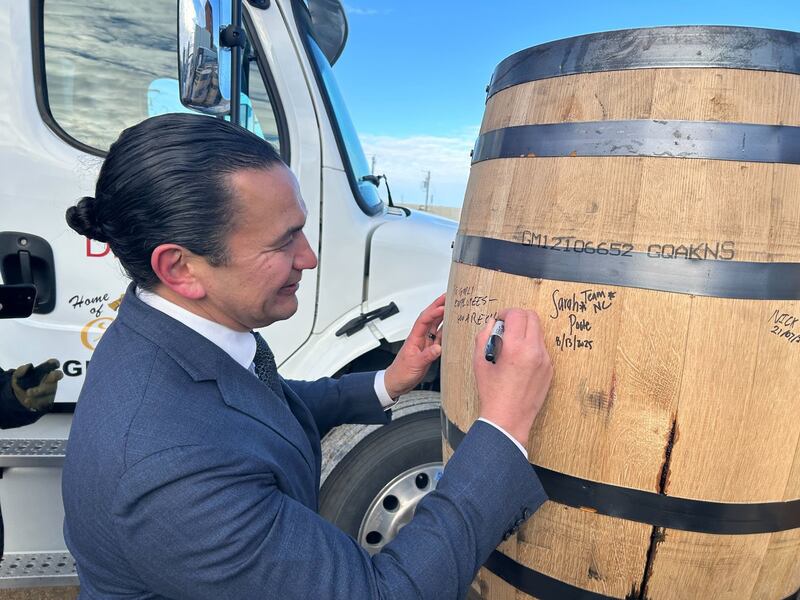
That has led one Manitoba MLA to criticize Ford for “jeopardizing livelihoods” in that province, while Manitoba Premier Wab Kinew has implored Ford not to “shoot ourselves in the foot” to punish Diageo.
“I’m asking you to reconsider because this is about sticking together as Team Canada,” Kinew said in a statement directed to Ford.
Quebec jumps in
There’s a Quebec connection too.
Diageo has said Crown Royal intended for Canadian and non-U.S. markets will still be bottled at its facility in Valleyfield, Que., southwest of Montreal.
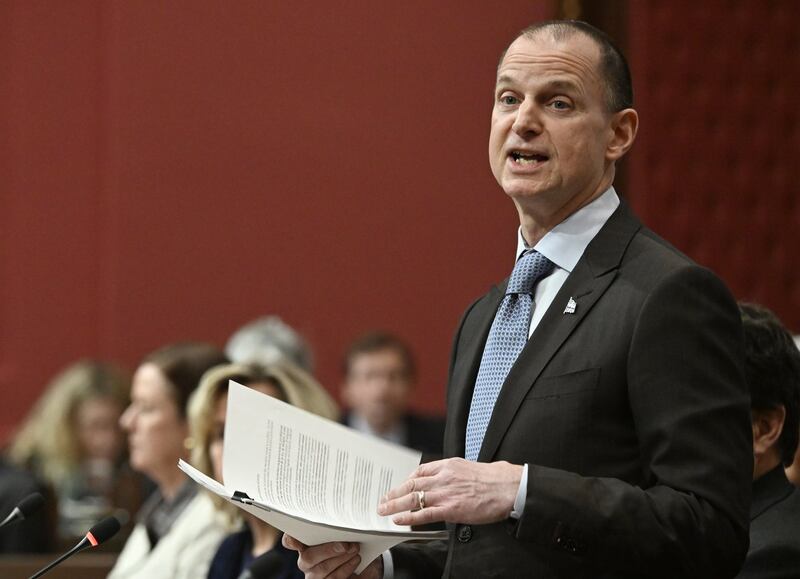
Quebec Finance Minister Eric Girard Recently said in a statement that he is concerned about the impact that a ban on Crown Royal from LCBO shelves could have on Quebec workers.
Ford ‘can’t wait’ for ban but offers opening
Nevertheless, Ford said just weeks ago that he plans to make good on his threat to pull Crown Royal from LCBO shelves and “can’t wait” to do it.
He predicted that while Diageo Maintains some operations in Canada for now, the company will eventually move it all to the U.S. to appease Trump.
He said the province is working on “new opportunities” for the affected workers in Amherstburg, though the union has said many of them have already found new jobs.
However Ford did appear to soften his tone in recent comments to reporters, saying he offered “an olive branch” to Diageo.
“Show me a plan that’s going to replace those jobs, and then we’re good,” Ford said. “But you can’t take jobs out of a small town in Ontario that’s been around for 100 years and say, ‘come and support me.’”
As it stands, Ford has said the province will pull Crown Royal from LCBO shelves in February after the plant closes if the company doesn’t present a plan to keep some labour in Ontario.
“We have other great whisky manufacturers that are employing people right here in Ontario. Let’s focus and support them.”

