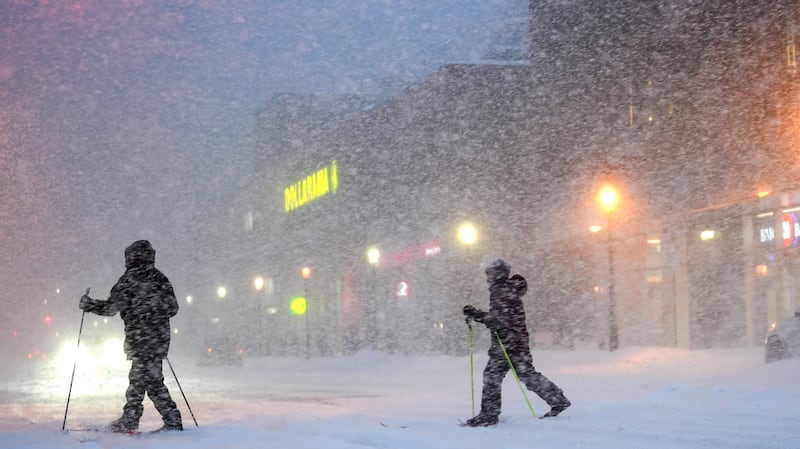
A massive winter storm on Sunday set a new single-day record for snowfall at Pearson airport.
CP24 Meteorologist Bill Coulter says that the 46 centimetres of snow recorded at the airport eclipsed the previous single-day record of 36.8 centimetres which dated back to January 23, 1966.
Environment Canada says that there has now been 88.2 centimetres of snowfall recorded at Pearson this month, which represents “the snowiest January and snowiest month since records began in 1937.”
The previous record for Jan. 25 specifically was only 13.8 cetimetres of snow accumulation at Pearson (2023).
Coulter said that “Toronto really got the brunt of this one,” in part due to some lake enhancement snow that drove up snowfall totals downtown, where an estimated 56 centimetres of snow accumulated throughout the day on Sunday.
He said that without the lake enhancement, Toronto might have only seen 15 to 20 centimetres of snowfall.
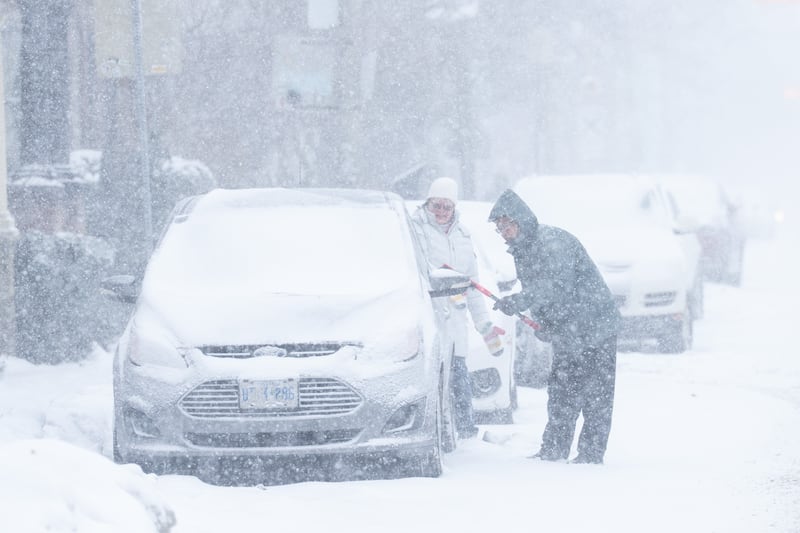
“The ingredients were there. The cold arctic air sliding down from the arctic and interacting with very warm moist air over the tropics and that spun up a monster of a system, impacting millions of people stateside. We got the northern fringes (of that) so not only did we get system snow but we got a cold easterly wind which drew moisture off the lake and caused lake enhancement and snow squalls that sat right over Toronto,” Coulter said. “What a winter wallop for Toronto.”
Snow fell throughout the day on Sunday and, at one point, was accumulating at a rate of eight or nine centimetres per hour closer to Lake Ontario, Coulter said.
He said that one of the primary factors in the volume of snowfall was the frigid cold temperatures, which allowed the same amount of moisture to “almost double up” the volume of snow that the city might have received with more mild conditions.
“These storm systems kind of go to the north of us and allow us into a warm sector and then the snow becomes very compact,and everybody maybe enjoys the warm up and the system pulls away and it cools off again. This one, though, we were never in the warm sector. We were always on the north edge of it and we already had established some pretty cold air which set the foundation,” Coulter said. “The temperature started the day yesterday at – 9 C and hung out at about -12 C It wasn’t packing snow. It was very light. Because the same moisture (in extreme cold) can almost double up your values, the liquid to snow ratio. It just makes for so much snow.”