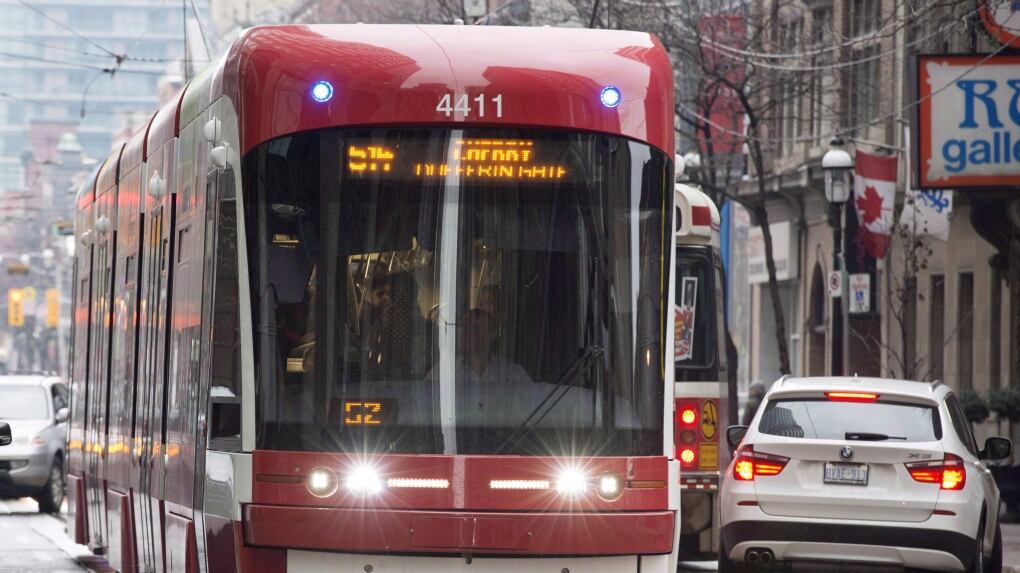
A presentation set to be delivered before the TTC Board today argues that revitalizing surface transit to make it attractive to riders would involve giving vehicles “real priority” by extending green lights to get them through intersections, cutting some stops, and modernizing antiquated technology that slows down vehicles.
The presentation, prepared by Jonathan English at consulting firm Infrastory Insights, points to “decades of ridership decline” on Toronto’s streetcar network and suggests a suite of measures that could bolster the ailing service.
English, the former policy director at the Toronto Region Board of Trade, approached the city to give the presentation.
“This is a really exciting moment,” he told CP24.com by phone. “As much as Finch – there’s some disappointing elements of it now that it’s opened so far – the recognition of those problems is putting a spotlight on the much more long-standing, and I would argue bigger problems with the other parts of the surface network, especially the streetcars downtown.”
According to English, there are several operational problems that have kept the city’s streetcars from performing as well as they were intended to over the years, including a lack of signal priority, too many stops, and using outdated technology that slows down vehicles.
He points out the streetcar right-of-way on the Queensway was designed for speeds of around 80 km/h, but current speed limits are far below design capability.
He says a “comprehensive review” of speed limits for light rail vehicles and streetcars is needed.
He also points out that modern switch technology would allow vehicles to go through intersections more quickly, instead of forcing drivers to come to a complete stop to look out the windshield to check that the switches are properly aligned.

“Single-point switches are a technology that kind of went out of favour in most places between 60 and 80 years ago,” English says, adding other cities have for decades used electronic systems that turn on a light in the operator’s cab if the switches are in the proper position.
Keeping the old technology also adds to upkeep cost for the streetcar network, as the old parts have to be custom-ordered when an intersection is being redone.
Other recommendations include modernizing streetcar control systems, updating TTC standards, aligning streetcars with LRT practice, and not installing obsolete infrastructure during rebuilds.
“Real priority” for transit vehicles, English argues, would include extending green lights up to 30 seconds to let them pass through intersections, removing some stops, adjusting pedestrian crossing timing, two-stage crossings, and eliminating left-turns “where alternatives” exist.
Poor on-time performance
Available data indicates there is indeed room for improvement when it comes to the performance of the TTC’s surface routes.
The city’s streetcar fleet operates at an on-time performance of just 55 per cent, according to the latest metrics published by the TTC. Customer satisfaction with streetcars sits at about 58 per cent.
Bus service has an on-time performance of 73 per cent, while customer satisfaction with bus service sits at 70 per cent.
Those numbers measure performance through the end of November. Performance metrics for the new Finch West LRT have not yet been published, though the line has been plagued by slow-downs and closures since its opening in December.
Some of those problems have been blamed on poor performance in winter weather, but a lack of transit signal prioritization has also been cited as an issue slowing down the line.
The TTC has said it is currently running a pilot project on signal prioritization on Spadina Avenue and will look at implementing those take-aways on Finch and Eglinton once it is complete, though TTC Chair Jamaal Myers said last week that likely won’t happen before May.
Full adoption required to be effective
English argues piecemeal adoption of some recommendations would limit the effectiveness of the plan since each element is “mutually reinforcing.”
Successful implementation would mean greater frequency, speed and reliability, the report states, as well as costs savings by reducing the need for shuttle buses.
It calls the surface revitalization plan “the highest ROI (Return On Investment) transit investment possible,” though it doesn’t include any figures on what the plan would costs to implement.
However English says “we’re not talking about billions of dollars.”
While more detailed study would be needed to determine proper costs, he estimates the entire surface fleet could be modernized for less than the cost of building a few kiolmetres of LRT.
“Some of these are new ideas, some of these are old ideas that we just need to actually move forward with,” English says.
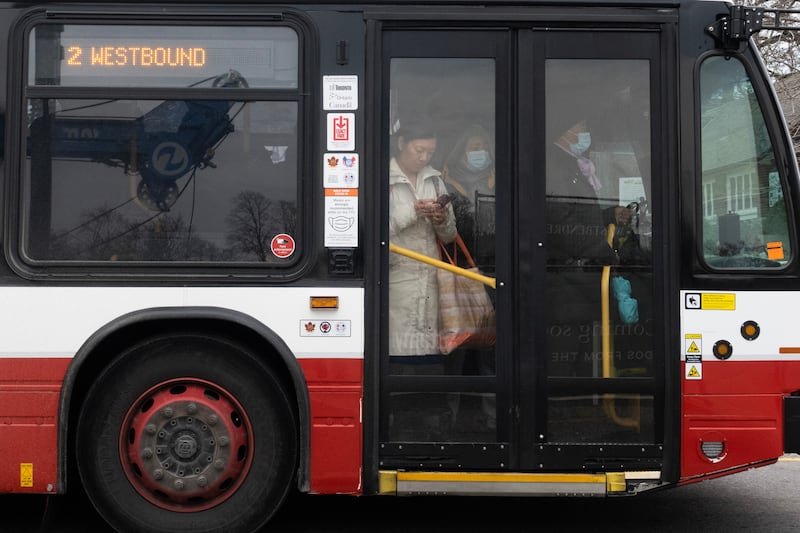
English also notes the plan could be applied to buses as well.
The TTC board is set to hear more details about the proposals when it meets on Tuesday.

