The number of people who experienced a drug overdose in Toronto this past January is up nearly 50 per cent over the same time last year, new city data has found.
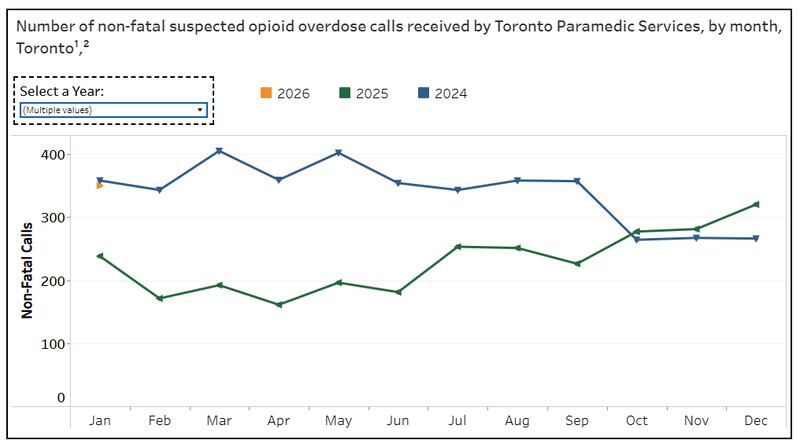
According to the recently updated Toronto Overdose Information System, Toronto Paramedic Services responded to 350 calls for suspected non-fatal opioid overdoses in January 2026.
That’s 47 per cent more than they attended in January 2025 when paramedics received 239 such calls.
The number of non-fatal overdose calls to medics began to climb in the city last October, when there were 277, followed by 281 in November, and 320 in December.
In 2024, there were 264 such calls in October, 267 in November, and 266 in December.
Fatal drug overdoses in the city from January 2025 and January 2026 were both at 12.
The city’s dashboard is reporting a total of 126 overdose deaths in the city in 2025, compared to the previous year, which saw 226.
The office of the Chief Coroner, meanwhile, has data available for the first nine months of 2025 and is so far reporting 189 confirmed and probable opioid toxicity death in Toronto during that time frame.
‘We said this was going to happen’
The Toronto Overdose Prevention Society (TOPS), a grassroots group of people who use drugs along with allies and healthcare workers that organizes and supports direct action to raise awareness, shared this troubling data in a post on X on Monday, saying it predicted this outcome.
“
We said this was going to happen when they closed supervised consumption services and it has been like this for a decade now. The toxic drug supply is ever more toxic with police issuing a warning,” TOPS wrote.
“Ideological opposition should not be a reason to dismantle pragmatic approaches.”

The group, which opened Toronto’s first supervised consumption site at Moss Park in the summer of 2017, has been speaking out about the detrimental effects, notably overdoses, of the Community Care of Recovery Act.
This legislation, which was passed in December 2024 without committee review, input from affected communities, or debate, makes it illegal to operate a supervised consumption site within 200 metres of a school or daycare across Ontario. So far, four such programs have shut down in Toronto.
Among other things, it also prohibits municipalities or organizations from opening new sites or seeking federal money for safe supply programs, without the province’s approval.
This Act was introduced in the fall of 2024 following a review of SCSs across Ontario after an innocent bystander was fatally shot in July 2023 during a fight between two rival drug dealers near the South Riverdale Community Health Centre, at Queen Street East and Carlaw Avenue.
The Ford government has now shifted to a more abstinence-based model and is investing $530 million to open 28 new Homelessness and Addiction Recovery Treatment hubs across Ontario, with the goal of “building a system of care focused on connecting people to treatment, support, and recovery.”
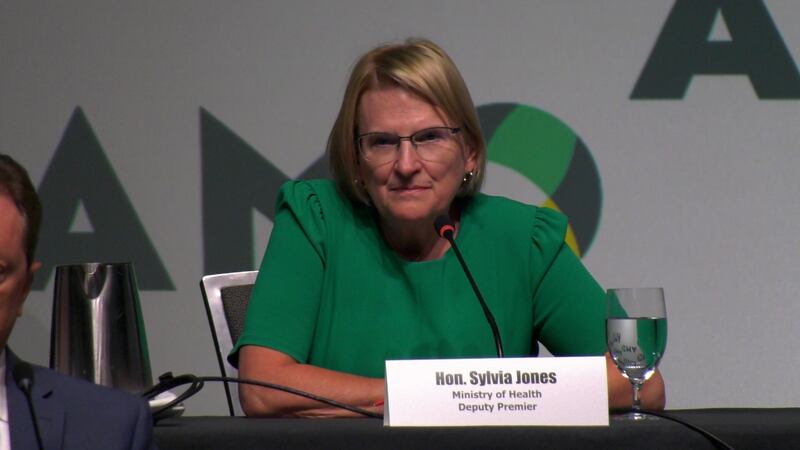
“Hubs provide people facing mental health challenges with 24/7 support to connect them with treatment and recovery options, while giving them support to break the cycle of addiction,” Satnam Grewal, the spokesperson for Ontario’s Minister of Health Sylvia Jones, wrote in an email to CP24.
“HART Hubs will also add supportive housing units, in addition to addiction recovery and treatment beds, helping thousands of people each year transition to more stable long-term housing.”
Grewal noted that since HART Hubs opened, nearly 40,000 client interactions have been served, adding data from the Chief Coroner has shown a 41 per cent decrease in opioid-related deaths.
“Calls for overdoses to the Central Ambulance Communication Centre have also decreased by 50 per cent, compared to the same period last year,” he noted.
ODs driven by toxic drug supply: TPH
Dr. Shovita Padhi, an associate medical officer of health at Toronto Public Health, said this crisis “continues to be driven largely by the toxic, unregulated drug supply, which contains varying concentrations of fentanyl and other unpredictable and hazardous substances.”
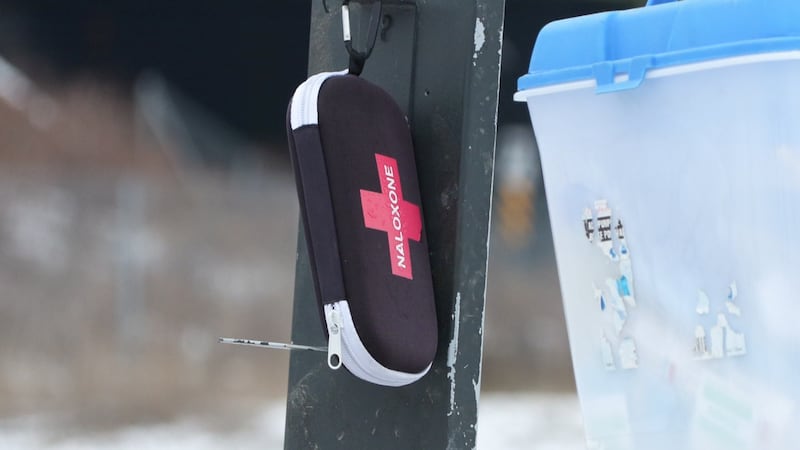
“We continue to work with partners across health, housing, and community sectors on prevention, harm reduction, treatment access, and pathways to housing and recovery. We encourage people who use drugs not to use alone, to carry naloxone, and to call 911 in the event of an overdose,” the associate medical officer of health said in a written statement provided to CP24.
Padhi said the health unit monitors overdose trends and is “committed to providing timely, accurate information about what we are seeing in the community.”
“Month-to-month fluctuations can occur, and this data reflects only incidents where 911 was called, and paramedics suspected an opioid overdose,” she wrote.
“While opioid toxicity deaths declined in 2024 and through much of 2025 based on preliminary data from the Office of the Chief Coroner of Ontario, deaths in 2024 remained 51 per cent higher than the pre-pandemic average.”
Correction
A previous version of this story stated that overdoses in Toronto had doubled in January over the same time last year. It has been corrected to reflect that overdoses increased 47 per cent during that period.

