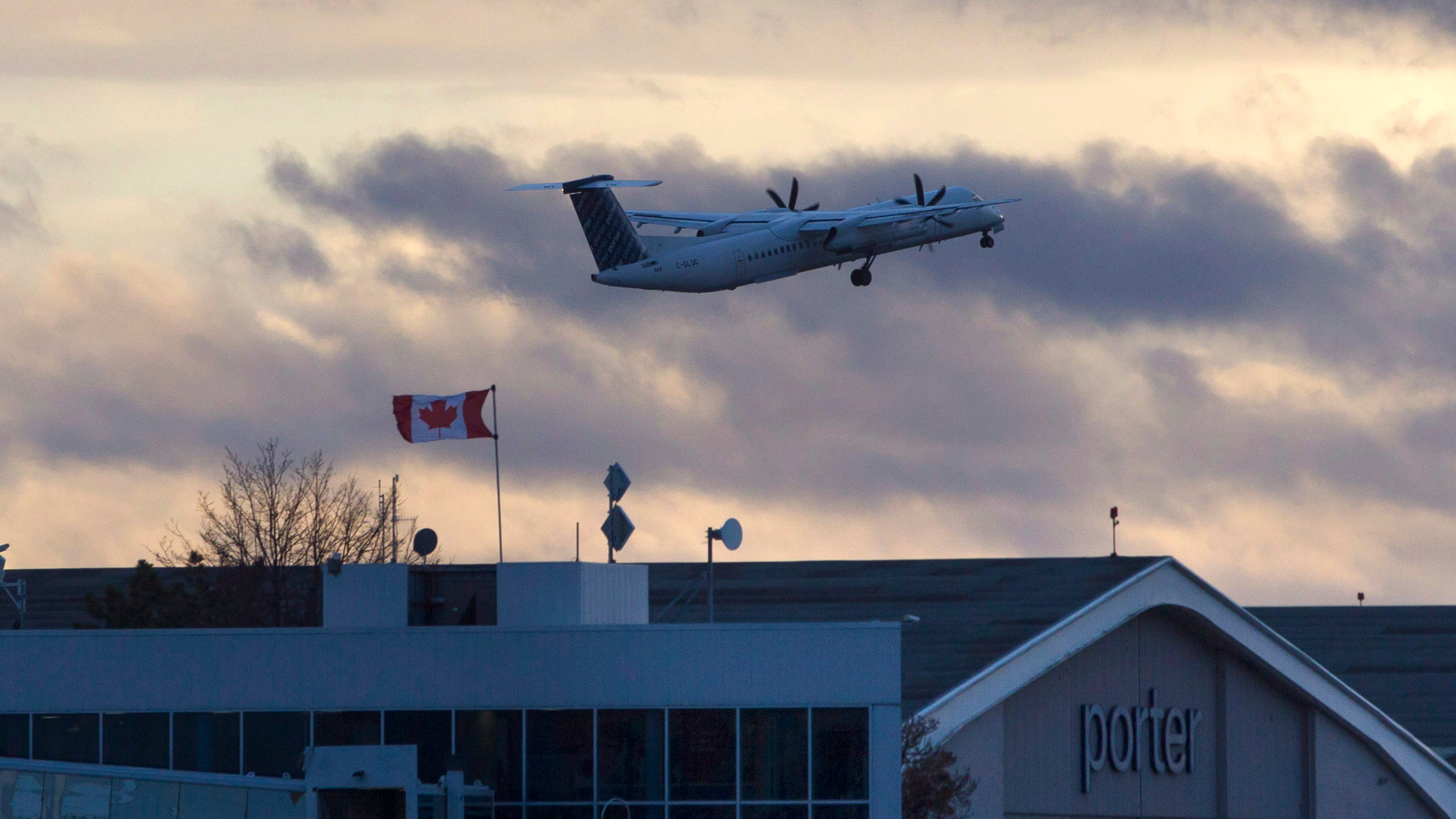
The operator of Billy Bishop Airport in Toronto is giving Ontario Premier Doug Ford’s pitch for a longer runway and larger planes at the downtown airport the thumbs up, but says the way the site is currently governed needs to be updated to make those plans a reality.
In a letter to Ontario Transportation Minister Prabmeet Sarkaria dated March 4, Toronto Port Authority president and CEO Roelof-Jan (RJ) Steenstra said the federally-regulated agency “fully” supports Ford’s vision for the future of the airport, which was outlined in his remarks at the Toronto Region Board of Trade (TRBOT) Annual Dinner last week.
“Southwestern Ontario airports, including Billy Bishop Airport, serve more than 30 per cent of the country’s air passengers. Addressing airport capacity requirements is a vital issue for the future of Ontario’s economy. Lack of airport capacity results in higher fares for passengers, a decline in regional connectivity including access to remote Northern communities, and a reduction in tourism and business activity,” Steenstra wrote.
He said the port authority is currently developing a plan to modernize the airport to meet rising aviation demand in the province, noting that Ontario’s population is expected to rise from 16.1 million to 20.5 million people by 2051.
The plan, according to Steenstra, would allow for route expansion across Canada, while also adding new direct routes to popular tourist hot spots in North America and the Northern Caribbean, including Los Angeles and Miami, as well as Nassau, Cancun, and Montego Bay. The port authority estimates that future airport operations would contribute up to $8.5 billion annually in economic output and add up to $4 billion to Canada’s GDP.
But none of this is possible under the current Tripartite Agreement (signed by the landowners in 1983, but amended in 2024 to modify the runway to meet federal safety requirements) that governs the airport, Steenstra warned, pointing out that the current governance structure poses several restrictions.
The land on which the airport sits is owned by the Toronto Port Authority (approximately 78 per cent), Transport Canada (approximately 2 per cent) and the City of Toronto (approximately 20 per cent). The Toronto Port Authority’s board of directors is composed of nine individuals appointed by all levels of government, seven of whom are selected by Ottawa.
That arrangement in its current form, according to Steenstra, is restrictive and limits the types of aircrafts that are permitted to operate on the island. He said it also prevents the development of new infrastructure to allow for modernizations and the short duration of the existing governing agreement, which is set to expire in 2045 after it was extended from 2033, “hampers investment in the airport and undermines sustainable development and growth.”
“This governance model needs to be addressed so that the Toronto Port Authority can develop the necessary long-term vision for Billy Bishop Airport,” Steenstra wrote.
In a statement to CTV News Toronto, Ontario’s Ministry of Transportation said it supports the proposal to expand Billy Bishop Airport.
“An expanded Billy Bishop Airport with an extended runway that will allow for larger planes will reduce congestion at existing Ontario airports, including Pearson International Airport. It will also increase flight travel options for Ontario travellers, support more routes to underserved parts of the province, increase competition that will lead to lower flight prices and support thousands of good-paying jobs across Ontario. We look forward to working with the Toronto Port Authority, the federal government and other partners to bring these benefits to Ontario,” the office of the ministry said.
The Toronto Port Authority confirmed in a statement to CTV News Toronto on Friday that their letter to Sarkaria was spurred as a result of Ford’s comments at last week’s TRBOT event.
“As owner and operator of Billy Bishop Toronto City Airport, the Toronto Port Authority regularly communicates with all levels of government on the future of the airport,” the Toronto Port Authority said in their statement.
“The Provincial Government has indicated a willingness to work together on optimizing the airport given the significant benefits and economic impact that Billy Bishop Toronto City Airport has on the region. Following the Premier’s comment at the Toronto Region Board of Trade in February, Toronto Port Authority sent a letter to Minister Sarkaria to confirm our willingness to work together.”

