Toronto’s transit system frustrated one local so much that he went out of his way to track its delays.
Karman Singh Bains’ website tracks TTC data from over a decade and gives users a handful of different ways to visualize delays.
“There were a few things which came out of nowhere,” Bains told CP24.com. “I did find out that my area where I used to live in, in Scarborough, had a higher number of incidents as compared to any other one in the downtown area.”
Bains is a data scientist and a regular TTC rider, as he only has a G1 licence. His project started in 2023, growing out of his frustration waiting for the 16 McCowan bus. The project went through a handful of iterations before arriving at its current form where it indexes more than 900,000 delay incidents over 12 years of data using publicly available TTC delay data posted to the City of Toronto’s open data portal.
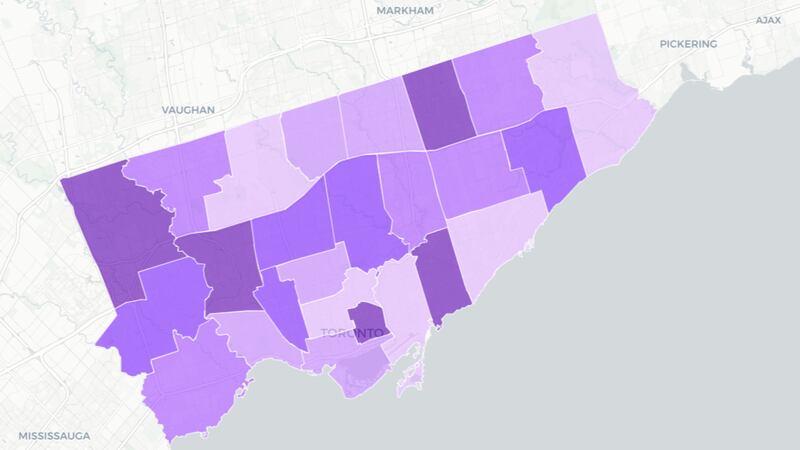
The site shows wards Etobicoke North, York South-Weston, Scarborough-Agincourt, Beaches-East York, and Toronto Centre as having the longest average delays. Scarborough-Guildwood, Scarborough North, Scarborough-Agincourt, Etobicoke Centre, and Etobicoke North have the most delays, each having more than 12,000 a year.
Bains analysis found that almost half of subway delays are by people, not mechanical failures.
“There could be some unruly passengers, someone trespassing or some fire incidents, somebody was smoking or something,” he explained.
The most recent data released by the TTC last month showed that the subway system achieved an 88.2 per cent on time rate in November but the on time rate for the bus network (73 per cent) and streetcar network (55 per cent) lagged significantly behind.
All three metrics were below the TTC’s goal of providing a 90 per cent on time rate across its network.
Vehicles are considered on time when they depart within five minutes of their scheduled time.
Speaking with CP24.com, Bains highlighted “the whole (bus) Eglinton line” as being “full of incidents.”
However, he was optimistic in the TTC’s ability to address problem areas. With Line 5 opening on Eglinton Avenue, Bains said that he was happy to see that new TTC infrastructure was lining up with where his analysis found stress.
Despite Line 5’s rocky launch, Bains says that the LRT is more effective than the bus. He says that after factoring in the average bus line delays on Eglinton, Line 5 is about twice as fast.
“That’s a major win,” he said.

