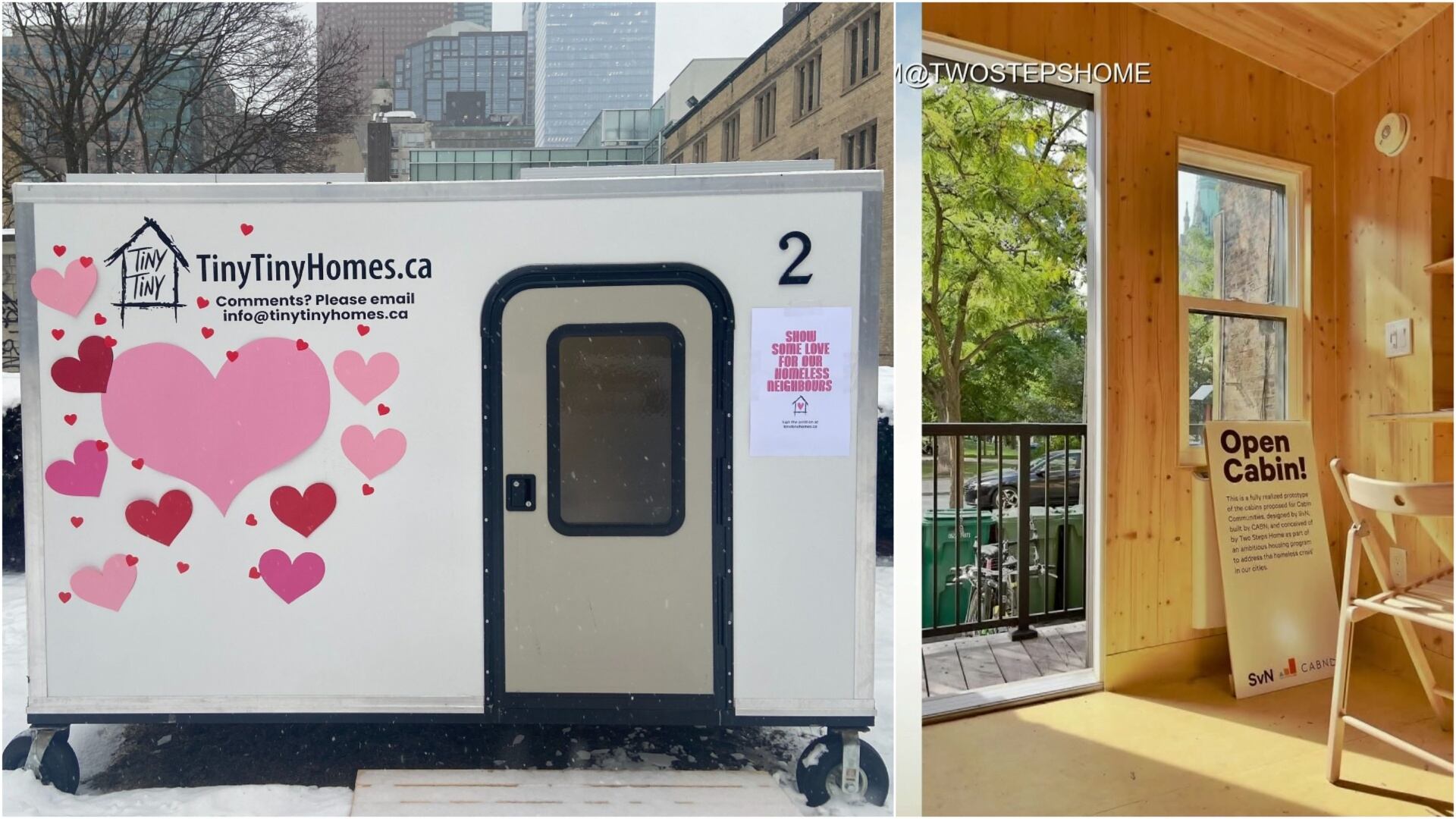
Micro-shelter communities are being floated as one way to provide emergency housing for people experiencing homelessness in Toronto.
However, some challenges have emerged, as 44 city-owned properties identified for potential sites have all been deemed unsuitable.
Nonetheless, the City of Toronto is moving forward with a two-year pilot, with the caveat that interested non-profits must come up with private land options.
Two Steps Home, a Toronto-based not-for-profit working to build temporary cabin communities to help unhoused people break the cycle of homelessness, has applied to take part in the pilot project.
Robert Raynor, the organization’s lead advisor, called this land option expectation a “big ask.”
He said finding a vacant property about an acre in size in Toronto that is suitable for housing a mini-home community with supports is no easy feat.
“We’re in conversation with private landowners, but we do feel the best solution is to use city-owned land. … We want to work with the city and with a reputable operator and figure out ways to make this work on city-owned land, which is a common practice for most municipalities and jurisdictions,” Raynor told CP24 during a recent interview.
“We’ll continue to advocate for the city to look at its land and come up with creative ways to use sites during the pre-development process.”
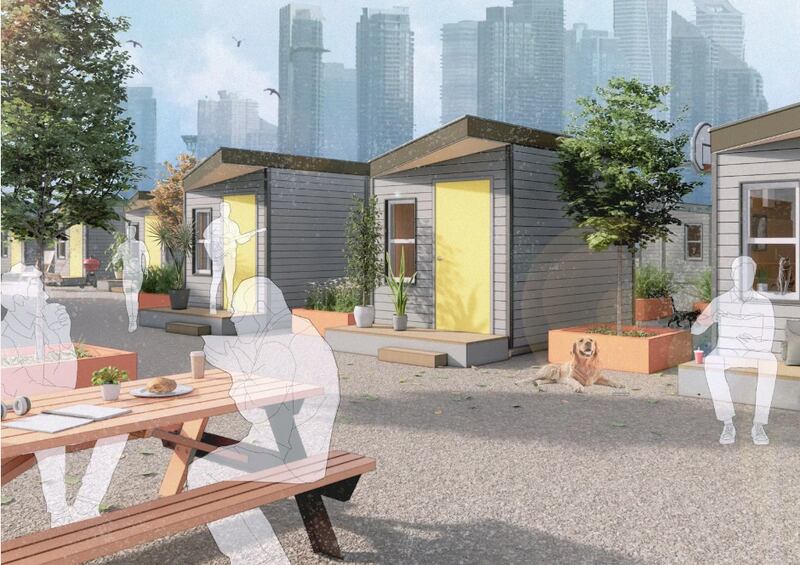
Two Steps Home, which is not revealing its partner organization, is proposing to build a fully accessible, 50-cabin community on a 0.75-acre plot of land.
Their goal, Raynor said, is to provide a place for unhoused people to stay until they transition to permanent housing.
“It’s not just another form of shelter. … We want to help people exit the cycle they’re stuck in,” he said.

Tiny Tiny Homes, another non-profit that provides emergency shelter in mini homes for people experiencing homelessness, has also expressed its interest in participating in the pilot, which would see the City of Toronto both fund the construction as well as the operation of the site.
Ryan Donais, the organization’s founder, said he wants to set up a 50-dwelling community on about an acre of land. Like Two Steps Home, Tiny Tiny Homes is also not revealing its partner organization.
Donais said the idea to use micro dwellings to shelter unhoused people makes sense.
“Cities should be looking at any option that adds more beds to the (shelter) system,” he said during a recent interview with CP24, adding the main challenge with Toronto’s micro-shelter pilot project, however, is the requirement that applicants find private property to do it on.
“If I had land, I wouldn’t be going to the city and there would be homes on it already.”

Donais said he also has some reservations about the city’s plan to source residents for these sites through its referral process, saying that a more intentional approach is needed, as he feels these larger micro-shelter sites are better suited to be a step to transitional housing, not necessarily for emergency shelter. He also noted that micro-shelter communities are not ideal for people with mobility challenges.
Currently, four of Donais’ tiny homes are housing vulnerable people in the backyard of a transitional housing site in Leslieville. Run by the Seeds of Hope Foundation, that facility has been operational for about a year. Two of Donais’ shelters are also currently on a farm in York Region that is run by the same non-profit.
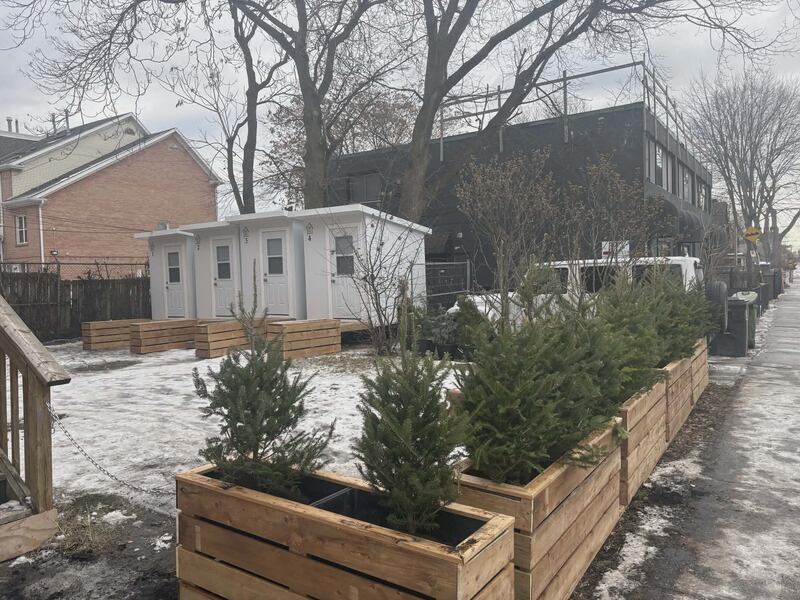
“(Tiny home communities) cost virtually nothing to operate. It’s a very minimal expense,” he said, noting the site in Toronto’s east end has washrooms, a kitchen, and other spaces needed by those staying in the tiny homes.
Applications being evaluated: city
The City of Toronto is now at the point where it is evaluating applications for its micro-shelter pilot project.
“City staff will assess these applications and determine if any of the proposals are suitable based on cost, location, construction options, program model, and applicant experience,” spokesperson Elise von Scheel told CP24.
Selected proponents will be invited to take part in a second stage, which will include a round of due diligence, a site assessment, and other related steps. If an organization successfully completes this step, staff will then recommend their application be considered in the final round. These evaluations could take three or more months to complete.
The pilot will then be confirmed and operational funding needed to deliver the proposal will be provided if a successful proponent is found and subject to City Council approval.
City spent more than a year studying feasibility of micro-shelters
Prior to inviting groups to express their interest in this pilot project, the City of Toronto said it spent more than a year studying the feasibility of micro-shelter communities, evaluating potentially suitable city-owned sites against its standard shelter criteria and micro-shelter best practices from other jurisdictions.
In the end, those identified properties were found to not meet the size and location criteria needed for a “viable” micro-shelter program, the city said.
Staff also determined that using those locations would displace or delay other higher-density shelter and housing projects that will support a greater number of people.
TTC parking lots also considered for micro-shelter sites
The city is also now exploring if it would be possible to set up mini-dwelling communities on seven underutilized TTC parking lots, but staff have yet to share their findings.
Toronto Centre Coun. Chris Moise tabled that motion last spring at the Economic and Community Development Committee.
“It’s not just putting down micro-communities on a lot. It needs so much more than that,” he said.
“People in micro-shelters have complex issues to get through in their lives. We know what works and the services they need.”
Moise said the city understands that the solution is good, affordable housing and is making investments in that. In the meantime, however, he said a “human approach” is needed to house people.
“I think we’re on the right track and we’ll keep moving forward,” Moise said, adding staff are expected to come back soon with their findings on using available space in TTC parking lots for micro-shelter communities.
Von Scheel, of the City of Toronto, said if those sites are deemed suitable, they could be considered for the micro-shelter pilot or for future communities.
“We recognize the need to be innovative and nimble to address the homelessness crisis,” she wrote in an email.
The city spokesperson echoed that the solution to homelessness is permanent housing, adding that it is “investing in building more homes faster, while enhancing the shelter system and exploring additional options in the interim.”
Regardless of what happens with the micro-shelters pilot, Donais said he intends to continue moving forward with his mini-home concept.
“Whether or not the Expression of Interest comes to fruition, Tiny Tiny Homes is going to continue on its mission,” he said.
Two Steps Home has similar aspirations and hopes to one day break ground on its own micro-shelter development.
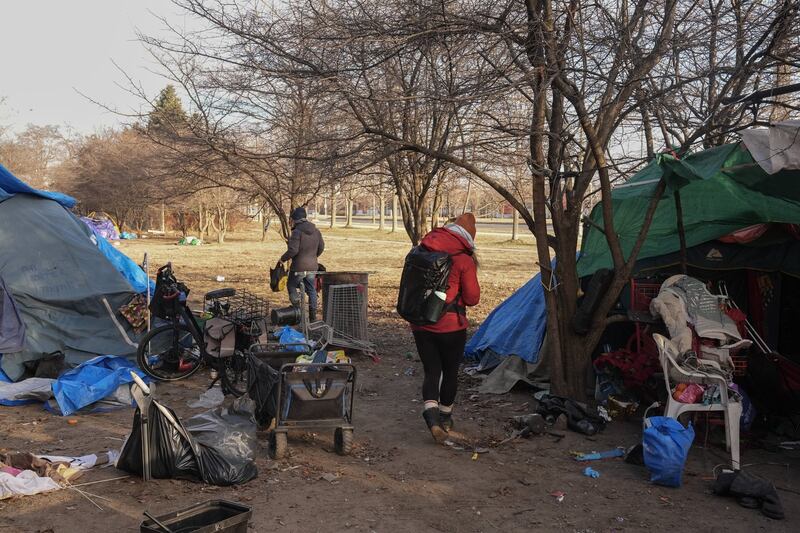
The idea of sheltering unhoused people in tiny homes in Toronto is one of myriad ways the city is considering as it grapples with a homelessness emergency, with its shelter system nearing or at capacity most nights.
In June 2024, City Council directed staff to prioritize the development of rapid shelter program models for individuals living in encampments, including micro-shelters.
This pilot is part of the city’s Homelessness Services Capital Infrastructure Strategy, a 10-year plan to stabilize the shelter system and be more responsive to the needs of people experiencing homelessness.

