The driving force of a grassroots Toronto non-profit says he was forced to pay $2,000 after his car was severely damaged by a pothole, throwing a major wrench in his organization’s ability to provide hundreds of free meals to those who need them.
“There’s so many potholes this year, it’s not normal,” Daniel Lauzon, the founder of Food For Now, told CTV News Toronto.
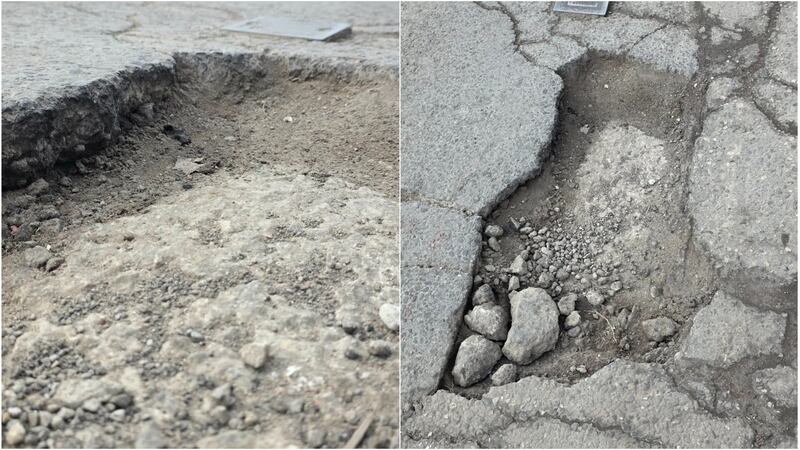
Lauzon explained he was driving along New Toronto Street in Etobicoke, where his non-profit is based, last weekend when he hit the crater.
“I knew there was something wrong. That road is very narrow where there’s trucks turning…I didn’t have a choice…I had to go to the right, and then that’s where the pothole is,” he said, adding that he could hear a rattling sound in his vehicle as soon as he turned the corner.
He managed to drive his car, a Mazda 5, to his mechanic where he said he dropped $1,400 on repairs.
“As soon as I got it to the mechanic…he told me there’s so many people having this problem (with potholes),“ he said.
The issues persisted even after Lauzon got his car back, and he said he had to spend another $600 to fix it.
Lauzon said he had no other option but to pay for the repairs out of pocket, as the vehicle is the lifeblood of his community-based food donation program. Since then, he said he had been without a car for several days, impacting his ability to operate his non-profit, before it was returned to him on Monday.
“The car is one of the biggest parts of the organization, because I’m the one who picks up the majority of the donations in South Etobicoke, in my neighborhood.”
Lauzon said he does have help running Food For Now, which he started during the COVID-19 pandemic in 2020, but described himself as the “major contributor” in transporting food and tables to a weekly event that regularly feeds 70 to 100 people.
“So this car is an essential part of what we do,” he said.
Lauzon said he has received donations to cover the cost of repairing the damage, but that they aren’t enough to even cover the taxes.
He said he’s considering filing a claim against the city for the damage but has heard, anecdotally, that the process isn’t straightforward.
“Some people say, well, it takes forever. It’s very hard to prove, and you got to go through a lot of hardship in order to get the money back,” he said.
Toronto says pothole claims up 292 per cent
Drivers in Toronto can bill the city for damage caused to their vehicle due to a pothole in the city, with restrictions, and according to a spokesperson those claims have nearly quadrupled year-over-year.
“There were 2,317 pothole claims reported from January 1 to February 28 this year, a 292 per cent increase over the same period last year,” the city said in a statement to CTV News.
According to the city, the city is not responsible for damage if it has met provincial legislation which sets out how long after being reported a pothole must be filled. For instance, a pothole more than eight centimetres deep on a Class 3 street, like an arterial road, must be filled within seven days after being reported.
The city’s website states that it is experiencing higher than normal claim volumes and, as a result, the 90-day target undertaken for resolution of all property damage claims “may not be achieved.”
Mayor Olivia Chow addressed pothole concerns late last month and blamed a “brutal” winter for the holes on the road, explaining that crews can’t fill them if it’s too cold or snowing.
“There are some outrageously big ones. They eat your tire and they wreck your alignment. I personally have seen it, and some of these potholes are gigantic,” she said at the time.
According to the city, 43,154 potholes have been filled since Jan. 1 and as of last week 300 service requests are being investigated and repaired. They previously said that the city is currently seeing a higher volume of pothole repair request than in previous years.
The mayor’s office said that as of today, 58 crews have been deployed to fix potholes across the city.
Toronto’s budget for fixing potholes in 2026 is $6.2 million. Last yet it was $5.5 million. The city says its pothole repair budget is an estimate based on the anticipated number of potholes to be filled each year, which is determined by previous years’ performance.
A motion will go before Toronto’s executive committee on Tuesday to discuss refining the city’s pothole repair strategy that is informed by 311 data.
How do potholes form?
Potholes form when water penetrates the top layer of asphalt through cracks in the road.
After the moisture freezes and expands, sections of the pavement are forced up and the weight of vehicles on the road breaks the pavement and the asphalt is forced out.
The city typically starts performing pothole “blitzes” in the spring months by pouring asphalt on the hole and raking it. Then they tamp down the asphalt and smooth it out until the road surface is improved. The job takes 15-20 minutes.
Crews will temporarily patch the holes with cold mix asphalt to make the road safe, as the city says it is “extremely difficult” to work with hot asphalt in the cold weather. More permanent repairs will then be performed with hot asphalt when the warmer weather arrives.

