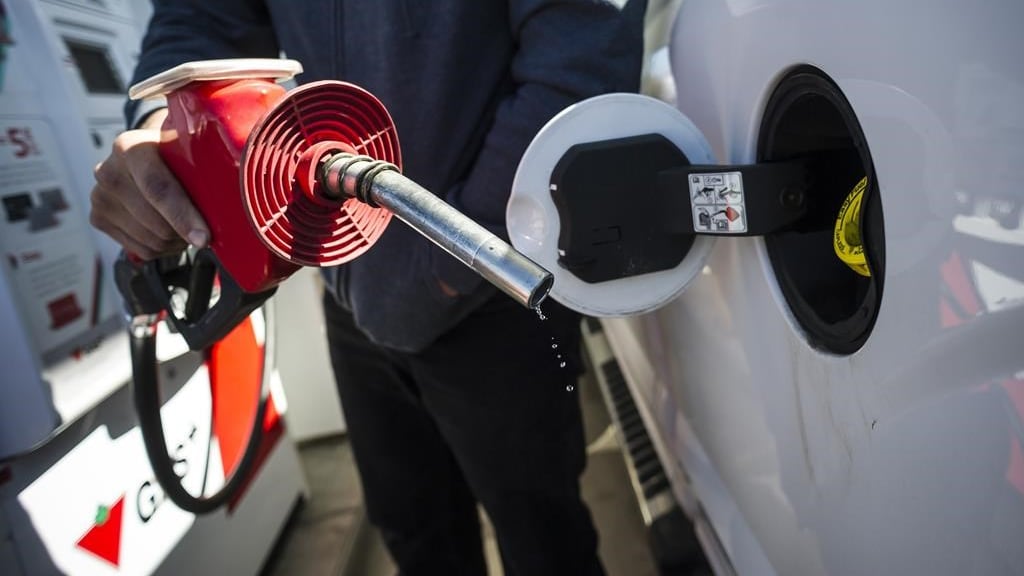
Drivers may see some relief at the pumps later this week, with one analyst predicting a “bit of a reprieve” in the price of gas.
About a fifth of the world’s oil supply passes through the Strait of Hormuz, the channel dividing Iran and Oman, which has effectively been closed amid the ongoing war in the Middle East. Strikes against commercial ships that pass through the strait have slowed shipping, resulting in a spike in the price of oil as a result.
That, in turn, has pushed gas prices up 34 cents per litre in the GTA since the conflict first started, according to gas analyst Dan McTeague.
As of Monday, the average price of a litre of regular gas across the GTA was 170.9 cents, which McTeague says is expected to hold Tuesday.
“Tomorrow, there is no change at the pumps. Wednesday, we could be looking at a two cent decrease if things hold out,” McTeague said in an interview with Newstalk 1010’s Jerry Agar on Monday morning.
“It looks like we’re in a … bit of a fixed situation in the conflict in Iran, and as a result, markets don’t know which direction to take.”
Ontario Premier Doug Ford griped about what he paid to fill up his car over the weekend during a press conference in eastern, Ontario on Monday.
“It was a buck 67 last night, it’s outrageous. Do you know what solves our problems? Let’s start getting a pipeline built across out country, let’s bring it down to Sarnia, let’s get the pipeline over to the Irving refinery in New Brunswick. That would relieve it,” Ford said.
“Right now, we’re relying on people from around the world, and some of those people don’t even like us, but I think the U.S. and Israel are doing the right thing.”
The United States and Israel attacked Iran more than two weeks ago, which prompted retaliatory strikes from Tehran against Israel, American bases in the region, and Gulf Arab countries’ energy infrastructure.
As the war continues to rage on in the Middle East, McTeague anticipates gas prices will likely soar despite the temporary relief.
“You’ve got to stop the paralysis at the Strait of Hormuz,” McTeague said.
“As a result these prices … are likely to go much higher. The reason what’s holding things back and really going up is the release of emergency supplies of oil. We’re day five of those emergency releases.”
The International Energy Agency, which Canada is part of, decided to make 400 million barrels of crude available as oil prices spiked amidst the U.S.-Israeli war against Iran. The IEA has said it could release more oil into the market “as and if needed,” as there will still be more than 1.4 billion barrels remaining in the emergency reserves. Canada, as a net oil exporter, is not required to hold oil reserves, but it can up production—which it announced it would do on Friday, increasing oil production by 23.6 million barrels as a result.
However, if those are not released, McTeague says the current emergency supply could run out in two or three weeks.
“When that runs out, I think one can fairly say that it’s going to get a lot worse before it gets better,” McTeague said.
With files from The Associated Press

