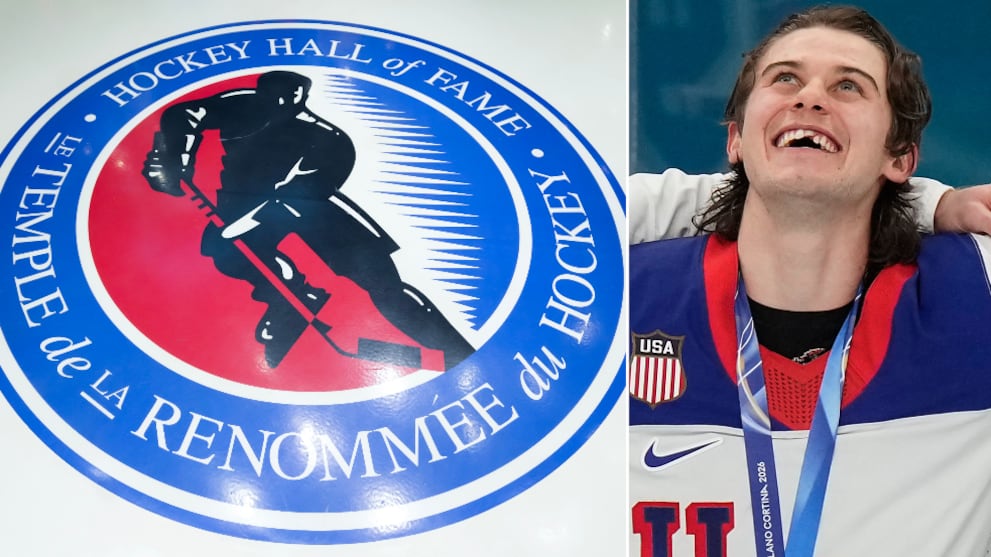
The Hockey Hall of Fame is defending its decision to display Jack Hughes’ gold-medal-winning Olympic puck in the wake of the U.S. star telling ESPN that the artifact should have been given to him instead.
Hughes told ESPN earlier this week that it was “bulls***” that the puck was on display in Toronto and that he planned to ask for it back “at some point.”
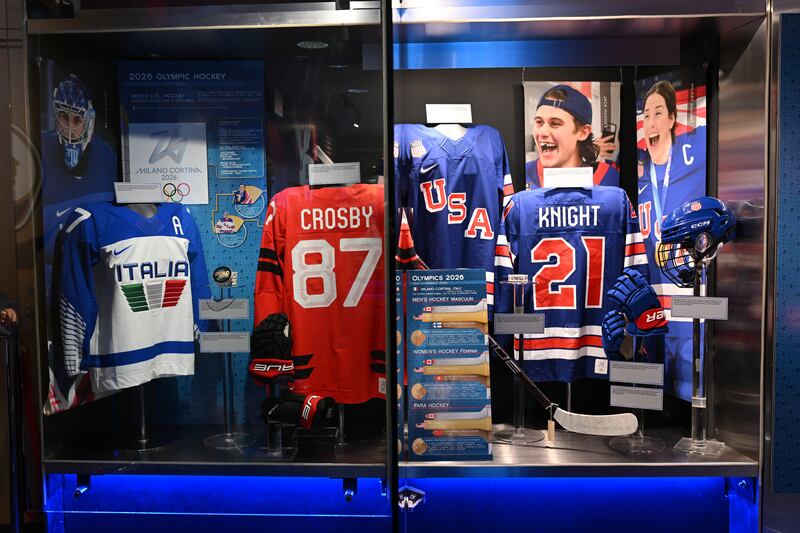
His comments came after the Hockey Hall of Fame set up a new display with artifacts from both the U.S. men’s and women’s hockey teams’ gold medal performances, including the puck Hughes used to defeat Canada in overtime of the gold medal game at the 2026 Winter Olympics.
In a statement to CTV News Toronto, the Hall emphasized that Olympic artifacts are not collected arbitrarily, but arrive through a formal “donation process” with international hockey authorities.
“The Hockey Hall of Fame maintains a longstanding and collaborative relationship with the International Ice Hockey Federation (IIHF), grounded in a shared commitment to preserving and celebrating the global history of the game,” officials said.
Hockey officials defend ‘donation process’
The Hall added that since the 1998 Winter Olympics, the International Ice Hockey Federation has routinely provided pucks and memorabilia tied to major moments, including Sidney Crosby’s 2010 “Golden Goal.”
“Items are formally transferred to the Hall through IIHF’s established artifact donation process and added into our permanent collection,” the statement reads.
The institution said the artifacts are preserved and displayed to ensure “defining Olympic and World Championship moments are preserved, and remain accessible to the global hockey community.”
‘That’s bulls***’ - Hughes pushes back
The response comes after Hughes, speaking to ESPN earlier this week, questioned why the puck from his overtime winner at the 2026 Winter Olympics was on display in Toronto.
“I’m trying to get it. Like, that’s bulls*** that the Hockey Hall of Fame has it, in my opinion. Why would they have that puck?” he said.
Hughes added that he believes both he and teammate Megan Keller — who also scored an overtime gold-medal winner for the U.S. women’s team — should have their pucks.

“I don’t see why Megan Keller or I shouldn’t have those pucks,” he added.
The 24-year-old added that he would like to give the puck to his dad.
“I know he’d just love, love having it,” he said.
Toronto ties to a global moment
Hughes’ goal—scored 1:41 into overtime as the United States defeated Canada 2-1—instantly became one of the defining moments of the Milan Cortina Games.
Now, that puck sits on display in Toronto, where Hughes’ hockey roots run deep.
Though born in the United States, Hughes and his brothers Quinn and Luke spent much of their childhood in the Greater Toronto Area after their father took a coaching job with the Toronto Marlies.
The trio developed their early skills in minor league hockey with the Toronto Marlboros, part of a pipeline that has produced NHL stars including Connor McDavid and Sam Bennett.
The Hall, located in downtown Toronto, says its role is to protect moments like Hughes’ goal for a global audience.
“We hold tremendous respect for the men and women who create these unforgettable moments on the ice,” officials said, adding they remain committed to preserving those achievements in a way that is “responsible, secure and accessible to fans everywhere.”

