The Toronto Region Board of Trade is urging Queen’s Park to “finish the job” on congestion, releasing a new report this week that calls for a range of low-cost fixes that include the use of automated enforcement to crack down on vehicles that needlessly block intersections.
The report argues the next phase of congestion relief must come from provincial action, after it says the City of Toronto adopted several earlier recommendations from a previous report.
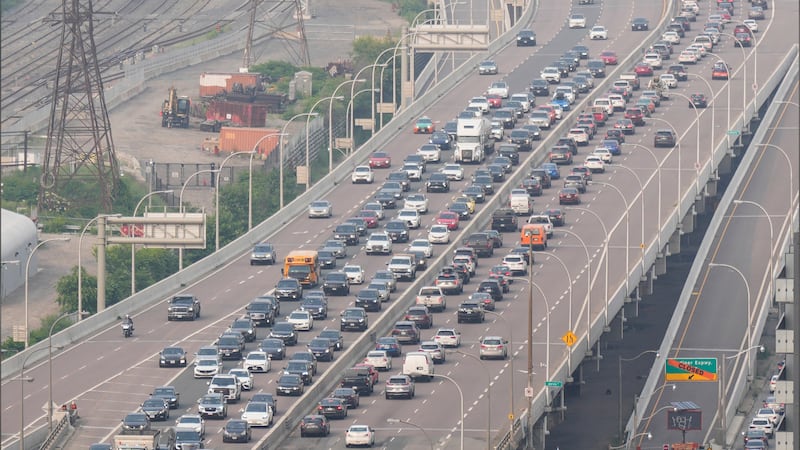
It comes as recent data shows traffic is continuing to get worse.
Drivers lost roughly 100 hours — more than four days — to congestion last year, according to TomTom’s annual traffic index, placing Toronto among the most gridlocked cities in Canada.
While the province is already investing billions in transit and highway projects, including the Ontario Line and expanded HOV access, some experts tell CTV News the board’s proposals amount to “incremental” changes that fall short of more transformative solutions.
Here are the recommendations
The report, titled Breaking Gridlock: Finishing the Job through Provincial Action, calls for several changes it says are the “next step” to address congestion in the region.
Changes include automated enforcement for blocked intersections, fewer lane closures through coordinated construction and targeted upgrades to major highway bottlenecks.
The report also says that the amount of money that the city charges for lane closures should more closely reflect the “socioeconomic costs.”
For example, it said that the closure of a lane of traffic on a major arterial road carries socioeconomic costs of approximately $1.7 million.
“These costs stand in stark contrast to the fees charged by the City of Toronto for construction-related lane closures: a maximum of $37,000 for a 30-day right-of-way occupancy, recouping just 2 per cent of costs for a major arterial road,” the report states. “The city’s pricing for a lane closure is based upon neither socioeconomic impact nor the importance of the street to the transportation network, but upon the lost revenue from nearby parking meters, a gross underestimate of its actual costs.”
The report describes Toronto’s current system for road closures as a “middling approach in which neither restrictions nor prices cause permit applicants in Toronto to consider alternatives.”
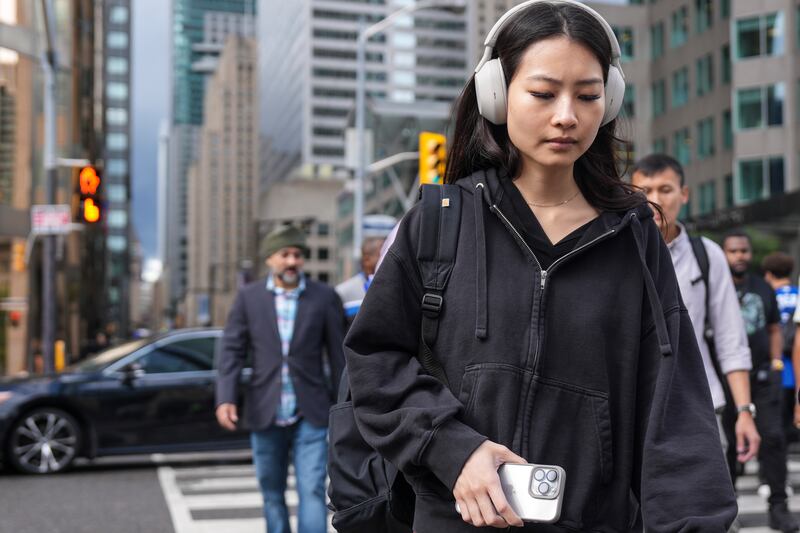
It says that in New York City, for example, daytime construction is not permitted in high-traffic areas whereas in London fees are reduced by 50 per cent in more to incentivize overnight work.
The report also pushes for better integration across transit systems and the rollout of “smart signals” to improve traffic flow.
Jonathan English, a consultant to the board, said the recommendations are meant to be practical and deliverable.
“I think we need a few regulatory changes and maybe some infrastructure changes… beyond what has already begun,” he said.
He pointed to intersection gridlock as a key issue.
“Right now, blocking the box is one of the big causes, especially downtown, because of traffic congestion,” English said. “…with a red light camera… these could be repurposed for blocking the box enforcement as well.”
English added the measures are relatively low cost and could have a meaningful impact.
“These measures are, for the most part, pretty low-cost ways to put a big dent into $44.7 billion (lost in productivity) a year,” he said.
Province points to billions in spending
When asked whether the province is open to adopting the recommendations, a spokesperson for Ontario Transportation Minister Prabmeet Sarkaria’s office pointed to ongoing investments.
“With gridlock costing Ontario’s economy $56 billion every year, we are exploring every option to cut travel times for drivers and move goods faster across the region,” the statement read.

The province highlighted plans to expand HOV lane access during off-peak hours, alongside more than $70 billion in transit spending and $30 billion in highway infrastructure.
Earlier this year, construction began on an elevated stretch of the Ontario Line, a project Premier Doug Ford has said will help reduce congestion by connecting more people to transit. The government is also studying a proposed tunnel beneath Highway 401, a plan with a $9.1-million feasibility cost.
‘Sensible,’ but not a ‘game changer’
Experts say the report’s ideas are reasonable — but at the same time, limited.
“This, to me, this is the sensible report,” said Matti Siemyticki, director of the Infrastructure Institute at the University of Toronto. “It’s important that it’s focusing on the region, because transportation doesn’t abide by invisible boundaries between municipalities.”
Still, he said the impact would likely be modest.
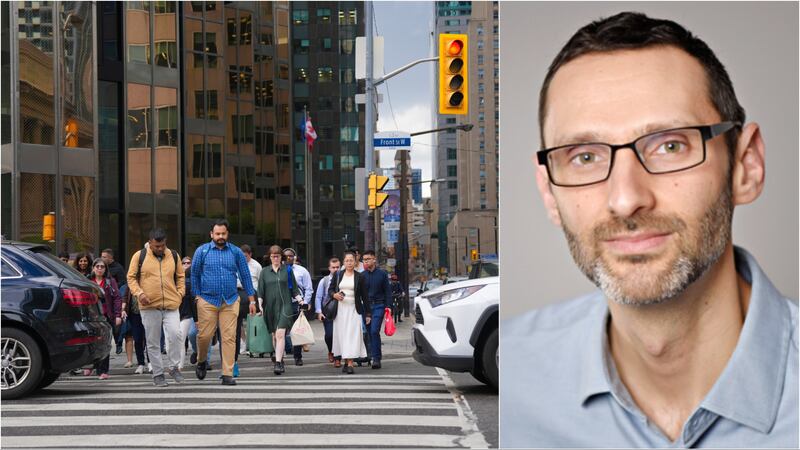
“For the most part, I feel like these are friendly amendments to what the province has already proposed… But this report is not the game changer that will revolutionize how people move around this region.”
Siemyticki said the proposals reflect an incremental approach at a time when congestion continues to worsen.
“We are sprinting to stand still,” he said. “We are doing a lot of little policy interventions… But the big picture is we’ve added… over a million people to the region, and the infrastructure hasn’t substantially changed.”
He noted the absence of more aggressive policies, such as road pricing. New York City, for example, began charging drivers a toll to enter parts of Manhattan in January in an effort to reduce gridlock downtown.
“I also think the big picture… which is road charging… is nowhere to be seen in this report," Siemyticki said
Growing problem, limited space
Despite the criticism, Siemyticki credited the province for ongoing transit expansion and infrastructure work.
“They are building a ton of transit across the region… Toronto is in the midst of the biggest transit building boom in a generation,” he said.
But he warned those efforts may not be enough on their own.
“The congestion in this region is horrendous… It’s costing us tens of billions of dollars… and the solutions are fairly incremental,“ he said. “This is all in the context of too many cars and not enough… space.”

