Several roads will be closed, including a portion of Lake Shore Boulevard West, while transit service will be boosted on routes serving Exhibition Place during the upcoming FIFA World Cup.
On Thursday, officials unveiled details about the City of Toronto’s “transit-first” Mobility Plan” to keep residents, visitors, and traffic moving during the upcoming World Cup, which will see six matches played in the city between June 12 to July 2 at Toronto Stadium.
In total, Toronto is anticipating welcoming at least 300,000 people for World Cup, with upwards of 65,000 people expected their way to Exhibition Place as well as Fort York and The Bentway for the FIFA Fan Festival on match days.
City staff are estimating that the tournament could cause a 15 per cent increase in vehicle volumes downtown on match days, which coupled with a reduction in roadway capacity could see a rise in congestion during evening peak times on match days.
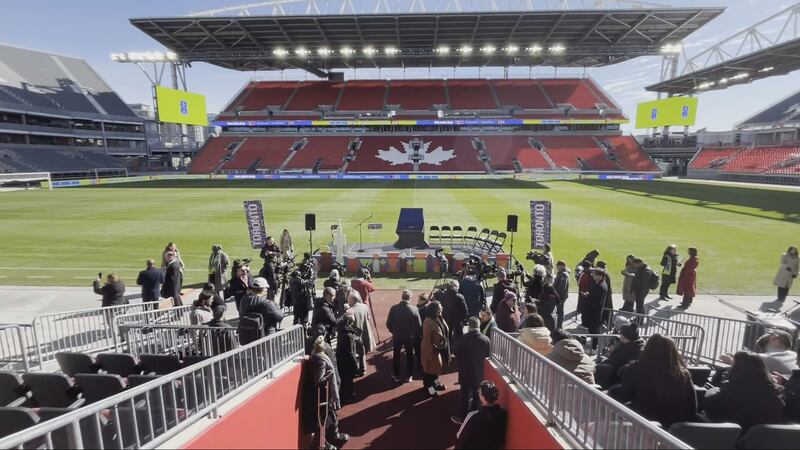
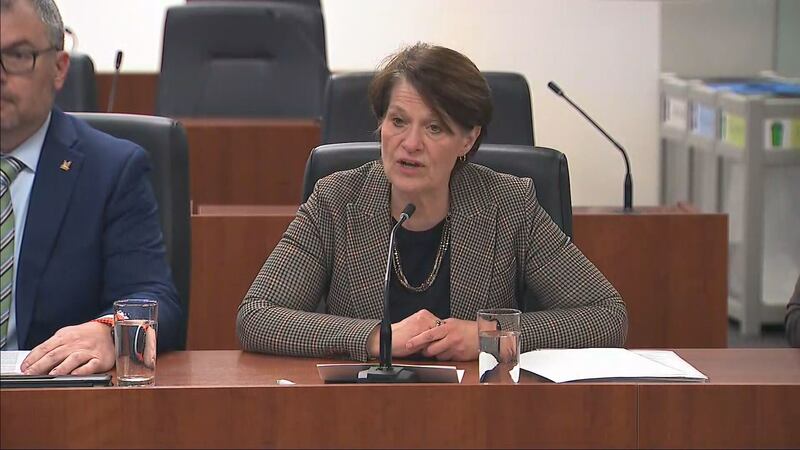
“In 78 days, we will welcome the world to our city, and we want to ensure that that we create a positive experience for those visiting our event venues and neighbourhoods, and for residents and businesses,” said Sharon Bollenbach, the executive director for the FIFA World Cup 2026 Toronto Secretariat, during a media briefing.
As a result, a “comprehensive mobility plan” has been developed, one that is being undertaken in collaboration with the TTC, Metrolinx, the Ministry of Transportation, Toronto Police Service, and Toronto Emergency Management.
“(It) reflects a coordinated multi-agency approach to managing transportation during the tournament and is designed to support the safe and efficient movement of residents and visitors while maintaining reliable transit service, emergency access, and overall city operations,” Bollenbach said.
TTC service to be stepped up, modified
The frequency of the Harbourfront and Bathurst streetcar routes serving Exhibition Place will also be stepped up during the World Cup and their final stop will be moved to Fleet Street, which will serve as the access point to the tournament.
Travellers should note the Exhibition Loop will only be open on match days to those in need of accessible ramp deployment.
Buses will also be running more frequently on the Dufferin and Ossington routes and there will be a shuttle bus running from St. Andrew Station to a new hub on Fleet Street.
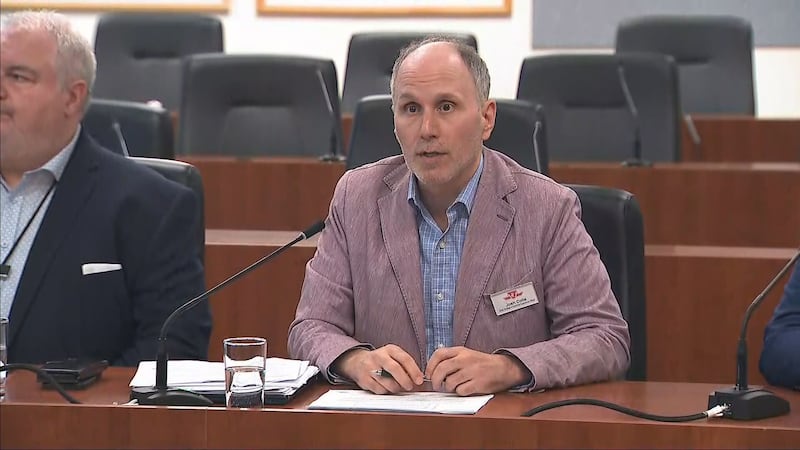
Josh Colle, the TTC’s chief strategy and customer Experience Officer, said they’re focused on three key area for the World Cup: communication and coordination, increasing service, and reliability and readiness.
“We are taking an exhaustive approach to make sure that our infrastructure, our service, our people are ready to host the world,” the said.
“The next key principle is really around applying a customer lens to all of this. We really want to make sure that we have a excellent customer experience and that’s how we’ll deploy our people and our service to ensure that that customer experience is an excellent. And then finally, another key principle is that people are still going to live and work in Toronto and we want to make sure that the TTC service across the city is still at the levels they expect.”
GO Transit, UP Express service increased
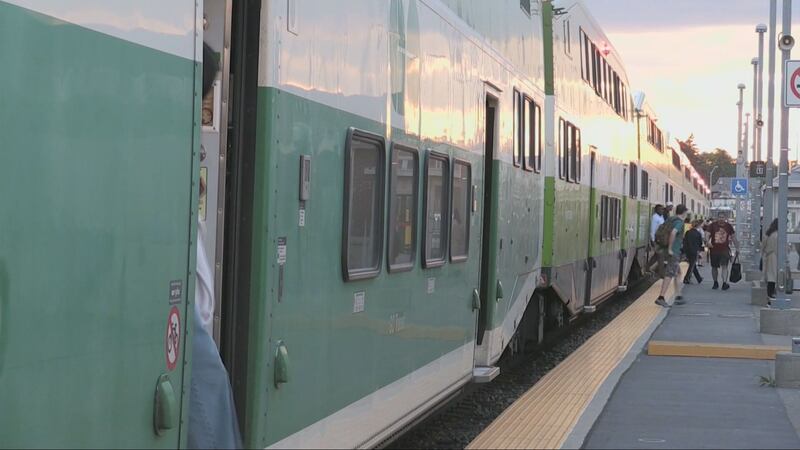
Sean Fuller, Metrolinx’s chief operating officer, said from June 10 to July 2 GO Transit will be running service every 15 minutes along the Lakeshore East and West lines.
“This will give fans and visitors reliable transit across the region,” he said, echoing his colleagues’ advice to take public transit to get around during the World Cup.
“There will be a focus on (GO Transit) service over those six match days, specifically in Toronto and right around Exhibition GO Station. We’re adding nearly 3,000 weekly go trips during the tournament, and that’s almost a 30 per cent increase over this winter’s service levels.”
Fuller added that the UP Express will also see extended “to support late night airport travel” as well as travel to key destinations, like Niagara Falls, during the tournament.
What roads will be closed
- Parts of Strachan Avenue from Lake Shore Boulevard West to East Liberty Street on match days for up to 10 hours. Two lanes of traffic on the east side of Strachan between Lake Shore and Fleet Street will remain open from those accessing and leaving the parking lot at the Enercare Centre.
- Fleet Street from Angelique Street to Strachan Avenue for the duration of tournament, to facilitate temporary dedicated streetcar platforms for pick-up and drop-off of transit users.
- Fort York Boulevard, as well as the residential area between Fort York and Fleet Street, will be local traffic-only from Bathurst Street to Angelique Street for the duration of the tournament. This also includes Fleet Street from Angelique to Bathurst streets, Angelique, Bastion, Grand Magazine, and Iannuzzi streets, Gzowski Boulevard, and Bruyeres and Sloping Sky mews.
- Access will also be restricted to local traffic in Liberty Village on match days for up to 10 hours, including East Liberty Street from Dufferin Street to Strachan Avenue, and Mowat, Fraser, Jefferson, and Atlantic avenues.
- Dufferin Street will be fully closed from Springhurst Avenue to Saskatchewan Road on match days for up to 10 hours, to facilitate transit and pedestrian movement with local traffic-only from Springhurst Avenue to King Street.
- Lake Shore Boulevard West will also be fully closed from Bathurst Street to British Columbia Road on match days for up to 10 hours, to accommodate FIFA constituent group bus parking and access. The closures on Lake Shore will likely push east-west traffic to the Gardiner Expressway or King Street West, the city said in its report. Lake Shore will be managed to allow access for constituent groups and to accessible parking, as needed.
- Some highway/expressway on- ramps/off-ramps may also be temporarily closed to control the volume of traffic entering and exiting, depending on traffic conditions and requirements, the city said.
Traffic mitigation measures
Mike Barnet, Transportation Services’ director of enforcement and street management, said the city will also be implementing turn prohibitions as well as no stopping and no standing prohibitions, at various times during the tournament.
“We will also see many traffic agents deployed at key locations to keep intersections clear and keep people moving,” he added.
Barnet said the city would also look at its signal systems, applying some of what it has learned about transit signal priority along the Finch West and Eglinton Crosstown LRTs and some of its key streetcar corridors.
“Finally, in addition to this, will be monitoring and adjusting signal timings in real time to manage key ingress and egress periods,” he said.
What cyclists need to know
While there are various cycling routes and dedicated bike lanes in the vicinity of Toronto Stadium and the Fan Festival zones, all bicycle racks and Bike Share Toronto docks near those areas and within Exhibition Place will be removed “to allow for FIFA needs,” city staff said in their report.
There will be some temporary cycle facilities outside of Exhibition Place, including Bike Share valet and valet bike parking.
Designated walking routes
For those who plan to walk to the World Cup, there are designated walking routes.
Pedestrians should note, however, that the Garrison Crossing Bridge, which spans the rail corridor, will be taken out of service for the duration of the FIFA Fan Festival, meaning that pedestrians will have to cross to the south side of the rail corridor via Strachan Avenue or Bathurst Street.
The Manitoba Drive access to Toronto Stadium via Nova Scotia Avenue may be moved to “manage crowds.”
“The covered walkway to the immediate east is too narrow to accommodate the projected pedestrian demand while maintaining a safe level of access for emergency services and pedestrian throughput, so it will only be open to spectators with accessibility needs,” the city’s report said.
People on foot should also note that access to the Exhibition GO will be a customer-only zone on match days.
Taxis and rideshares
Pick-up and drop-off access for taxis and rideshares near Toronto Stadium and the fan festival site will be limited due to road closures.
For spectators with mobility needs, there will be accessible pick-up and drop-off at both the Toronto Stadium accessible parking lot and at a designated location near the fan festival.
Limited on- and off-street parking
During the World Cup, parking will also be limited and there will be no designated regular parking for spectators near Toronto Stadium as well as the FIFA Fan Festival near Fort York and The Bentway.
Only one large parking lot for FIFA ticket holders with accessibility needs will be available at Exhibition Place on match days. There may also be some limited on- and off-street parking within a three-kilometre radius.
The removal of street parking on Dundas Street West and King Street West is also being considered to “prioritize streetcar movements and mitigate congestion resulting from new east-west traffic caused by the temporary closure of Lake Shore during matches.”
Road construction mitigation underway
Aside from parking restrictions and road closures, the city said it has been working to accelerate construction on roadways, like the Gardiner Expressway, to avoid lane closures during the World Cup.
Mitigation strategies for the Ontario Line subway construction have also been put in place to minimize disruptions and ensure construction doesn’t impact access to the World Cup or overall mobility.
Improvements are also being done to ensure the reliability of surface transit routes that will service the tournament, notably Dufferin and Bathurst streets where there are dedicated transit lanes for surface transit.
Make ‘informed travel choices’
Andrew Posuns, Toronto’s inaugural chief congestion officer and the executive director of the city’s Strategic Capital Coordination Office, said another way to manage congestion is by helping people working in the city during World Cup make “informed travel choices.”
A key part of this work is going to be encouraging adjustments in travel behavior to help keep the transportation work moving. This is not just for those who may be attending matches or tournament related events, but it’s also for those who live and work in the area and want to continue to be able to get to where they need to go and do what they need to do,” he said.
“Transportation demand management is making sure that people are aware of when and where the network will be at its most congested and then providing advice on options that can help them navigate during this busy time.”
This may entail adjusting in-office work, deliveries, and mode of travel, to name a few.
Posluns added that this approach reduces overall demand on the network, which in turns helps everyone get around easier.
“We encourage people to plan ahead and to avoid the busiest times and areas, as well as to leave extra time to get to their destination. Residents near terminate zones can also expect more people in their neighborhoods, on transit and sidewalks, particularly in areas close to the event sites, and we’ll want to take that into account,” he said.
“By planning ahead and making adjustments, everyone can play role in helping keep Toronto moving through this historic international opportunity.”
Impacts to be felt most in Spadina-Fort York
Local Coun. Ausma Malik, who also serves as deputy mayor, said staff are working “at full speed” on final preparations for this summer’s World Cup, which she said would “showcase the very best of our diverse, bold and world class city.”
With the tournament’s impacts being felt the most in neighbourhoods in her ward, Malik said her priority is to keep people in those areas informed, while also ensuring they have the “opportunity to catch the excitement and the enjoyment of the games” as they “navigate their neighbourhoods safely and reliably.”
To that end, she spearheaded the creation of a dedicated World Cup neighbourhood planning table, which has taken cue from how the city successfully managed crowds and traffic during the Taylor Swift concerts in November 2024, for example, as well as a traffic action plan for Liberty Village.
“This has helped us work towards clear and responsive transportation, event management, and public engagement plans, so that local communities are well prepared for the games and making decisions again that are best for them,” she said.
“I work to ensure that there are dedicated city resources to support communications and problem solving in those neighborhoods in the lead up to and during the games, and that community improvements as well are experienced before, during and after our hosting of the World Cup.”
Mobility plan needs city council approval
Required under the FIFA host city agreement, the city’s mobility plan will be considered by the City of Toronto’s FIFA World Cup 26 subcommittee on March 30, followed by the executive committee on April 15, and then Toronto City Council at its next meeting in late April. It will also be reviewed by FIFA.

