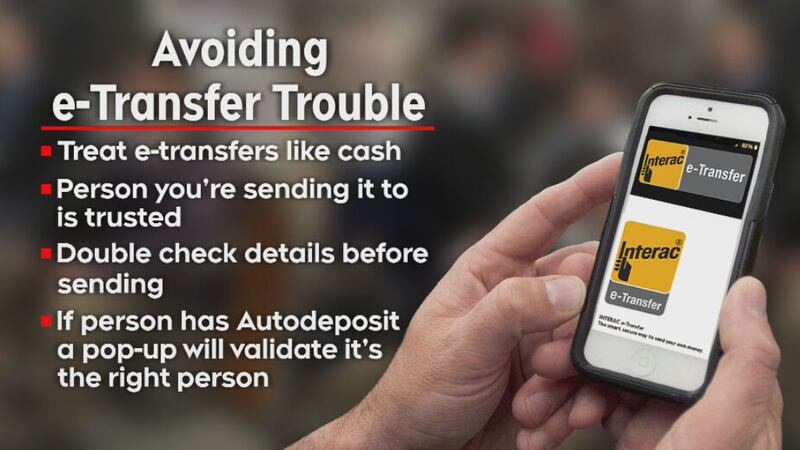
A Toronto man was sending his sister some money via e-transfer around Christmas time, but he entered her email address incorrectly, and the money went to someone with a similar name. He’s been trying for months to get it back.
“I thought, oh my God, what have I done,” said Tony De Simone, who said it was the first time he ever sent an e-transfer.
“I actually have a vision problem, and I’m blind in my right eye, so sometimes it’s difficult to do emails and texts and things like that.”
He said he owed his sister $1,600 and wanted to pay her back around Christmas time, and she gave him her email address.
“I kept telling my sister that I sent it, and she normally gets an email saying that she has received a deposit from an e-transfer,” recounted Simone.
When the money never arrived, he took another look at the email he used and realized he had forgotten two numbers, and he sent it to the wrong email address.
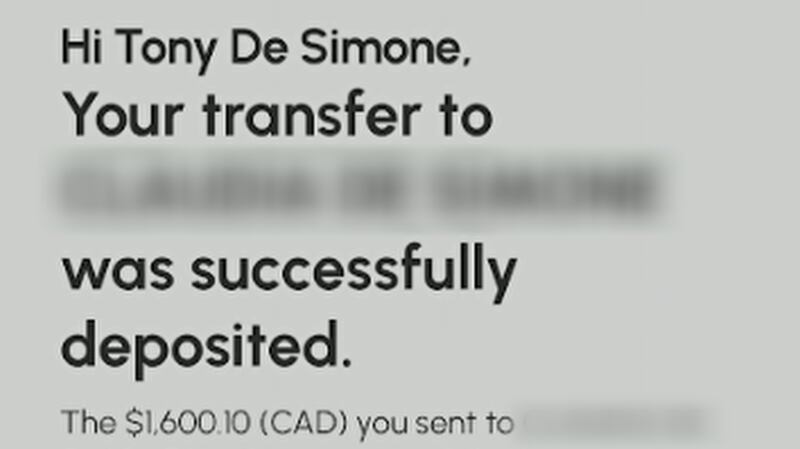
He contacted his Credit Union, and they told him the person he sent it to had an auto deposit, and the money went straight into their account.
“They told me I sent it to the wrong person and now it’s been deposited and we can’t get it back,” said Simone.
The Windsor Family Credit Union told CTV News in a statement, “We understand how upsetting this situation has been for our member, and we sincerely empathize with anyone who experiences financial loss.”
In this case, the e-transfer in question was initiated directly by De Simone, who entered the recipient’s information and confirmed the transaction, including acknowledging that the funds would be deposited automatically through auto-deposit.
Once an e-transfer with auto-deposit has been successfully deposited, it cannot be reversed without the recipient’s consent.
“As the recipient is not a member of our financial institution, we do not have the authority to withdraw funds from that account. We have made every reasonable effort through established banking channels to attempt recovery of the funds,” the credit union said.
“We encourage all members to carefully review recipient information before confirming an e-transfer and are always available to provide assistance or guidance with digital banking services.”
When De Simone reached out to the person and explained the mistake, they (the person who accidentally received the funds) were concerned it was a scam and refused to send the money back.
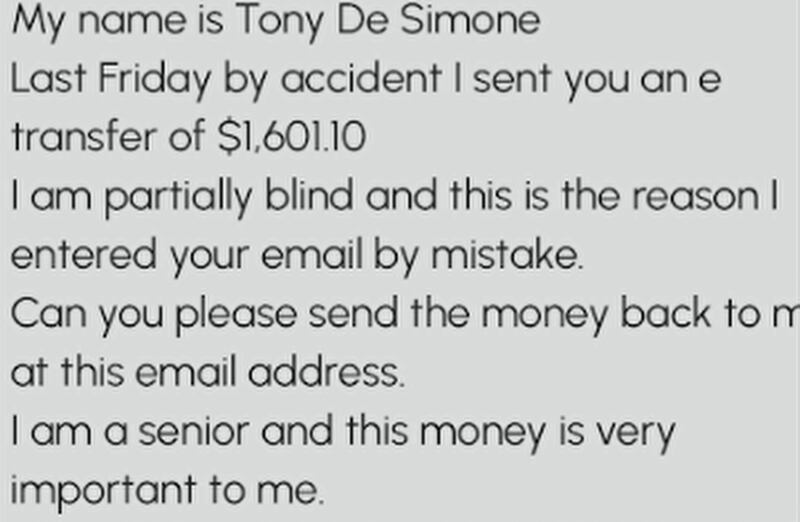
De Simone initially said losing $1,600 affected his finances.
“I feel really bad, and I want to get my money back, if possible,” said De Simone.
After CTV News reached out to the person who mistakenly received the funds, they said they’d been scammed before but now realized it was a mistake and agreed to send De Simone back his $1,600.
“This is such a relief, and I am so glad I was able to get this money back,” said De Simone.