As many notice the higher cost at the gas pumps, travellers should expect spring and summer air travel to also get more expensive with the price of jet fuel rising due to the conflict in the Middle East.
Flight Centre Canada says it’s noticing some airlines are now introducing fuel surcharges on airline tickets to try and recoup some of the rising costs associated with the war in Iran.
“We have seen rising jet fuel prices, which is driving up costs for airfares, so this will impact Canadians,” said Amra Durakovic with Flight Centre Canada.
The increase may be included as a separate line for a fuel surcharge on the ticket or it may just be that your seat on the aircraft will cost you more.
Durakovic also said flight paths are being diverted or dropped around the Middle East conflict zone, which is also putting pressure on ticket prices.

As airlines reroute planes, they may have to take a longer flight to get to their destination. For some international flights such as Canada to the Philippines that could add hundreds of dollars to the cost of a ticket.
“So instead of a $1,600 flight to the Philippines over the Middle East, you may now have to go the opposite way. So, you will now be paying $2,000, so this is just adding to airfare prices right now,” said Durakovic.
Some cruises seeing hikes
Some cruise ships have also started raising their prices and riverboat cruises may follow.
“I do expect a domino affect. I do expect the major cruise lines and even the small river boats will start to introduce fuel surcharges real soon,” said travel expert Barry Choi.
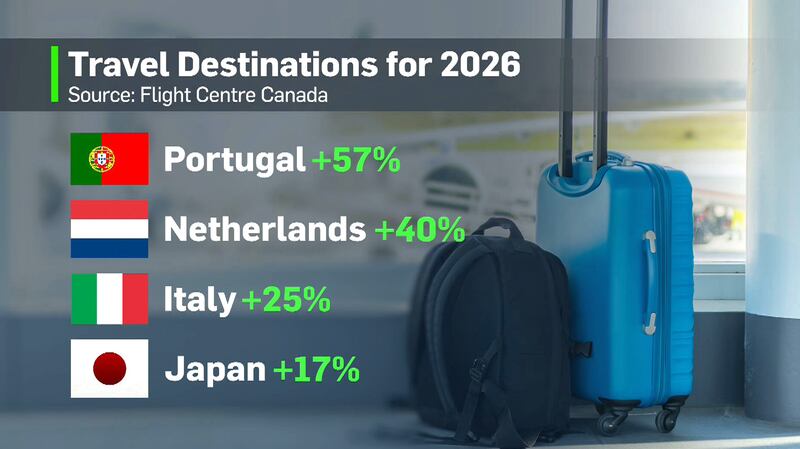
Of the summer destinations Canadians have already booked, Portugal has seen a 57 per cent increase this year, according to Flight Centre Canada. The Netherlands is up 40 percent, Italy 25 per cent and Japan has seen an increase of 17 per cent.
Choi said some Canadians are also considering more budget-friendly locations.
“That could be booking a trip to South America, Central America, Panama, or Belize. I know I’m personally looking at Mexico,” said Choi.
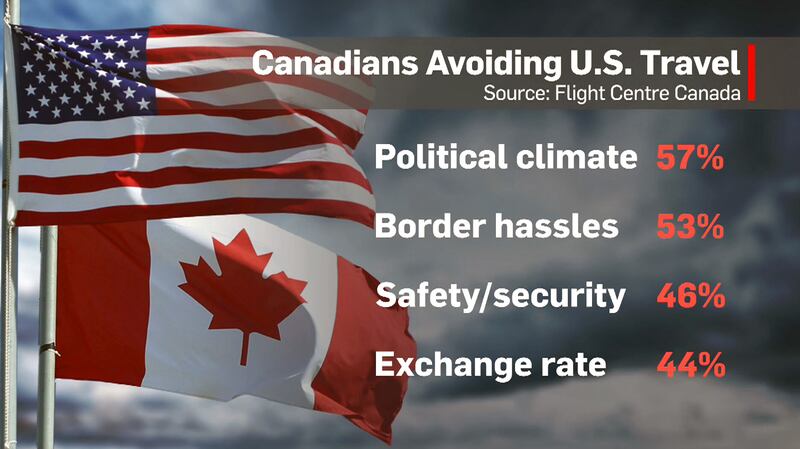
A survey by Flight Centre found that Canadians are still avoiding travelling to the United States, with 57 per cent concerned about the political climate, 53 per cent worried about border hassles, 46 percent having safety and security issues and 44 percent saying they have concerns about the exchange rate.
The survey found there has been an increase in domestic bookings, with more Canadians deciding to stay home and travel within Canada this summer, with the most interest in Atlantic Canada and Alberta.
Durakovic said if the conflict continues, expect travel costs to remain high.
“As long as the situation in the middle east is uncertain, we do not anticipate airfare prices will be decreasing,” said Durakovic.