Toronto Mayor Olivia Chow says the Eglinton Crosstown LRT will begin running later into the night starting Sunday, alongside changes expected to cut travel times for riders.
The extended hours and faster trips mark a shift out of the line’s early testing phase, with the city aiming to make Line 5 more viable for commuters — especially late-night workers who have relied on other alternatives including shuttle buses and rideshare services.
In an interview with CP24 on Friday, Chow revealed service on the Eglinton Crosstown LRT will now run until 1:20 a.m. from Sundays to Fridays and 12:30 a.m. on Saturdays.
“Line 5 Eglinton Crosstown. Remember how long we’ve been waiting for it? It’s open, but it was a test period. Now we are extending the hours to very late, to 1:20 a.m.,” she said, noting that service previously ended at 11 p.m.

The mayor said the change is paired with signal priority upgrades along above-ground portions of the route, allowing trains to move through intersections without waiting behind turning vehicles.
The result: trips are about 10 minutes faster each way, or roughly 20 minutes saved on a round trip.
In a news release, the TTC explains “trains will arrive approximately every four minutes at the busiest times of day and six to 10 minutes at off-peak times.”
Officials add that the TTC’s Blue Night bus service will continue to operate from 1 a.m. until the start of train service at 6 a.m. Monday to Saturday, and 1 a.m. to 7:30 a.m. on Sundays.
“It is really fast because two thirds of it is underground. It’s almost like a subway, and then the above ground... because of the signal priority, it’s so much faster,” Chow said. “People have been loving it, because it’s smooth, it’s trouble free, and I’m so pleased that it’s happening.”
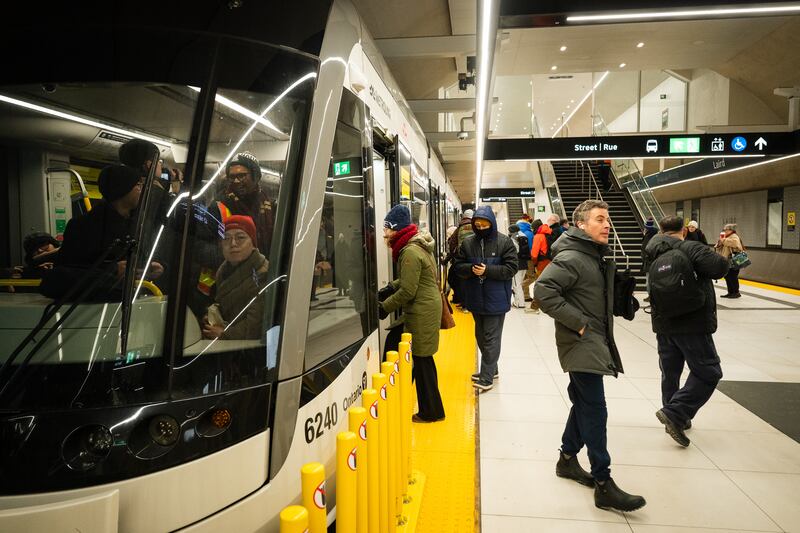
The 19-kilometre line, which runs between Mount Dennis and Kennedy stations, officially opened on Feb. 8 after years of delays.
Early travel times clocked in at roughly 50 to 55 minutes end-to-end, based on opening day rides.
Officials had said signal priority would be phased in over time, with full implementation expected by May.
Chow said the improvements, including more trains and reduced travel times, are particularly important for shift workers who previously had to rely on ride shares, taxis or shuttle buses late at night.

