There’s a new chargeback scam targeting businesses, in which criminals use stolen credit cards to buy items over the phone.
Once they get merchandise, they demand refunds and leave the store owner on the hook. While some credit card chargebacks are legitimate, criminals are using this loophole to get merchandise for free.
One Ontario business told CTV News they are out thousands of dollars after purchases were made and orders had been fulfilled, but shortly afterwards, chargebacks were requested.
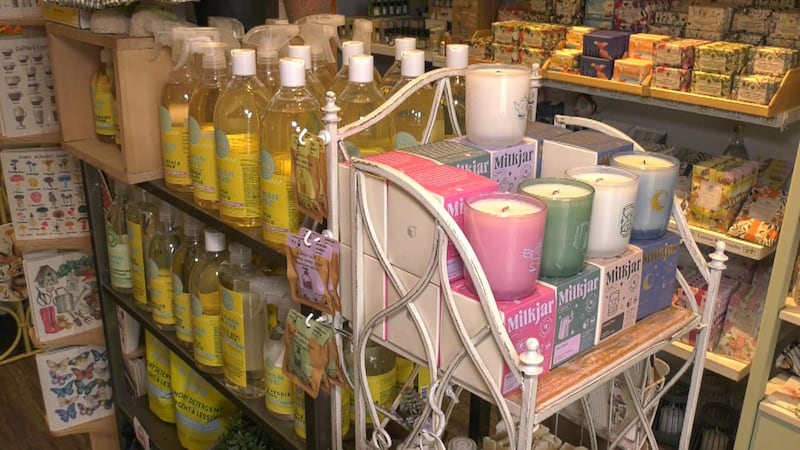
“These are Jellycats. They are the number one plush toy in the world,” said Christina Kotiadis, owner of Lemon and Lavender.

Lemon and Lavender is a shop in Bloor West Village that sells adult gifts, toys, children’s books, and greeting cards.
Kotiadis said that it was almost Christmas, a busy time for her store, when someone called in to order larger versions of the plush toy.
“It was an elderly British woman who said she needed to purchase gifts for her grandchildren to go back to the U.K.,” said Kotiadis.
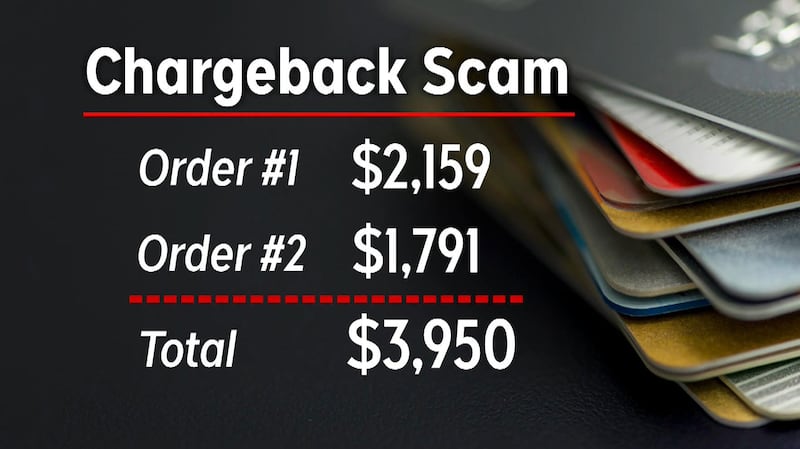
The first order was just over $2,100, and she paid with a credit card over the phone.
“Once she purchased them, she said a driver was going to come and pick them up, and we didn’t think twice about it. We wrapped it up nicely for her. We met the driver at the door, and that was the end of it,” Kotiadis said.
Days later, the same person called back and made another order for almost $1,800.
Kotiadis said everything seemed fine, but the following month, the credit card company issued a chargeback, claiming the card used was stolen.
When CTV News reached out to Cornèrcard, a financial card provider based in Switzerland, a spokesperson said in a statement, “Our customer has confirmed in writing that he did not carry out the transactions in question. In fact, the IP purchase address of the alleged purchaser is a Canadian address (our customer has no connection to Canada) and the customer’s surname and first name, as provided by the merchant (“Amanda Louie”), do not match our effective customer’s personal identity data.”
“Moreover, the mobile phone number provided by the merchant – with which the merchant apparently had some contact – is clearly a Canadian number; it does not match the mobile phone number of our customer stored in our system and has no other discernible connection whatsoever to our customer. These circumstances clearly indicate that the transaction is fraudulent, which is why charge-back proceedings were subsequently initiated.”
Kotiadis is now out almost $4,000.
“So it’s a whole other element to the scam that you’re not dealing with the person on the other end of the card. We are dealing with an unknown figure who placed the order,” said Kotiadis.
With chargeback fraud, retailers lose the purchase amount and the merchandise. They also must pay shipping fees, they’re penalized by the payment processor, and they waste time fighting fraud.
When Kotiadis posted what happened on social media, other businesses said the same thing had happened to them.
“This seems to be an ongoing, continuous scam using the same format, an elderly British woman calling and buying for her grandchildren,” said Kotiadis.
She also told CTV News that the store is redirecting all callers to its website for purchases and that the scam is a warning for others.
“Our mistake is that we took the order on the phone, so if you are taking a larger order, make sure the person is physically putting in their credit card,” Kotiadis said.
According to the Canadian Federation of Independent Businesses, stores impacted by chargeback scams lost an average of $7,800 in 2024, and it’s continuing to get worse.
Many also worried about AI, and Kotiadis believes the British grandmother who communicated with her on the phone, most likely was AI generated.

