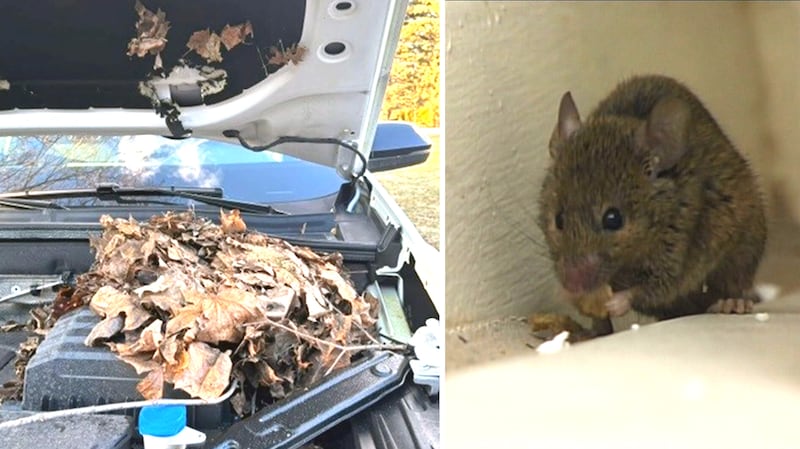
An Ontario woman is speaking out to warn others after rodents built a nest in the engine compartment of her vehicle, resulting in thousands of dollars in repairs for the second time in a year.
Laura McAnulty, of Rockton, Ont, told CTV News she’s paid more than $13,000 for repairs to two of her vehicles as a result of the incidents.
“I’m kind of at a loss as to what to do because there are squirrels everywhere,” she said.
McAnulty previously owned a 2019 Kia Sorento. Last fall she noticed squirrels had built a nest in the engine compartment chewing wires and other parts.
“There was $7,500 in damage from rodents that had chewed through a whole bunch of wires and everything,” she said.
After paying the $7,500 for repairs, McAnulty said she decided to get a 2025 Volkswagen Atlas. However, in March the same thing happened again.
This time, the repairs cost $6,000.
“It’s been a lot of money, a lot of time, and a lot of inconvenience and we don’t know what to do to prevent this from happening again,” McAnulty said.

Some signs you have rodents under the hood of your vehicle are seeing scratches, chewed wires, droppings, and nesting materials.
“Mice are dirty. Certainly, there’s respiratory health concerns. But not to mention, they just tear the car up” said Michael Crossen, of Consumer Reports.
Squirrels may climb into the engine compartment and mice may enter your cars through air vents.
“We noticed some debris down on the floor of the vehicle, a little bit of a smell. We went right to the pollen filter and sure enough, that’s where we found the mouse’s little home,” Crossen said.
You’ll need to clean and inspect the vehicle.
“We want to clean it up and disinfect it. We need to take care of any repairs that need to be done due to the mouse being in the car. And then we need to prevent it from happening in the future,” he said.
To deal with the mess, Consumer Reports advises people to use protective gloves, disinfectant spray, and disposable towels.
“You definitely don’t want to use a vacuum cleaner because it turns all that stuff into airborne contaminants and then you can breathe them in and cause respiratory problems. Then you want to disinfect the area, replace that pollen filter with a brand new one and put everything back together,” said Crossen.
If you see any wires where the coating has been chewed through, your car might not be safe to drive and you may need to have it checked by a mechanic.
As for keeping those rodents out, Consumer Reports suggests using peppermint oil pouches.
“There are things you can do to prevent this from happening in the future. There are peppermint oil pouches that you can put inside your vehicle, and there’s also a tape that actually has capsaicin in it. That’s the hot part of a chili pepper. If they try to chew on the wiring, they hate the way it tastes and they go find somewhere else to live” Crossen said.
It is also best to keep your car free of food debris.
If you park in a garage, keep your door sealed tight and put mouse traps out.
As for McAnulty, she said she’s tried many fixes to try and keep squirrels and mice away from her car but she’s worried it could happen again.
“I’m not really sure what we are supposed to do and we are not really getting the answers from car manufacturers as to what can be done to prevent this,” she said.
You can also buy rodent repellent sprays and some drivers have had success with dryer sheets or Irish Spring Soap, Crossen says. If your car is damaged you can also check with your insurance company to see if it may be covered under the comprehensive part of your policy.