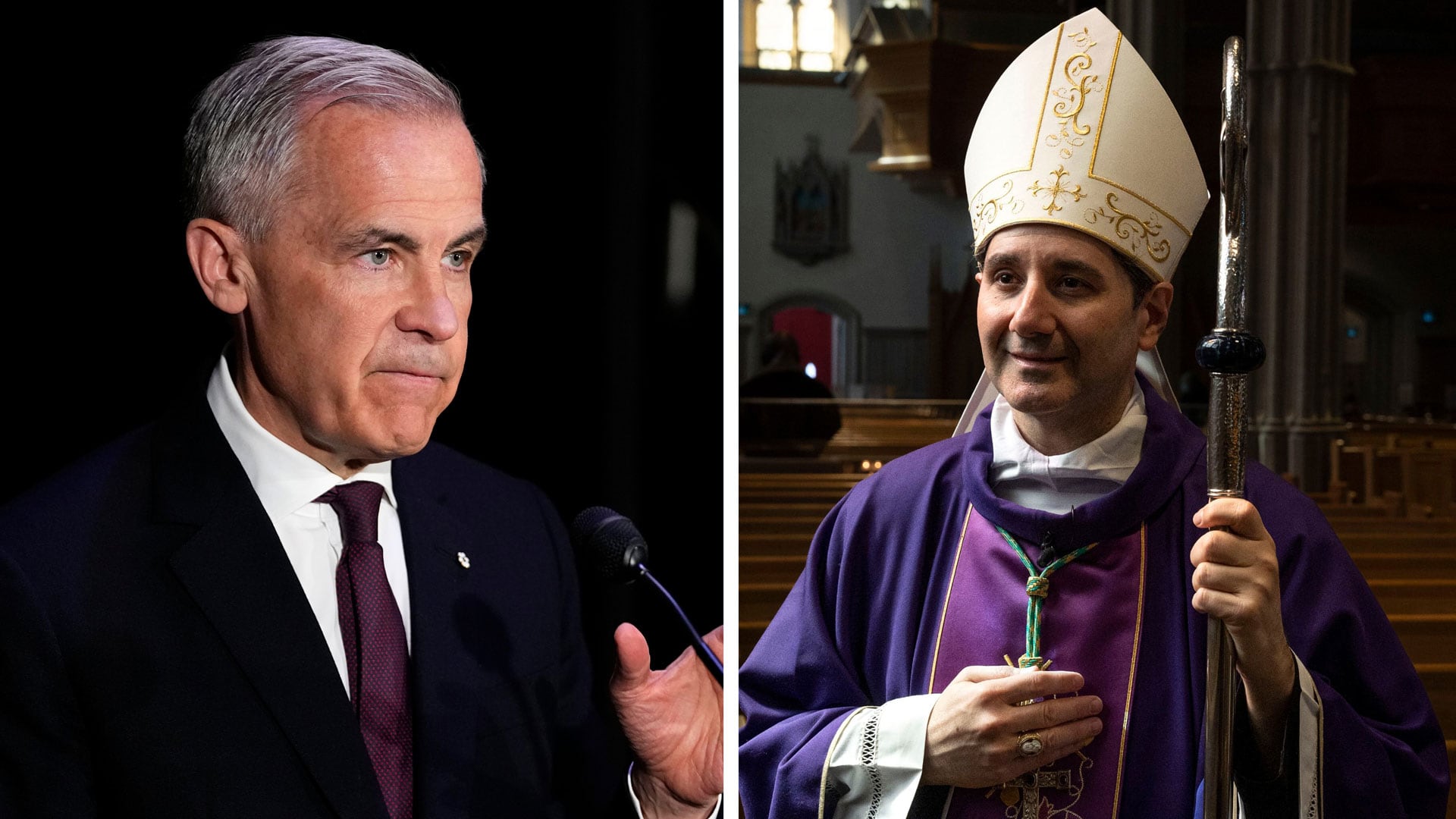
The Archbishop of Toronto is appealing to Prime Minister Mark Carney’s Catholic faith and urging him to “choose life and not death” when it comes to the planned extension of assisted dying eligibility.
In a letter dated April 20, Archbishop Frank Leo expressed support for a Conservative private member’s bill that would prevent access to medical assistance in dying from being extended to people whose sole underlying medical condition is a mental illness.
That change is set to take effect in March 2027. A special joint parliamentary committee of MPs and senators is currently studying whether Canada is ready for that to happen.
Leo urged the prime minister to allow Liberal members of Parliament to vote freely on the private member’s bill to restrict MAID.
“I also urge you and the minister of justice to consider measures that restrict further expansion of assisted suicide in our country and instead prioritize investments in palliative care, mental health support and resources for those who are increasingly marginalized and isolated,” Leo wrote.
The archbishop’s office said it has not received a reply from the prime minister. A similar letter was sent to all MPs in the archdiocese.
Carney’s office refused to answer any questions about the letter or his government’s plans for assisted dying.
Health Minister Marjorie Michel would not say whether she believes the country will be ready for the planned extension.
In an interview on Thursday, she said she and Justice Minister Sean Fraser are waiting for the committee’s report, which is expected sometime in June.
“It’s a big decision. Is there a good or bad decision? I don’t think so,” Michel said.
Concerns have been raised that the committee is not hearing balanced testimony from witnesses and that its two chairs have openly stated they are opposed to expanding assisted dying to people with mental illnesses.
Canada legalized medical assistance in dying in 2016 after a ruling from the Supreme Court of Canada struck down sections of the Criminal Code that made it illegal to help someone end their life.
In 2021, the former Liberal government passed a new law in response to a ruling in Quebec Superior Court that found it was unconstitutional to restrict assisted dying to people whose deaths were reasonably foreseeable.
The expanded legislation included a clause that would allow people suffering solely from a mental disorder to be considered for an assisted death, provided they meet a stringent set of eligibility criteria.
Mental health professionals and provinces raised alarms about the complicated nature of those assessments. The government delayed the extension until 2027 to give provincial health systems and health care workers time to prepare.
One of the witnesses at Tuesday evening’s meeting of the special joint parliamentary committee was Brian Mishara, director of the centre for research and intervention on suicide, ethical issues and end-of-life practices at Université du Québec à Montréal and a former president of the Canadian Association for Suicide Prevention.
“I believe that MAID should be available when suffering is not remediable by other means,” he told the committee.
“However, in the case of mental illness, this is not possible.”
That concern has been echoed by several other witnesses and medical professionals during the committee study.
But more than one witness has also suggested that the committee appears to be deliberately calling witnesses who will argue against the extension.
Jocelyn Downie, a professor emeritus of law at Dalhousie University who has studied assisted dying for decades, said she was alarmed to see the committee call nearly twice as many witnesses who were opposed to the expansion than those who supported it.
She also noted it has not heard from people with lived experience with mental illness who are currently ineligible to seek an assisted death.
The Canadian Psychiatric Association, which has drafted clinical guidelines for assessing patients for MAID, has written a letter to the committee offering to appear and refuting what it says are false statements made in past meetings.
Later in Tuesday’s meeting, Sen. Kristopher Wells said that most of the witnesses called before the committee so far had “made the false equivalency between requesting MAID and having suicidal ideations.”
“For the record, I want to point out that to receive a medically assisted death in Canada, a person has to be eligible under strict rules laid out under the law, and they have to go through a rigorous process for multiple medical professionals to deem them eligible,” he said.
The committee is set to wrap up its hearings on May 5.
This report by The Canadian Press was first published April 30, 2026.
Sarah Ritchie, The Canadian Press
— With files from Hannah Alberga in Toronto

