
Ontario wants to give special constables the power to arrest people caught doing drugs on public transit through a regulatory change aimed at cleaning up subways and buses in the province.
On Monday, the province’s solicitor general announced amendments to the Restricting Public Consumption of Illegal Substances act, a law passed last year which prohibits drug use in public spaces.
Under the existing law, police officers and provincial offences officers can direct a person using drugs on transit to stop consuming the illegal substance and leave the area. Those officers can also seize the narcotics and place those individuals under arrest if they don’t comply with the act.
Monday’s announcement expands the enforcement of those measures to special constables.
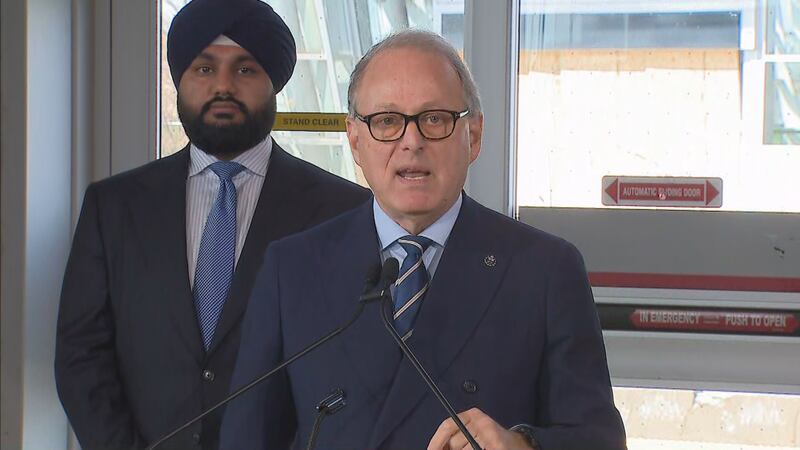
“We want to make sure that they (special constables) can tell a person who’s openly using an illegal drug, ‘Stop.’ If they won’t stop, then they may issue a fine or a warning,” Michael Kerzner said Monday. “If they still won’t cooperate, they’ll be asked to leave the premises. And that’s why it’s important that the special constables be able to make an arrest.”
Kerzner added that if an arrest is made by a special constable, the police will be called.
Those convicted under the provincial code could face a maximum fine of $10,000 and/or six months in prison.
Asked if the legislation could potentially push those who consume drugs to use at adjacent local businesses, Kerzner pointed to the strength of local policing efforts as a deterrent.
“The security network is sufficiently strengthened that if somebody tries to migrate from a subway station, as example, to a local coffee shop, that there will be somebody in the police service that will make the necessary arrests if needed.”
Before Monday’s announcement, Premier Doug Ford had teased that “tough new rules” were coming to combat public drug use on transit.
“We’re bringing in tough new rules to crack down on people using drugs on public transit so we can keep our communities safe,” he said in a tweet.
The province previously hinted at the change in February. Ford stated at that time that Ontarians were “scared” to go on the subways due to the public drug use. Critics of the proposal say that giving special constables greater power is a mistake, and that more social supports are needed to support those who use drugs.
The president of the Ontario Special Constable Association welcomed Monday’s news, saying the legislative changes would give its members the power to make transit safer for riders and staff.
“The OSCA is pleased to see the government’s recognition of special constables as essential, professional law enforcement partners that can be relied on to deliver public safety within our varied roles across Ontario,” Sarah Kennedy said in a statement.
Toronto Mayor Olivia Chow reacts
At an unrelated news conference, Toronto Mayor Olivia Chow agreed that while public transit is not the place for drug use, removing those individuals doesn’t fully address the problem.
“We need more treatment beds. We also need more support workers, because ultimately, if they are addicted to drugs, we need to help them get out of the addictions, both with a place to stay, a shelter and treatment,” she said.
The Ford government previously closed supervised consumption sites in the province, moving to an abstinence-based model known as homelessness and addiction recovery treatment (HART) hubs.
Kerzner was asked about what data the province had to justify the legislative change and said that if even one person took a subway ride and felt uncomfortable that someone was consuming illegal drugs, “then that’s one too many.”
Targeting illicit drug producers, landlords who permit drug production
Also included in Monday’s announcement are provisions to crack down on illegal drug production. The province says that, as part of an upcoming legislative package, owning, using or selling devices like pill presses to make illicit narcotics would be prohibited.
The ownership, production or trafficking or precursor chemicals to make illegal drugs would also be prohibited.
As well, Kerzner said the province will bring the Measures respecting Premises with Illegal Drug Activity Act into force, making it an offence for landlords to knowingly allow illegal drug production to occur on their property.

