A rare virus that has killed three people on a cruise ship in the Atlantic Ocean can carry an incubation period of more than four weeks, complicating efforts to trace its spread, an infectious disease specialist says.
Dr. Isaac Bogoch, who works at Toronto General Hospital, tells CP24 that people can develop symptoms anywhere from one week to four weeks after being exposed to hantavirus.
That lengthy incubation period, he says, could make it challenging to determine whether there was person-to-person transmission of the largely rodent borne virus onboard the MV Hondius or whether those who have been sickened were exposed to the virus prior to the ship departing Argentina for Antarctica.
“The key point here is we don’t know yet and they have to conduct their investigations,” he said. “The issue with hantavirus is it has quite a long incubation period. It can be one week to even north of four weeks so it might have been acquired on land in Argentina and people just got sick at different times because of the incubation period or possibly people got sick on the cruise ship and then perhaps transmitted it to other people on the cruise ship.”
There are four Canadians among the 149 people onboard the cruise ship.
In its latest update, the World Health Organization said that it has identified seven cases of hantavirus among those on board so far.
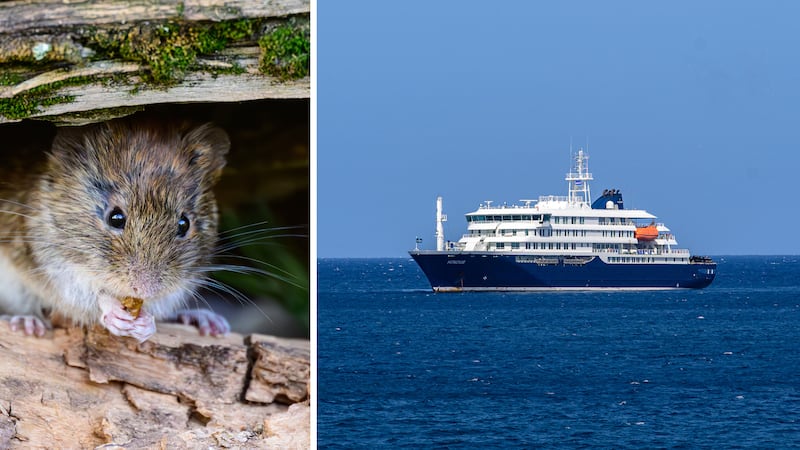
Bogoch said that the virus is “fortunately very rare” in Canada and only results in about three to five cases every year.
But he said that it can cause severe illness when cases do surface from time to time.
“It can be very severe and it is frequently causing a very severe respiratory illness. Many people are cared for in the hospital, they might need intensive care unit care and the mortality rate for cases, at least the North American version, is upwards of 20 per cent,” he said.
Bogoch said that while the strain of the hantavirus seen in Canada does not appear to be spread from person to person, he said that there is “some evidence” of that type of transmission in parts of South America.
“Hantavirus is sort of an umbrella term for a lot of related viruses. The type of hantavirus that is in South America actually has some evidence of transmission from person to person, whereas there is less evidence of that for the type that we are seeing in North America,” he said. “So certainly those who are part the investigation on the cruise ship are looking for potential evidence of human-to-human spread, although most cases are acquired from an exposure to nature where this virus exists.”

