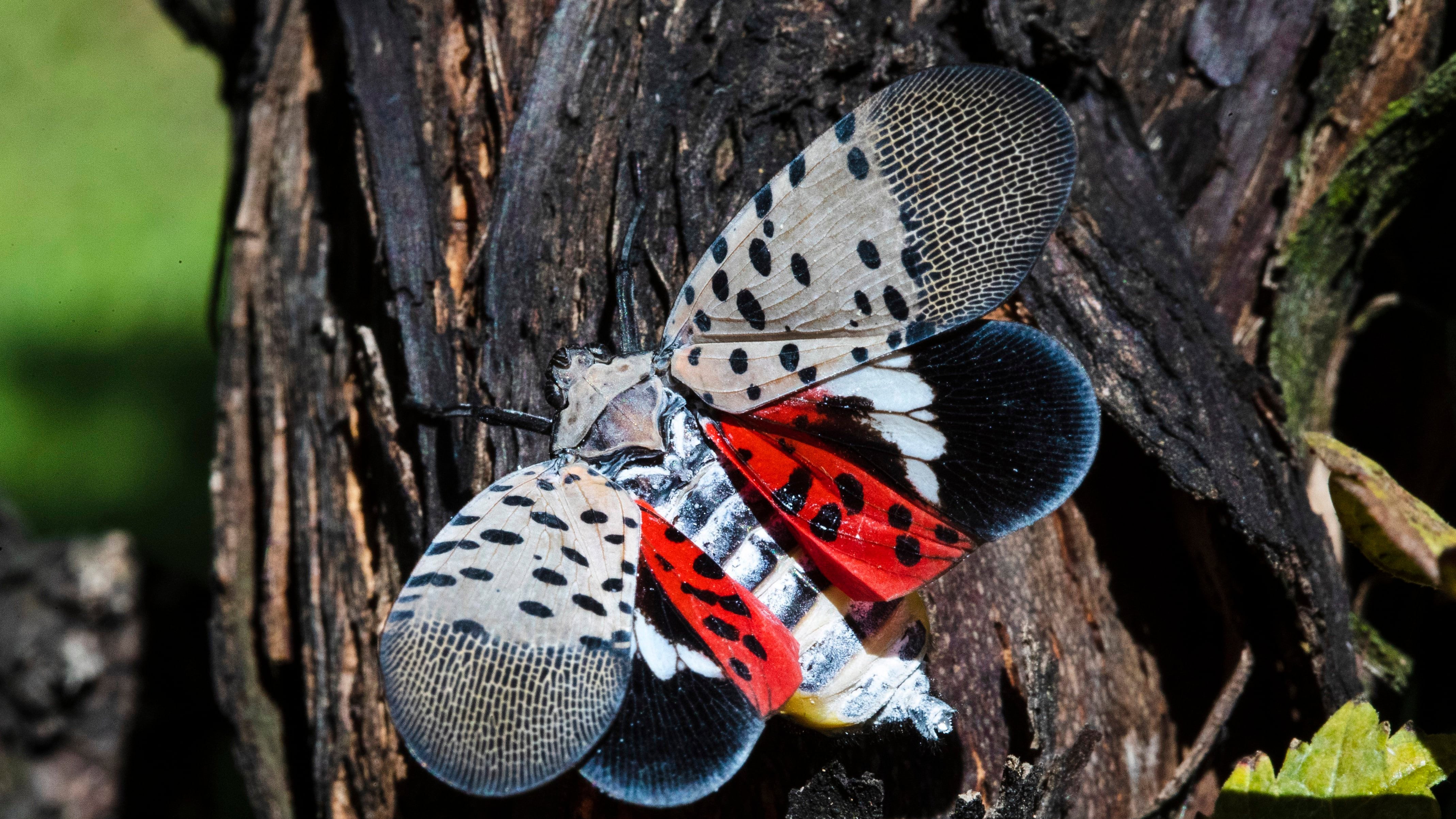
An invasive insect species that can be “very dangerous” to plants was recently spotted in the province.
A dozen spotted lanternflies were found in St. Catharines, Ont. this March, according to the Canadian Food Inspection Agency (CFIA). One Ontarian shared photographs online of what appears to be a dead, adult lanternfly in their hand, which was reportedly discovered on the afternoon of March 12.
The CFIA confirmed to CTV News Toronto the spotted lanternflies were found, dead, in an imported shipment of empty planting pots from an “infested” area of the United States, but did not specify where exactly.
The spotted lanternfly, formally known as Lycorma delicatula, is native to China but has been making a greater appearance in North American within recent years.
“The spotted lanternfly has become increasingly a concern in northeastern North America,” Scott MacIvor, an associate professor at the University of Toronto Scarborough in the Department of Biological Sciences, said in an interview with CTV News Toronto.
“Although this area faces issues from all kinds of invasive species of plants and insects and so on, because of how obvious this particular one is, there’s a great opportunity to get the public involved in monitoring that kind of initial detection.”
This particular planthopper, in its adult form, is vibrant with vermilion hues and black dots speckled on their wings. The invasive species can also lay between 30 and 50 eggs at a time.
While MacIvor couldn’t exactly pinpoint why this invasive species is now being found in Ontario, he hypothesizes the spotted lanternfly is here “exploiting opportunities for resources.”
Their host plant—colloquially known as the tree-of-heaven—is a deciduous tree that is a restricted invasive species in the province. The spotted lanternfly bites through the bark when they feed and suck on the sap, leaving behind a sugary substance (called “honeydew”) that can promote the growth of black sooty mold that is seriously damaging to plants.
Though the tree-of-heaven is their primary host, MacIvor notes that much of the flora found in Ontario are food and nesting spots for the spotted lanternfly. In fact, the CFIA says it can feed on more than 100 species of trees and plants.
“Their invasive tree, like as I said, is found all over northeastern North America, all over Toronto, and the plants that they like to feed on, unfortunately, are all over Ontario as well,” MacIvor said.
“You know, critically important is that they have a great deal of economic importance for our region. They feed on grapevines, they feed on hops, which are used in beer, they feed on our orchard trees … so it’s a bit of a smorgasbord for these creatures if they are able to establish.”
Great potential economic loss
Norman Beal, chair of Ontario Craft Wineries and president of Peninsula Ride Estates Winery, expressed concerns to CTV News Toronto about the spotted lanternfly’s presence as the winged insect can decimate vineyards.
“We’re very nervous about it here in southern Ontario, particularly in the Niagara Peninsula,” Beal said in an interview. “The spotted lanternfly is an invasive species that can be very dangerous to the health of tender fruit and, in particular, grape vines.”
This poses a great threat economically, MacIvor noted. The spotted lanternfly was first discovered in the United States in 2014 and, currently, there are established populations in 19 states, including New York, Illinois and Pennsylvania, which all border the Great Lakes.
An article published in the Journal of Integrated Pest Management in January 2025 hypothesized the economic losses in New York grape production if spotted lanternfly populations are either left uncontrolled or if local growers in the Lake Erie and Finger Lakes regions are unprepared, looking at what happened in Pennsylvania to back its hypothesis.
A study published in 2019, from Penn State’s College of Agricultural Sciences, estimated its local economy was losing US$50.1 million annually with a worst-case scenario projecting losses of up to US$554 million yearly and just shy of 5,000 jobs due to the spotted lanternfly.
The article published last year predicted production loss to New York’s grape industry could amount to around US$1.5 million in the first year of infestation before ballooning to a loss of US$8.8 million in the third year.
Squish or stomp them out
These winged insects were first discovered in New York State in 2020 and expanded to the New York City region a year later. Spotted lanternflies became such a problem in the U.S. that agricultural officials urged Americans to squish or stomp any of these critters they encountered.
“There was even a Saturday Night Live sketch about it,” MacIvor noted, pointing to a skit from 2022 where Bowen Yang came out on stage during Weekend Update dressed as a spotted lanternfly.
MacIvor says the campaign to stomp out these bugs was successful in New York, though it was met with some level of resistance.
“But, what’s the alternative? These things can produce a huge amount of eggs that are very well protected by a waxy substance which keeps them from being attacked. When they emerge, they’re going to weaken and kill a lot of native flora and agriculturally important plants that surround us, so what do we want?”
MacIvor cautions to squish the bugs that clearly are the spotted lanternfly, because there are other insects native to Ontario that are unharmful to the province’s ecosystem.
Though the spotted lanternfly has been discovered here in Ontario, the CFIA says it has not yet “detected or confirmed any established populations” in the country.
Ontarians who do see this invasive species are asked by the CFIA to catch the insect and take a picture or video if it and submit that footage to them. If spotting their egg mass, the national agency says to scrape it off and seal it in a container.

