
A multibillion-dollar facelift that will take a decade to complete and eventually allow Toronto Pearson International Airport to serve roughly 30,000 more passengers daily takes off today.
Officials say Monday marks the start of Pearson LIFT (long-term investment in facilities and terminals), the first phase of which will focus on airfield technology upgrades and expansion as well as an overhaul of the baggage network.
It’s one of the largest airport infrastructure projects in Canadian history and Pearson president and CEO Deborah Flint says the work will allow it to serve nearly 30,000 more passengers per day.
The initial $3-billion investment begins what the airport says is a “decade-long” transformation of the travel hub, which will enable it to serve 65 million passengers each year. Pearson saw 45 million passengers in 2023.
Flint said the project will also create additional 16,000 jobs at the airport.
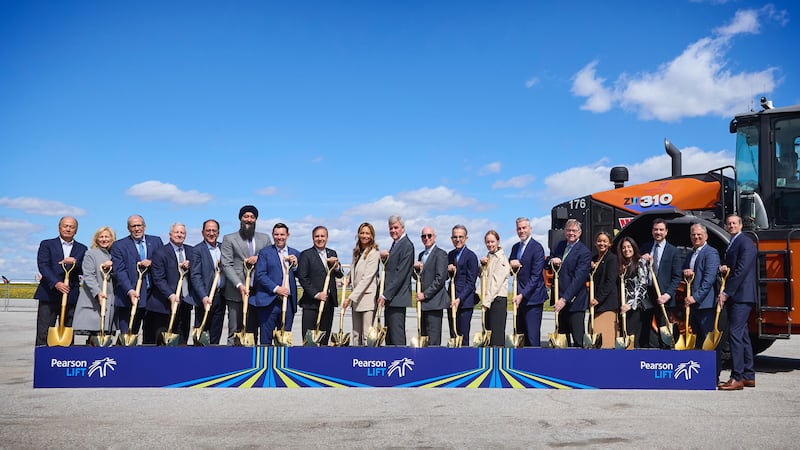
“The future is very bright, and our 52,000 workers will expand to 68,000 jobs over that term, as well, at a time where good jobs, stable jobs, are very important to the country and locally,” she said ahead of a ground-breaking ceremony.
What’s being upgraded
Pearson says that a new, state-of-the-art airfield lighting control and management system will enhance visibility and guidance to support operations on its runways and taxiways.
As well, investments are being made across 30 kilometres of its baggage infrastructure including new luggage carousels in Terminal 1. New cameras and sensors are also being added for early issue detection.
New aircraft stands and a high-speed taxiway are being added to an expanded and renewed 2.2 million square metre airfield, a move that will support 28,000 additional passengers daily.
Expanded electric vehicle charging and cleaner heating systems are also included in the scope of work.
The groundbreaking Monday comes after the airport said in 2024 that it needed to update its facilities to keep up with growing demand.
Flint said at the time that the project had been informed by the surge in travel the industry saw following the COVID-19 pandemic and the delays that followed.
What’s next?
Pearson says that, beyond the first phase of improvements, it plans to invest in Terminals 1 and 3 with “modernized” retail, amenities and passenger processing spaces.
The airport also plans to make investments in its parking facilities to optimize the arrival and departure experience.
As it prepares for 65 million annual passengers by the early 2030s, Pearson said it is also “evaluating” options for expanding its terminal facilities.

