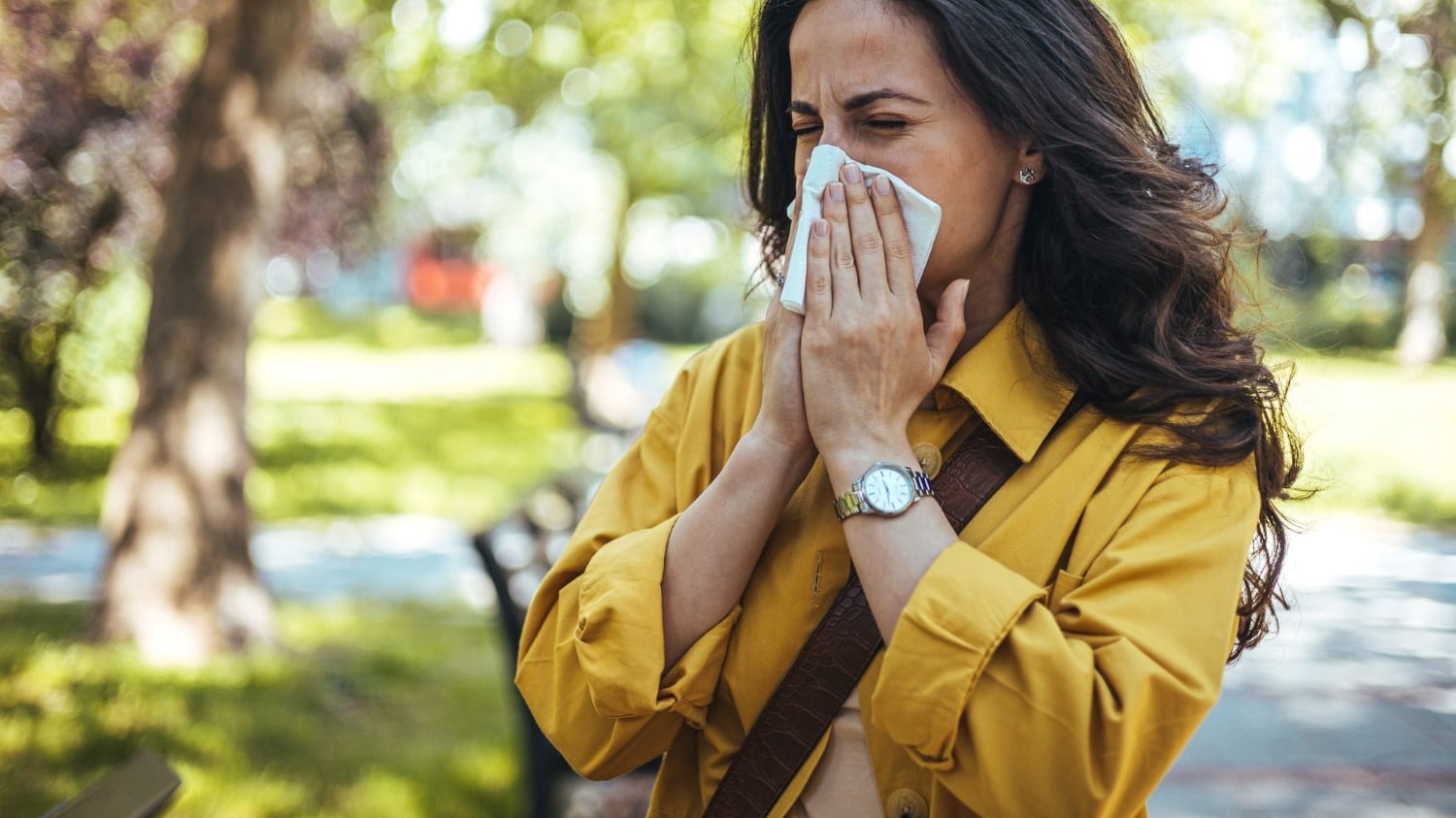
Seasonal allergy sufferers may be in for more watery eyes and runny noses this season as the Greater Toronto Area is seeing an “explosion of pollen” already this spring.
“For the whole GTA region, and for most of Ontario, we’re seeing a huge influx of pollen right now in the air that we wouldn’t necessarily traditionally see,” Daniel Coates, director at Aerobiology Research Laboratories, explained told CTV News Toronto.
That’s primarily due to the fact that trees that release pollen earlier, like cedar and maple trees, are doing so much later than usual this year. With their pollen being released at the same time as birch, oak, poplar and willow trees, Coates says Toronto is seeing an “explosion of pollen in the air.”
“It is a much more intense pollen season at this moment of time and probably will remain so for another four or five weeks,” Coates said, noting how it will end at a time where seasonal allergies to grass start to arise around mid-June.
Dr. Samira Jeimy, an associate professor at Western University’s clinical immunology and allergy division, says their aerobiologist noticed tree pollen starting earlier this year in March, when it was still cold in London, Ont.
“The reason why is because the tree pollens that are responsible for allergies are windborne and it can travel far,” Jeimy explained in an interview with CTV News Toronto.
“So, the pollen gets picked up from southwest U.S., southeast, U.S., and gets pulled all the way up to Ontario and impacts us.”
Tree pollen season will collide with grass season, Coates said, and with the prevalence of the highly allergenic ragweed, it could pose a problem for Ontarians who experience seasonal allergies.
Allergy capitals of Canada
Aerobiology Research Laboratories recently published a report highlighting what areas across the country have the worst allergy seasons, and southern Ontario dominated the top five list with Windsor, Hamilton, Barrie, and Kingston among the ranking.
Toronto is among the top 10, Coates says, pointing to how the city’s concrete jungle contributes to less pollen in the city. However, pollution can, in fact, worsen allergy symptoms.
Though climate change and extreme weather can influence what kind of allergy season will be experienced, Jeimy explains pollution can make pollen particles more allergenic.
Like how adjuvants can be added to vaccines to enhance its effectiveness to a person’s immune system, she says something similar happens with pollution and pollen.
“In a similar fashion, things like diesel particles can actually cling onto polyps and make them more exciting to the immune system. The immune system gets more easily activated,” Jeimy
“The other piece of it is that pollution and things like fire, ash in the sky, all of that can also directly cause mucous membrane damage and inflammation, which makes you more susceptible to allergic inflammation, because your mucous membranes are handling all of these different kinds of triggers.”
Pollen levels have doubled in 35 years
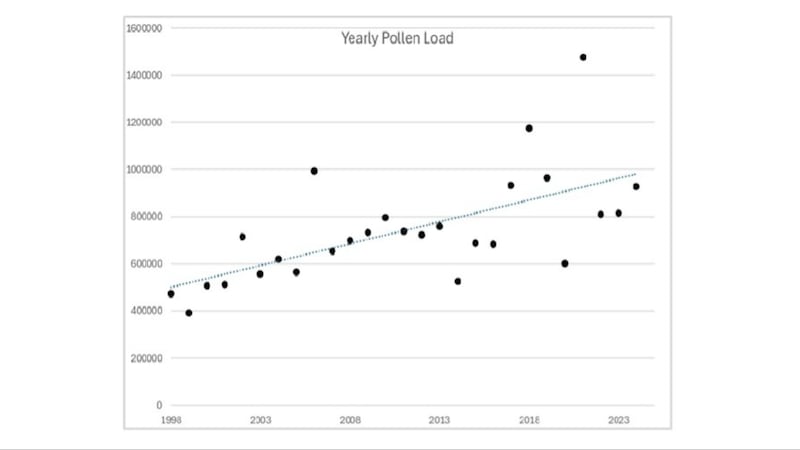
Aerobiology Research Laboratories has been monitoring pollen levels in Canada for more than 35 years, and Coates says those levels have doubled over that period.
“The bad news is, it’s only getting worse,” Coates said.
“It’s like a business … you have ups and downs every year, just like a business, but the trend line shows that we’re actually increasing pollen dramatically across Canada.”
Coates says the reason why pollen levels are worsening is two-fold: there’s no cure to seasonal allergies and global warming is promoting longer warmer weather. For those reasons, Coates says it’s important to know what exactly one is allergic to.
How to manage symptoms
Coates says it’s “incredible how many people don’t know what they’re actually allergic to.”
“We always recommend go see a doctor and then go to an allergist, find out what you’re allergic to, and then the best thing to do is know when it’s in the air,” he said.
Then it’s easier to track when the allergen is in the air.
Pollen sufferers, for example, would want to go for a walk after it rains because it washes the pollen out of the air—but the opposite applies to people who are allergic to spores.
Once allergy sufferers know what they’re exactly allergic to, Jeimy says they can start symptom management medications like nasal corticosteroids or antihistamines, adding that she usually tells her parents two to three weeks before allergy season begins so their noses aren’t as inflamed.
To manage symptoms, Jeimy suggests closing windows overnight as there is heavier exposure to pollen in the early morning hours due to the convection effect.
“When the weather is warm, the air is warmer. It actually pulls pollen particles up into the atmosphere and as the temperature cools down, things drop back down onto the ground,” she said, adding that it typically happens between four and 10 a.m.
“That effect is most prominent for pollens in the wee morning hours.”
Jeimy also suggests showering after heavy exposure to pollen, frequently changing bedding, and using a HEPA filter at home.
Coates adds going for a run indoors instead of outdoors, and disallowing pets in the bed as they can carry a lot of pollen.

