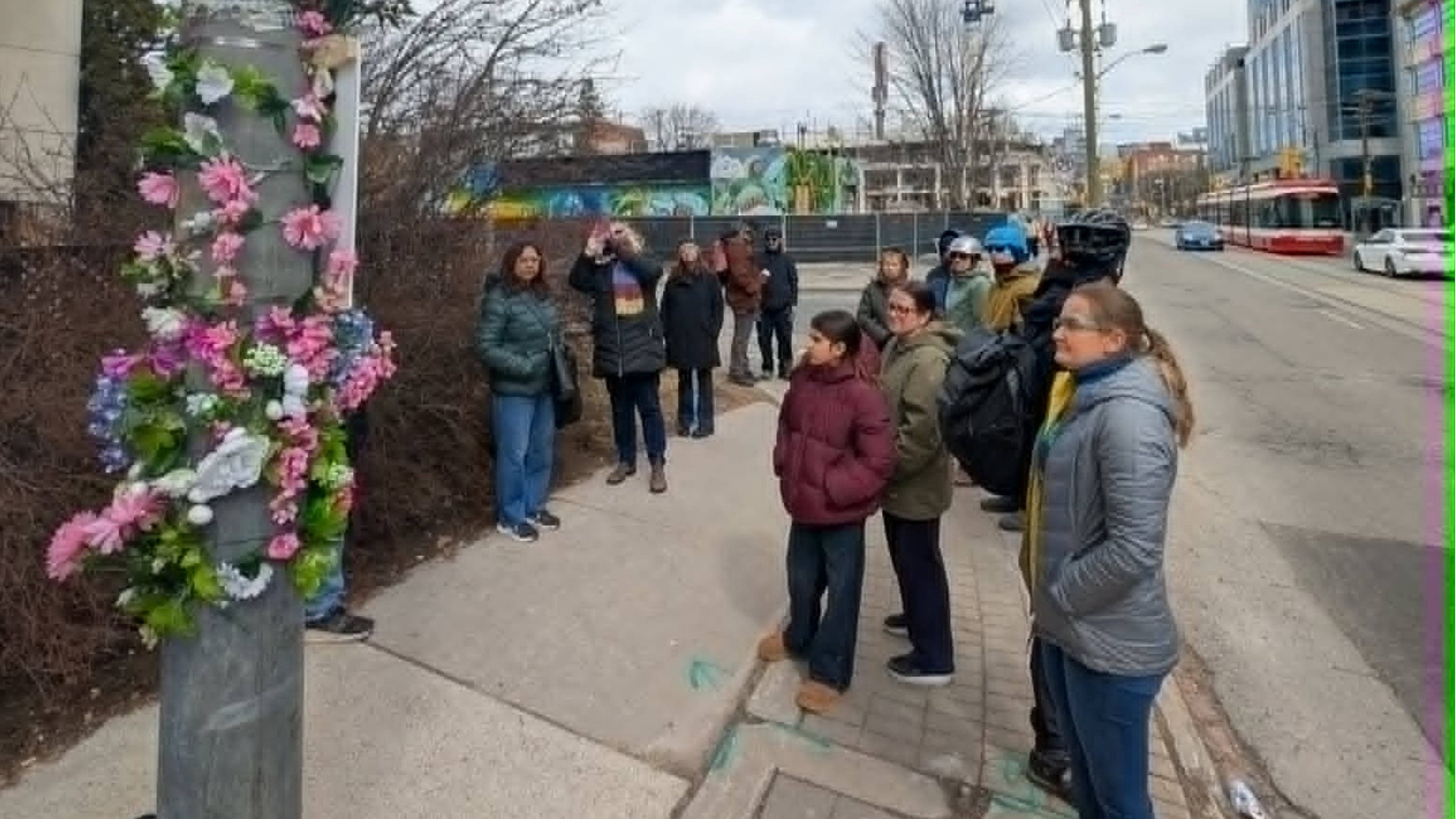
Memorial signs have started popping up in neighbourhoods across Toronto to honour pedestrians killed on city streets.
The new initiative, launched in late March, is spearheaded by Friends and Families for Safe Streets (FFSS), a group that works to end traffic violence in Toronto by changing laws, enforcement, street design, public attitudes, and traffic culture.
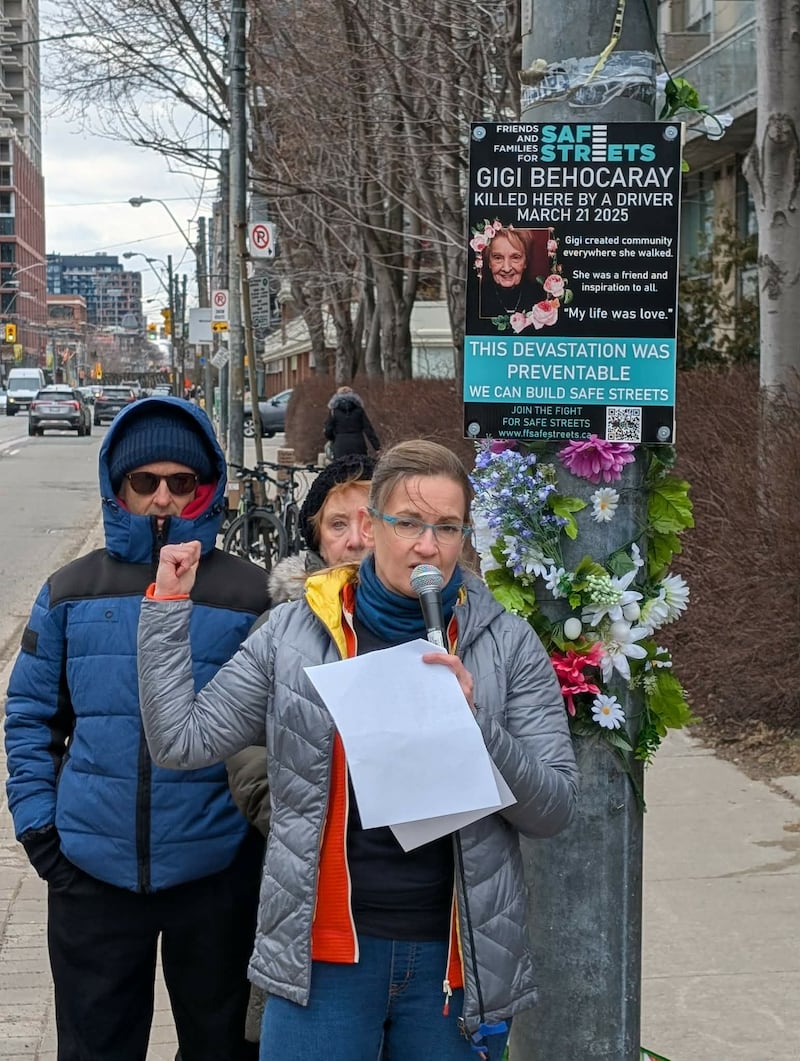
The first installation was erected on March 28 and memorializes 94-year-old Gigi Behocaray, who died on March 21, 2025 after being struck by the driver of a vehicle while walking near her home near King Street West and Massey Street in Liberty Village.
Behocaray was a beloved member of the community, and many were devastated by her tragic death, Jess Spieker, of FFSS, told CP24 during a recent interview.
“People really liked her. … The whole neighbourhood was sad when she was killed,” she said of the well-known area resident.
“Gigi should still be here enjoying life with her family. She is never forgotten,” FFSS wrote in a follow-up post on Facebook, thanking everyone who attended their inaugural pedestrian memorial.
The sign installed in Behocaray’s memory says she “created community everywhere she walked” and was a “friend and inspiration to all.”
“My life was love,” it read.
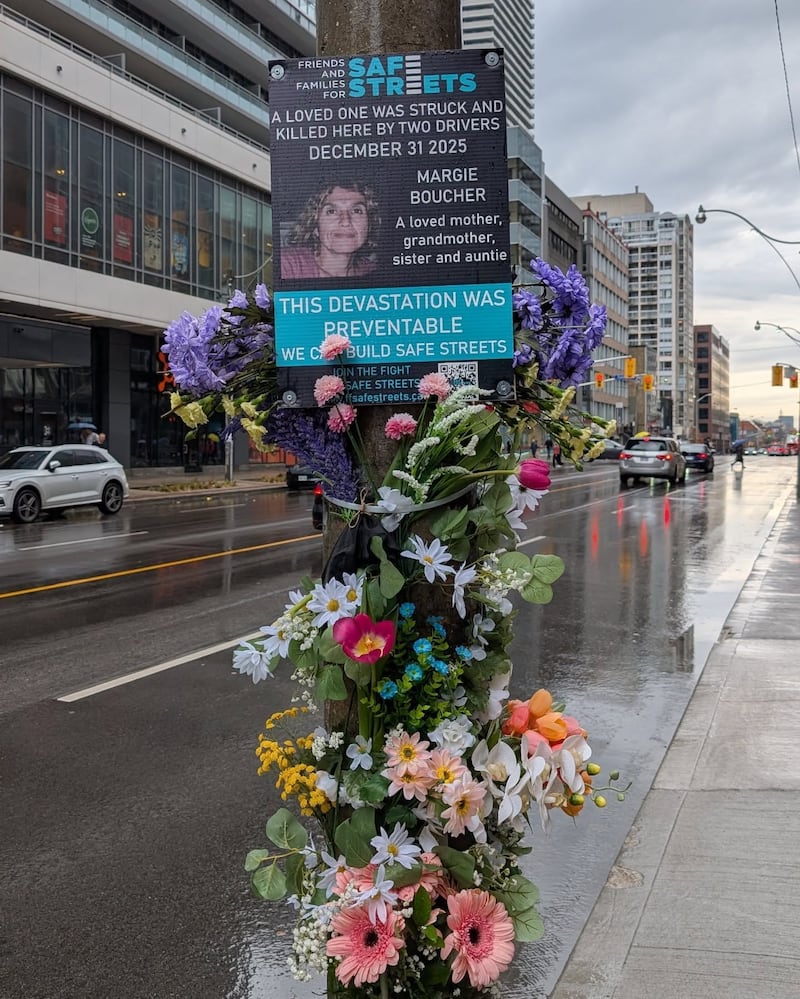
Friends and Families for Safe Streets’ second pedestrian memorial installation took place on April 18 for 70-year-old Margie Boucher, who died after being struck by two drivers, one of whom is still outstanding.
The incident occurred in midtown Toronto, on Eglinton Avenue East between Yonge Street and Mt. Pleasant Road, on Dec. 31, 2025.
The sign erected in Boucher’s memory states that she was a “loved mother, grandmother, sister and auntie.”
“Margie was dearly loved, and she is never forgotten. She should still be here. Her death must not be in vain,” FFSS wrote in a social media post.
Third pedestrian installation on May 13
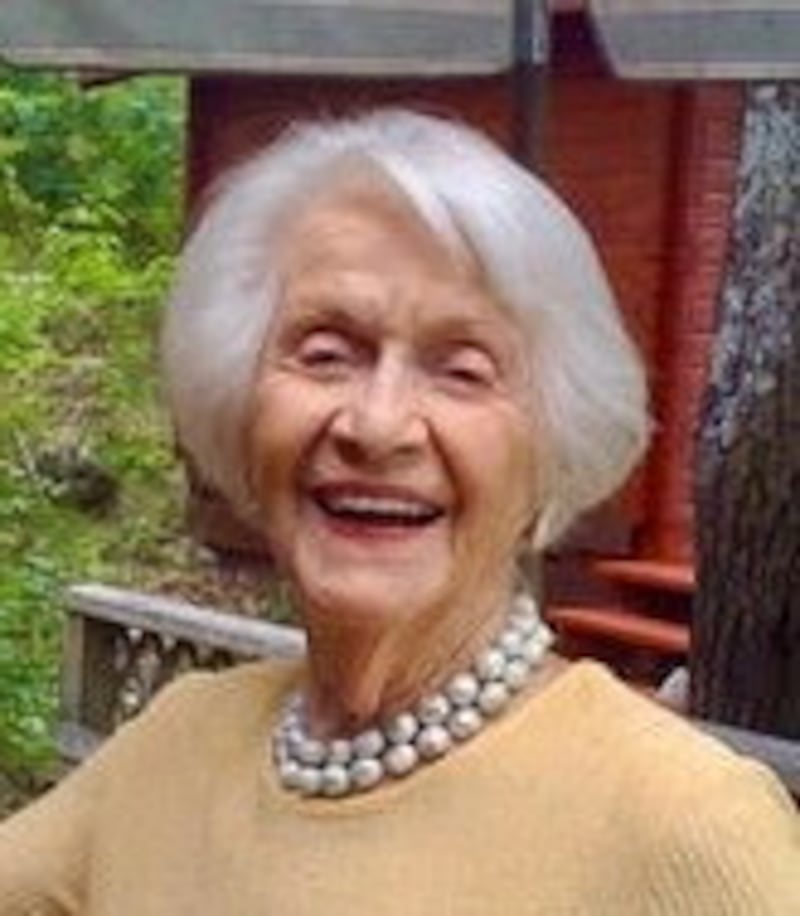
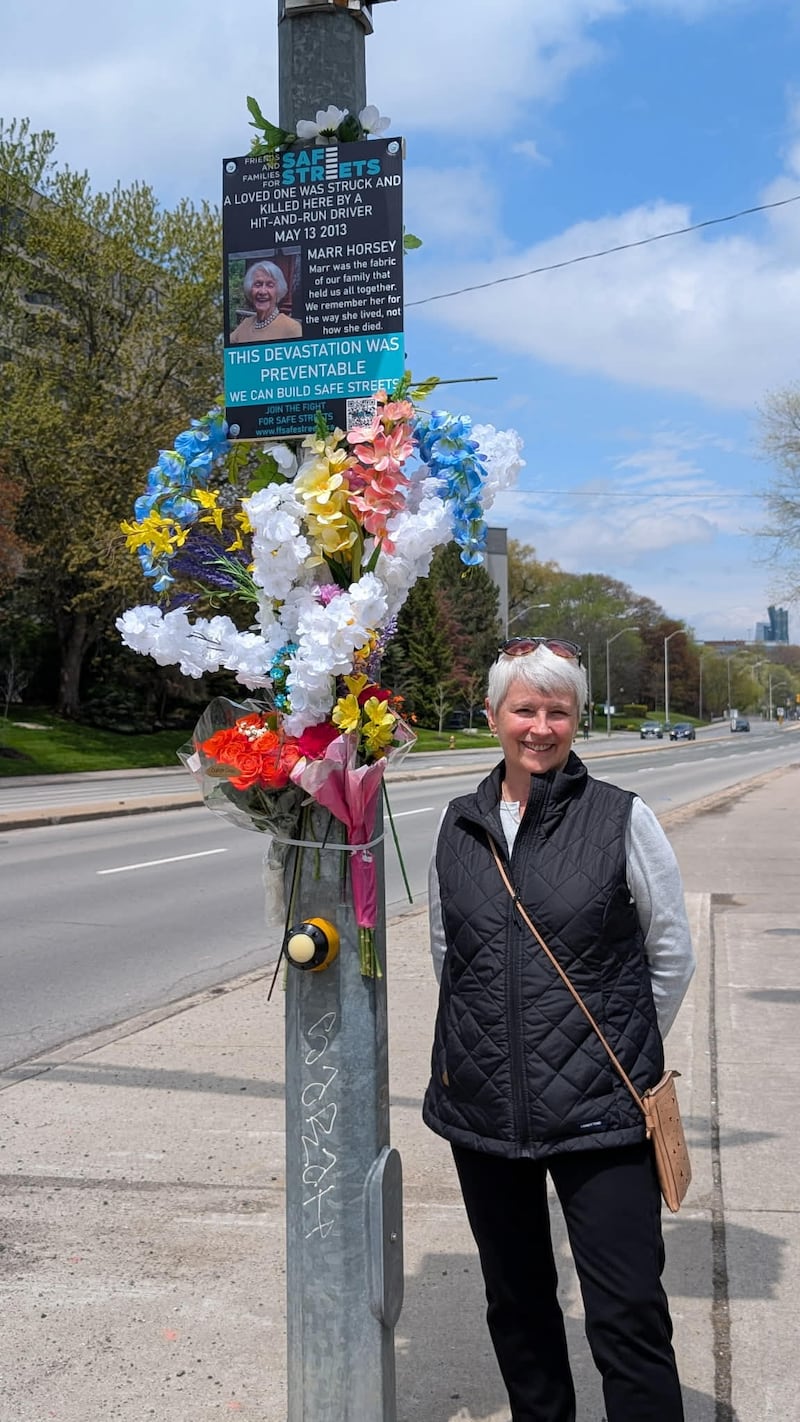
On Wednesday at noon, the group will hold its third pedestrian memorial installation to honour the life and memory of 90-year-old Marr Horsey, a “beloved mother, grandmother, and aunt” who was struck and killed in a hit-and-run near Yonge and Mill streets, just south of York Mills Road, on May 13, 2013.
“No matter the years that have gone by, her family still misses her deeply and thinks about her every day. This intersection remains as dangerous today as it was 13 years ago,” organizers wrote in an online invitation to the memorial.
‘Every pedestrian death deserves to be recognized’
Friends and Families for Safe Streets said it launched this initiative because “every pedestrian death deserves to be recognized.”
Spieker, who was severely injured when the bicycle she was riding was hit by a driver on Bathurst Street in May 2015, said the memorial program aims to both provide comfort to family members and friends of pedestrians who were killed as well as raise public awareness.
All signs erected are inscribed with the message, “This devastation was preventable. We can create safe streets.”
“No matter how many years have gone by, the grief and pain inflicted on people and families by road violence never goes away,” Spieker said in a news release.
“If a memorial existed at every location a reckless driver has killed someone on streets designed for speed instead of safety, the scale of this massive ongoing public health crisis would be more apparent to the public.”
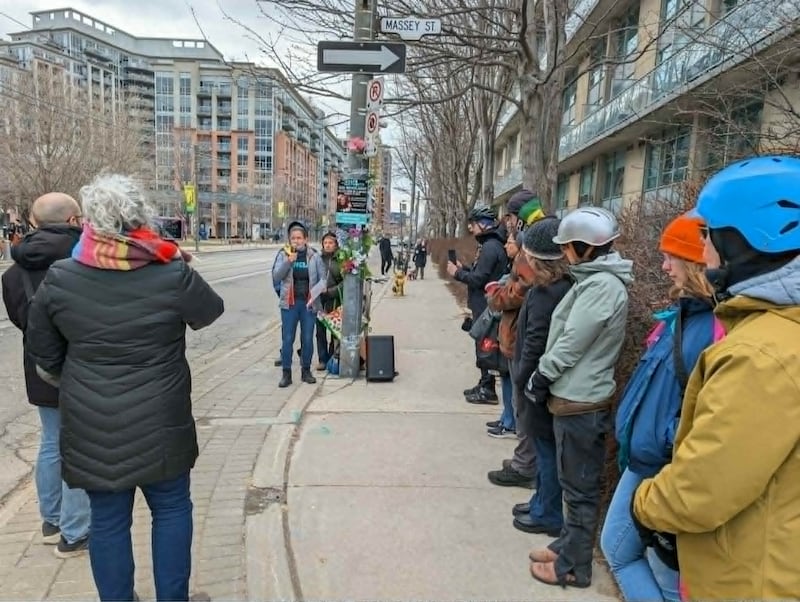
The pedestrian memorials are similar in concept to “ghost bikes,” which are placed near cyclist fatality sites in the Greater Toronto and Hamilton Area and are usually installed about a week after a death. The timeline for the pedestrian memorials, however, is much more open-ended.
In both cases, family members, friends, supporters, and advocates come together to remember the person who died where they were struck.
Ghost bike memorials also usually include a memorial ride.
- READ MORE: Laws must be ‘drastically changed’ to prevent more deaths on the road: GTA ghost bike creator
And while the new pedestrian memorial program has started off slowly, Spieker said she’s confident this “well-overdue” initiative will ramp up once more support comes in.
17 road fatalities in Toronto so far in 2026
So far this year, there have been 17 road fatalities in the city: 12 involving pedestrians, four involving motorcyclists, and one involving an automobile, according to the Toronto Police Service’s public data portal.
In 2025, there were 1,595 traffic collisions in the city, 42 of which were fatal. Of those fatal crashes, 21 (12.5 per cent) involved pedestrians.
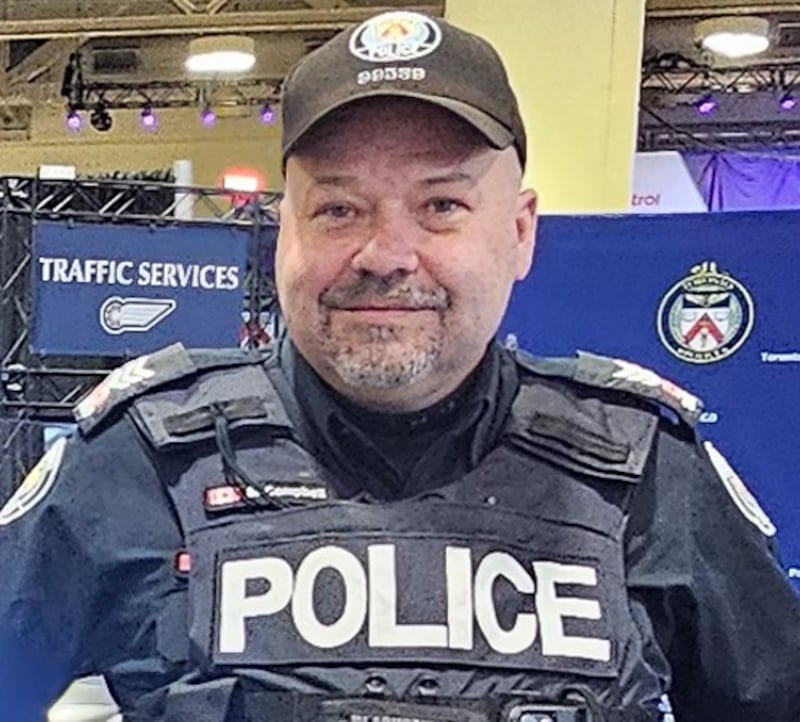
“Any fatality on the road, anywhere, is not acceptable,” said Sgt. Murray Campbell of the Toronto police’s Traffic Service Unit.
“These are obviously needless deaths. … We do not want to see this happen.”
Campbell said police analyze every road fatality, looking to see what circumstances led up to it, and if there are any trends that are emerging and any opportunities for improvement.
He said so far in 2026, most of the road fatalities in the city happened in the west end, with those killed ranging in age from 28 to 80.
Murray added so far this year there doesn’t appear to be any common denominators when it comes to pedestrian fatalities.
“We are trying to be proactive where most collisions are happening, but we’re also reactive to where most (of them) occur,” Campbell said, adding the winter weather is a factor in road fatalities; however, more people tend to be out on motorcycles, bikes, and on foot when it warms up, which also increases the likelihood of deadly collisions.
Road safety a ‘shared responsibility’: police
Campbell went on to say road safety is a “shared responsibility,” one that also involves the city as well as road designers.
“It is a cooperative effort that vehicle users, cyclists, motorcyclists, and pedestrians have to do together to make sure it’s safe for everyone using the roadways,” he said, adding police and partners also do their part by running several road safety initiatives throughout the year.
Spieker, meanwhile, said there’s so much more that can and should be done by both police as well as different levels of government to keep vulnerable road users safe, especially pedestrians, who she noted are 10 times more likely to be killed on Toronto’s streets compared to cyclists.
The safe streets advocate added that people injured or killed on Toronto’s streets are rarely at fault, as they’re usually just trying to go about their daily lives.
“Even if you do make a mistake, it should not be a death sentence,” Spieker said.

