It’s going to be a hot start to the week as the first official “heat event” of the season is set to come to the Greater Toronto and Hamilton Area on Monday afternoon.
According to Environment Canada, there will be daytime highs near 30 C, with humidex values near 36 in the region. Overnight lows are expected to hover around 18 to 20 C, the national weather agency said.
The heat event is expected to last until Tuesday night.
On Sunday afternoon, the national weather agency issued a yellow warning for heat for Toronto, Burlington – Oakville, Caledon, Hamilton, Halton Hills – Milton, Mississauga – Brampton, Niagara Falls - Welland - Southern Niagara Region, Newmarket - Georgina - Northern York Region, St. Catharines - Grimsby - Northern Niagara Region, and Vaughan - Richmond Hill - Markham.
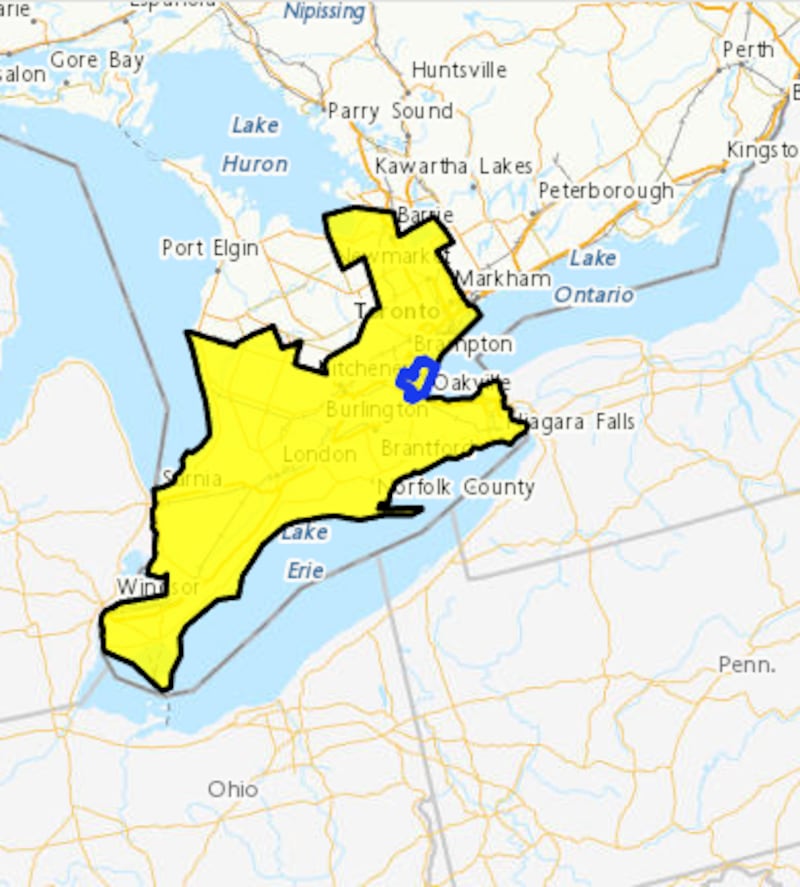
It is advising people to protect themselves and others, as the extreme heat can “affect everyone’s health.”
“Determine if you or others around you are at greater risk of heat illness. Check on older adults, those living alone and other at-risk people in-person or on the phone multiple times a day,” Environment Canada said.
“Watch for the early signs of heat exhaustion in yourself and others.”
Those signs may include headache, nausea, dizziness, thirst, dark urine, and intense fatigue.
Anyone who experiences these symptoms should stop what they’re doing and drink water, Environment Canada said.
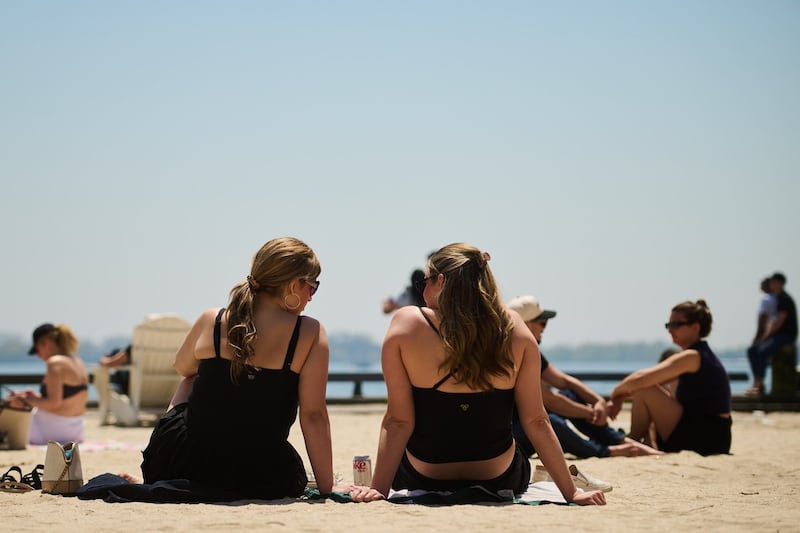
The agency further underlined that heat stroke is possible in this hot weather and should be considered a medical emergency.
“Call 9-1-1 or your emergency health provider if you, or someone around you, is showing signs of heat stroke, which can include red and hot skin, dizziness, nausea, confusion and change in consciousness,” it said.
Environment Canada said those waiting for medical attention due to possible heat stroke should cool the affected person by moving them to a cool place, remove extra clothing, and apply cold water or ice packs around the body.
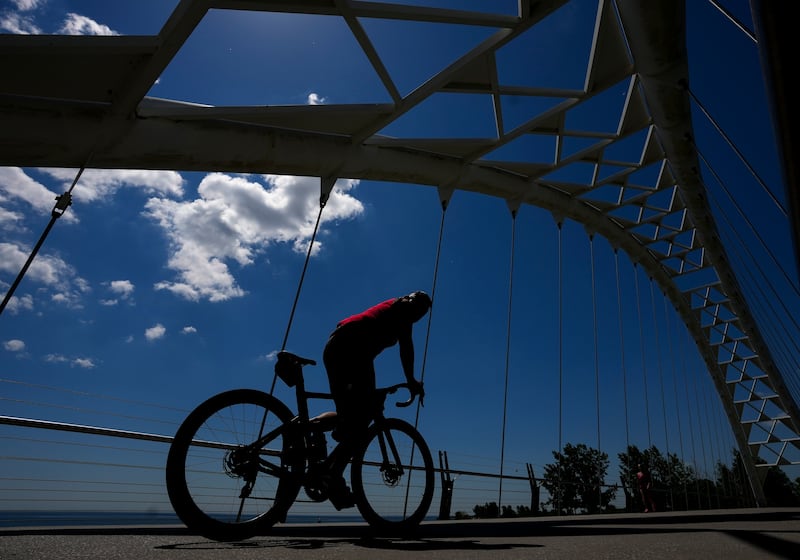
Further, people are being urged to drink water often and before you feel thirsty to replace fluids, close blinds or shades and open windows if outside is cooler than inside, and turn on air conditioning, use a fan, or move to a cooler area of your living space.
The agency is advising anyone whose living space is hot should move to a cool public space like a cooling centre, a community centre, a library, or a shaded park.
People are also being advised to follow the advice of their region’s public health authority, plan and schedule outdoor activities during the coolest parts of the day, limit direct exposure to the sun and heat, and wear lightweight, light-coloured, loose-fitting clothing and a wide-brimmed hat.
“Never leave people, especially children, or pets inside a parked vehicle. Check the vehicle before locking to make sure no one is left behind,” Environment Canada noted.
More information about how to protect yourself from the effects of the extreme heat can be found online.
Toronto activating Heat Relief Strategy
In response to the heat warning, the City of Toronto has activated its Heat Relief Strategy and is “coordinating services and monitoring conditions around the clock with a focus on keeping residents safe.”
It noted that heat warnings are issued when daytime highs reach 31 C and overnight lows of 20 C for two or more days, or when the humidex reaches 40 for two or more days.
Currently, there are more than 380 park water fountains and 247 park washrooms available immediately for people to cool off throughout Toronto.
Toronto’s 168 splash pads will be available from dawn until dusk throughout the heat warning.

Additionally, four mobile water trailers will be available in the city by noon on Monday, offering water fountains and bottle filling stations at Nathan Philips Square, Mel Lastman Square, East York Civic Centre, and Etobicoke Civic Centre. These trailers will remain onsite, it said, until the heat warning is lifted, with the exception of Nathan Philips Square, which will remain in place throughout the FIFA World Cup.
The city said it is also working with Second Harvest to distribute about 250,000 bottles of water to more than 73 community-based organizations. Distribution began on Friday, May 15 and will continue throughout the entire heat season.
Cool Spaces will also be available to the public throughout the heat season, starting on Monday, with extended hours at North York Civic Centre, Scarborough Civic Centre, Etobicoke Civic Centre, East York Civic Centre and Metro Hall, which will be open from 8 a.m. to 9:30 p.m. North York Civic Centre will be open from 7:30 a.m. to 9:30 p.m.
John Innes and Jimmie Simpson community centres will be opening as additional Cool Spaces on Monday from 8 a.m. to 9 p.m. Regular community centre hours will resume at those locations on Tuesday.
A 24-hour Cool Space will also be provided at 136 Spadina Rd. starting at noon on Monday and will remain in place throughout the heat warning, the city said.
The city says it will also be increasing outreach, wellness checks, and shelter capacity for people experiencing homelessness during the extreme heat. Additional Streets to Homes and Parks Ambassador teams will be out distributing water, sunscreen, and hygiene kits. An additional 112 shelter spaces will also be made available starting on Monday at noon.
Residents are advised to contact 311 to request outreach support for someone in need.
Stay safe during the extreme heat
The city is urging people to plan ahead to stay safe during the extreme heat, by drinking water often, even before feeling thirsty, wearing light, loose clothing and wide-brimmed hats outdoors, limiting time outdoors during the hottest parts of the day, cooling down with showers or wet towels, keeping blinds and curtains closed during the daytime, visiting a Cool Space, checking in on neighbours, friends and family members who may be more vulnerable to heat, and never leaving children, older adults or pets in parked vehicles.

Toronto Public Health is warning that extreme heat can cause serious health risks, notably heat exhaustion, heat stroke, and other heat-related illnesses.
It is urging people to watch out for common symptoms of heat-related illnesses, which include dizziness, nausea, headache, confusion, and extreme fatigue, and call 911 immediately if someone is confused, unconscious, or experiencing worsening symptoms.

