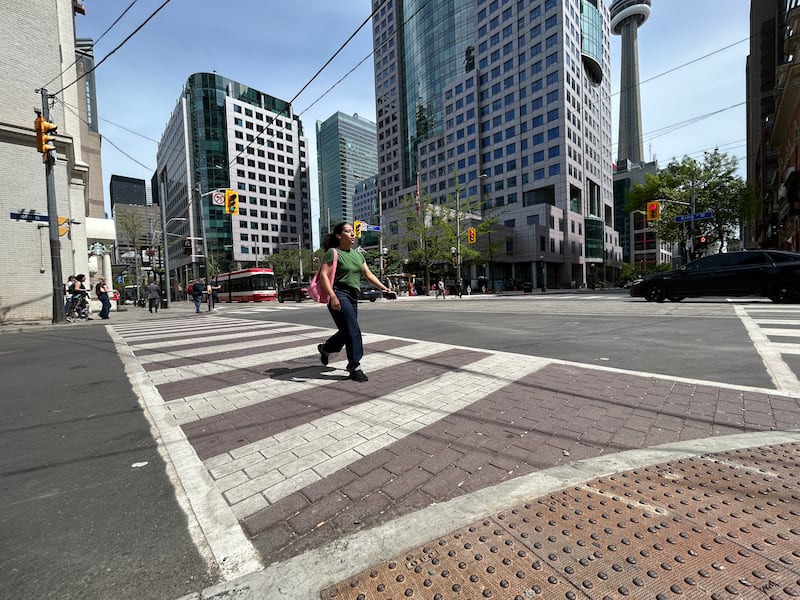
If parts of Toronto look a little more put-together than they usually do at this time of the year, you’re not hallucinating.
The City of Toronto has been quietly working to move quickly on a number of infrastructure repairs ahead of the FIFA World Cup, “mindful” of getting the work done ahead of a deadline that will limit construction.
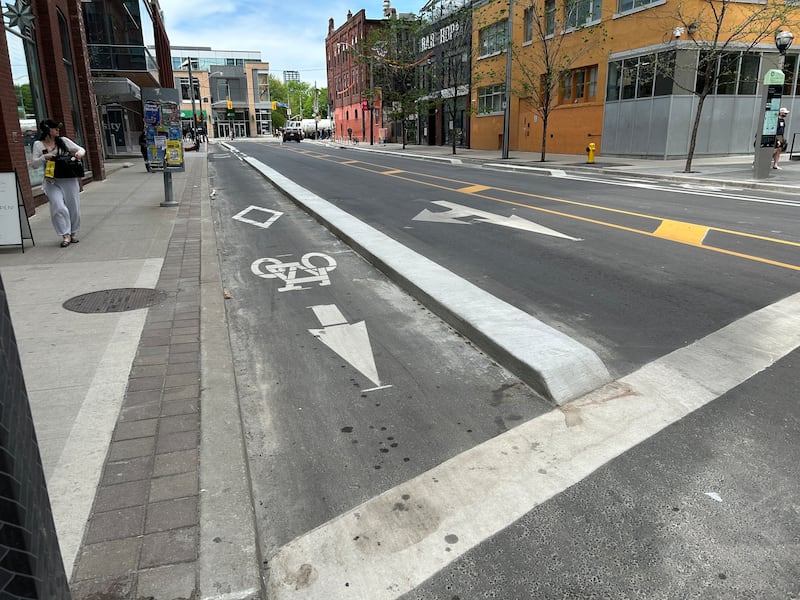
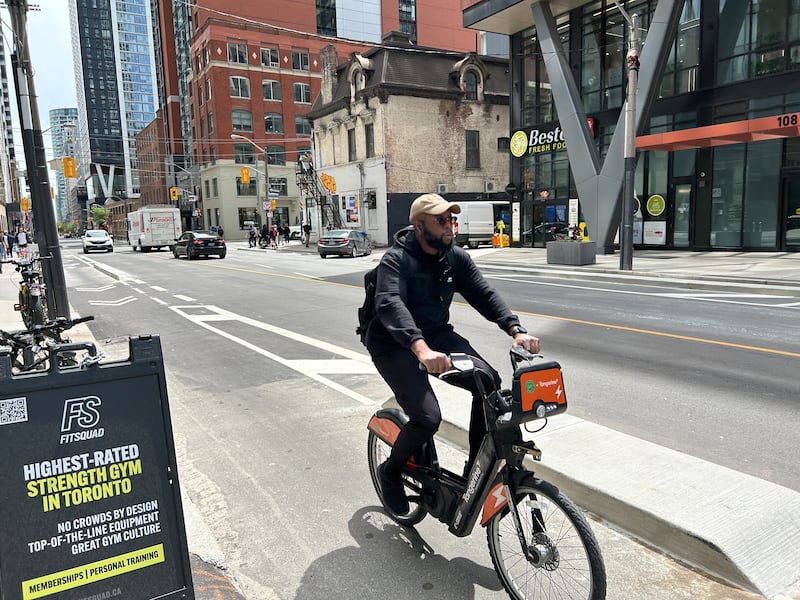
That work includes a number of projects. A repaving of Peter Street, which was delayed last year because of the Blue Jays’ playoff run, has been completed in a few short weeks, complete with new concrete separators for bike lanes on some stretches of the road.
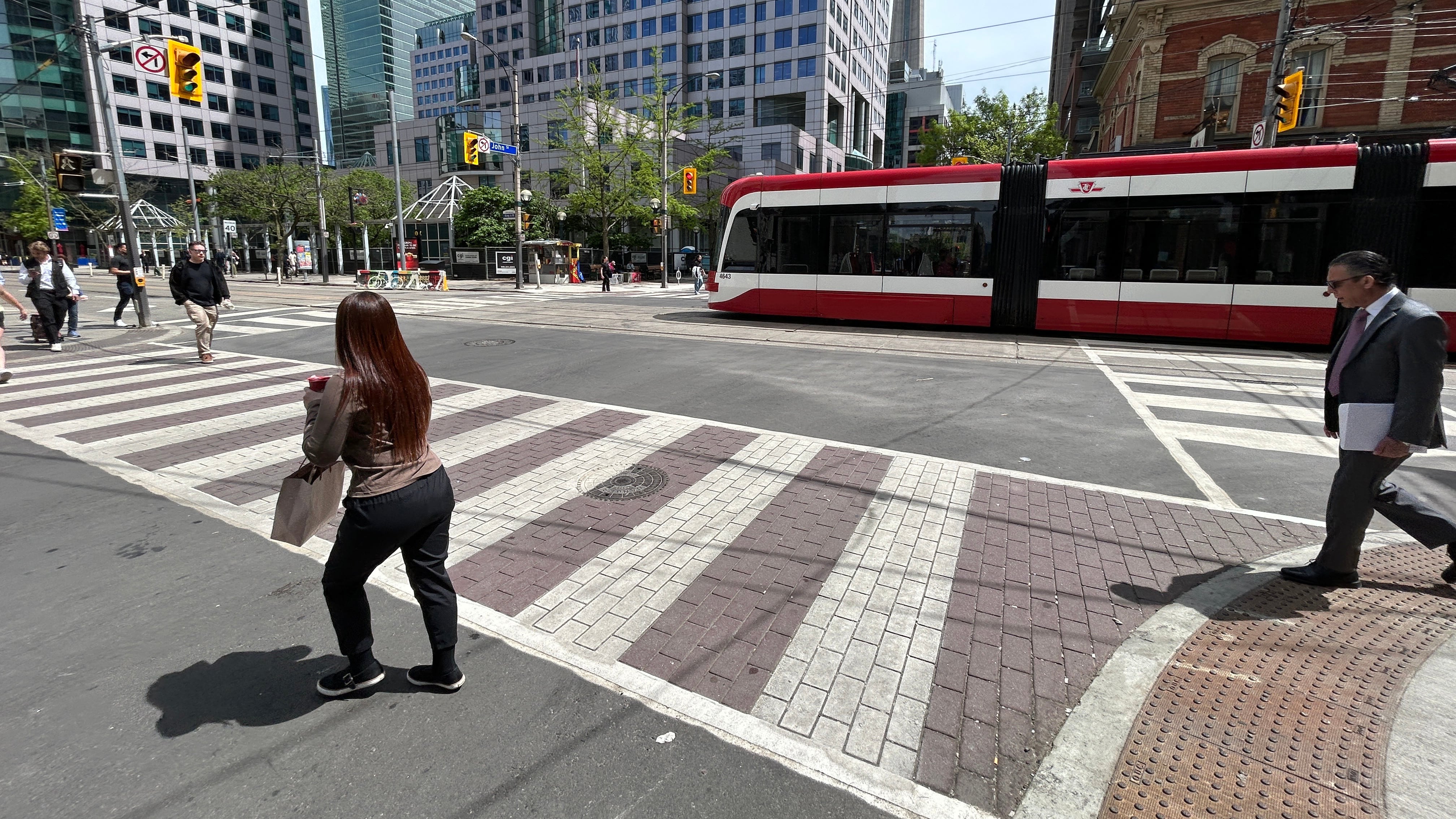
The city has also moved quickly to repave the intersection of King and John streets, rebuild busy sidewalks adjacent to Sankofa Square, replace pavers in the St. Lawrence Market area, and complete a “broader set of state-of-good-repair work in the city” and around CaféTO installations.
“We’re mindful of FIFA timelines, so the goal is to finish the work before restrictions start. The work wasn’t sped up specifically because of FIFA, but we are trying to get ahead of it,” Ashley Curtis, General Manager of Transportation Services, told CP24.com in an email.
Construction activities will be restricted on key routes and in certain parts of the city from May 1 to July 31 as the city prepares to host six World Cup games.
“These factors were considered and built into the planned timelines for construction projects this year,” Curtis said.
“Some major projects will be complete before the tournament, like the DVP/Richmond ramp, while some projects are in phases, like the College and Carlton watermain and streetcar track renewal, with the first phase completing before the tournament, and the final phases starting in August.”
Curtis said all the work that’s been carried out was already slated to take place this year.
FIFA speed ‘should absolutely be a benchmark’
But for city residents accustomed to seeing construction timelines that stretch on for longer periods, some might be left wondering why work typically takes longer to complete.
“This should absolutely be a benchmark and every project should be accelerated in Toronto. We should be looking at every project and trying to say ‘what would it take to make this project go faster,’” says Prof. Matti Siemiatycki, director of the Infrastructure Institute at the University of Toronto.
In many cases, he acknowledges, the answer might be more money.
“But there’s also a cost to going slow, and that cost may not be seen on the immediate balance sheet, but it’s borne out on everyone’s frustration, on lost productivity, on gridlock and a city (where) people are losing faith that things can actually get done,” Siemiatycki says.
In particular, he points to the need for improvements around transit.
“The same sense of urgency we’ve been talking about, like getting the city ready for FIFA and getting these infrastructure projects built, I feel like that same level of urgency needs to be brought to the operations of the TTC,” Siemiatycki says.

The transit agency has struggled this year to meet its own targets when it comes to customer satisfaction and on-time service.
Siemiatycki says the service seems to be struggling to operate with “a sense that people’s time is valuable” in a day.
“If you’re not providing a service that’s competitive, they will find other things, and we will go into a death spiral,” he says.
He said while large, high-profile events like the World Cup can sometimes lead cities to prioritize poorly – spending on beautification projects rather than important infrastructure – they can also serve as useful accelerants for much-needed improvements if dollars are spent wisely.
“I think actually this sense of urgency is something that we should be maintaining well after the games are done,” Siemiatycki says.