Ontario’s major education unions have officially served the Ford government with a notice to meet at the bargaining table, potentially setting the stage for labour action that could begin as soon as this fall.
The formal legal notice means that bargaining in the education sector will have to get underway within 15 days.
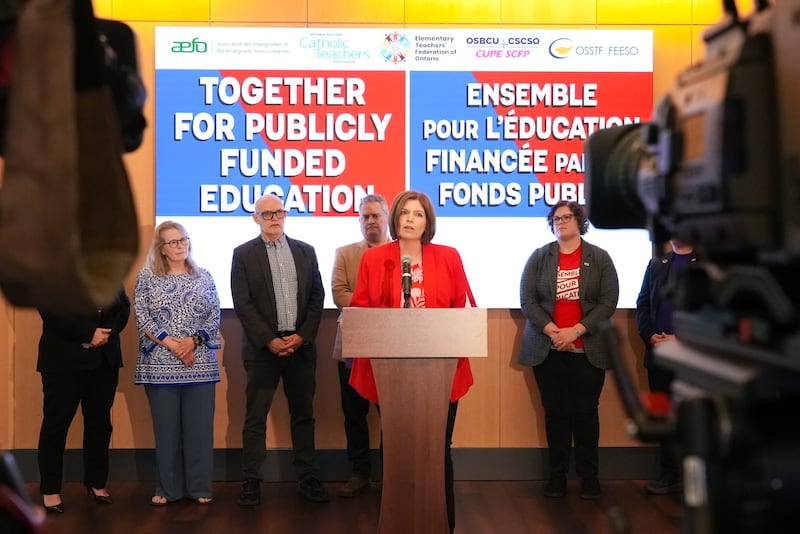
The move was announced Wednesday by unions representing more than 255,000 teachers and education workers across Ontario.
Among those involved include the Elementary Teachers’ Federation of Ontario (ETFO), the Ontario Secondary School Teachers’ Federation (OSSTF/FEESO), the Ontario English Catholic Teachers’ Association (OECTA), L’Association des enseignantes et des enseignants franco-ontariens (AEFO), and the Ontario School Board Council of Unions (CUPE-OSBCU).
The unions have long been calling for Education Minister Paul Calandra to meet at the bargaining table ahead of the expiration of collective agreements on Aug. 31.
“We’re prepared for whatever happens, and in being prepared, I think what that means is to anticipate the highest level of challenge that we’ve seen, not necessarily to expect it, but to anticipate it and be ready for it, and I know we are collectively ready for that,” President of the Elementary Teachers’ Federation of Ontario David Mastin told reporters.
When asked why the province didn’t meet with the unions earlier, a spokesperson noted that “there is no need to change a process that is working as intended,” adding that “collective bargaining timelines are set out clearly in legislation, and that negotiations have consistently begun within the established 90-day window.”
What are the issues?
In a joint statement, officials say they are focused on improving learning and working conditions that they say have worsened due to “years of underfunding and understaffing” in the education sector.
“Students and families deserve a safe, stable, well-supported, and fully resourced publicly funded education system,” the unions said.
The union says that some of the issues it wants to address in this round of bargaining will include “growing student needs, violence in schools, inadequate supports for students with special education needs, large class sizes, insufficient staffing, and challenges in retaining and recruiting teachers and education workers.”
Speaking at the press conference, President of the Ontario Secondary School Teachers’ Federation Martha Hradowy noted the unions are also looking to “end mandatory e-learning.”
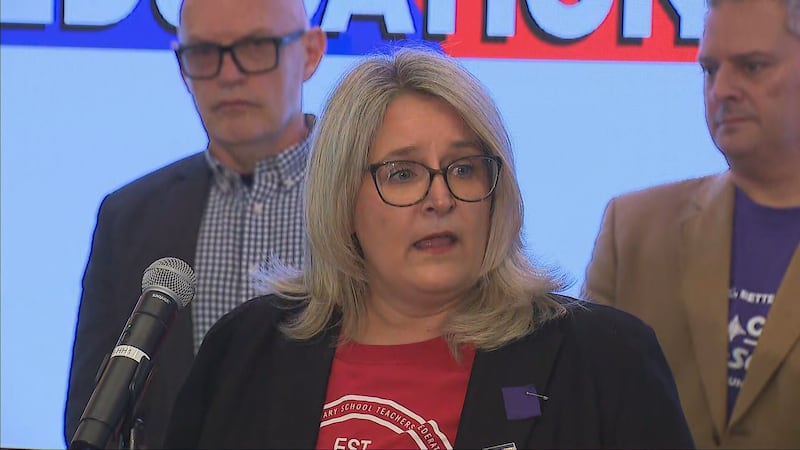
“Students, parents, and educators have made it clear that mandatory online learning is not delivering the educational experience students need. It was introduced as a cost-saving measure, not an education one,” she said.
“Students deserve meaningful access to in-person learning opportunities, not requirements that force them into courses that do not meet their needs.”
Under Ontario’s labour framework, the parties are now legally required to meet at the bargaining table within 15 days.
In 2022, a brief strike by education workers in Ontario closed schools for multiple days.
Vice-President of the Ontario English Catholic Teachers’ Association, Lisa Lacaria specifically called on the government to “move beyond the posturing, the politics, and the power grabs at the expense of local communities and voices.”
“We urge this government to come to the table ready to bargain,” she said.
‘I remain optimistic’: Minister Calandra
Calandra for his part, previously told reporters on Tuesday that he remains optimistic that both sides will be able to reach a deal “without disruption.”
“I think one of the hallmarks of our time in office has been relative peace with our teachers unions and with the unions representing education workers, but I’m optimistic,” he said.
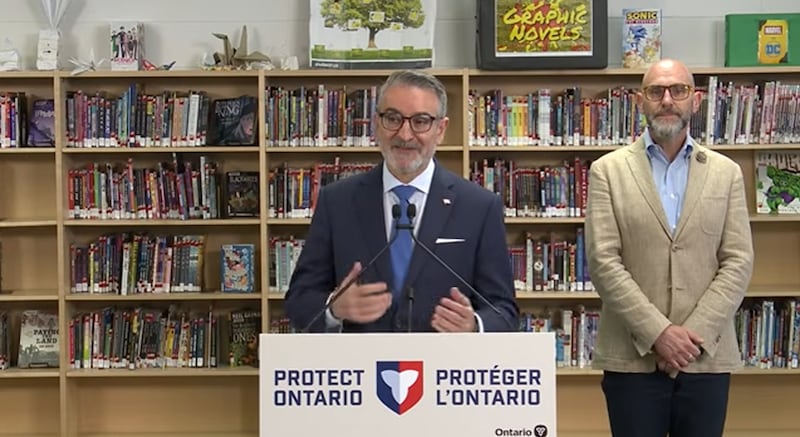
“I think we’re going to get there. There’ll be some tough negotiations, obviously, but they’re always tough, and I think they’re always tough because there is a level of passion that the leadership, frankly brings to the table.”
In a statement on Wednesday, Emma Testani, Calandra’s press secretary also reaffirmed that same optimism.
“While there will be important discussions ahead, all parties share the same goal of keeping students in the classroom, maintaining stability in our schools and supporting strong student outcomes across the province,” she said.
The Ontario government, for its part, has pledged more than $40 billion in funding for the education sector through the end of 2029.
This year’s negotiations will look drastically different after Calandra placed eight major school boards under provincial supervision, sidelining elected trustees who would normally be present at the bargaining table.
Since then, provincially appointed supervisors have made a wave of major structural cuts and staffing changes that have been introduced for the upcoming school years. Some of those cuts include changes to literacy programs. The TDSB also announced earlier this month that it was cutting more than 200 administrative positions in response to declining enrollment.
In order to take labour action, such as a strike or a lockout, both parties must first participate in a bargaining process followed by a mediation process. Should they remain in a standoff, either party would have the option of requesting a no-board report from the Ministry of Labour.
Once that report is issued and a strike vote is taken, it triggers a 17-day countdown to potential labour action. However, five days notice still must be provided by the union.

