Police in Durham Region, Ont., say they’ve uncovered a network of what they’re describing as criminal tourists who enter Canada legally to commit crime for financial gain.
Investigators unveiled the results of “Project Jetsetter” on Friday, saying they’ve connected more than 200 incidents to the organized criminal network and confirmed more than $2.6 million in financial losses.
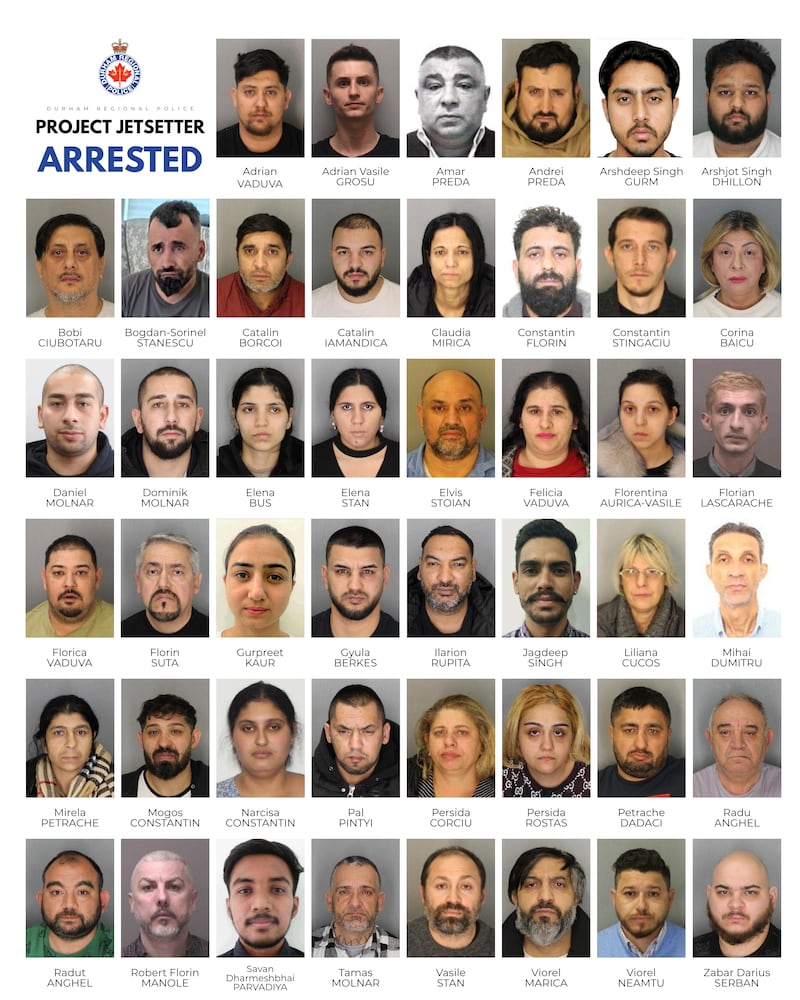
So far, 46 individuals have been arrested and are facing a combined 1,442 criminal charges. At least 164 arrest warrants have been issued for individuals currently wanted by police.
Through the investigation, Chief Peter Moreira said police uncovered what he called “concerning patterns” of structured, repeatable, and deliberate criminal offences, including large-scale retail thefts, vehicle and financing fraud, staged collisions, distraction-style thefts, and exportation of vehicles and goods.
Det. Brad Chapman explained that the “majority” of the people they’ve identified as suspects are from Romania, while a smaller portion is from India.
“So they travel quite frequently from jurisdiction to jurisdiction, they come here, they commit the criminal offences, and a lot of times they leave the country before we can identify who they are,” Chapman said, adding that “Project Jetsetter” is the culmination of multiple investigations spanning from 2019 to 2026.
The ‘dirty oil’ scam
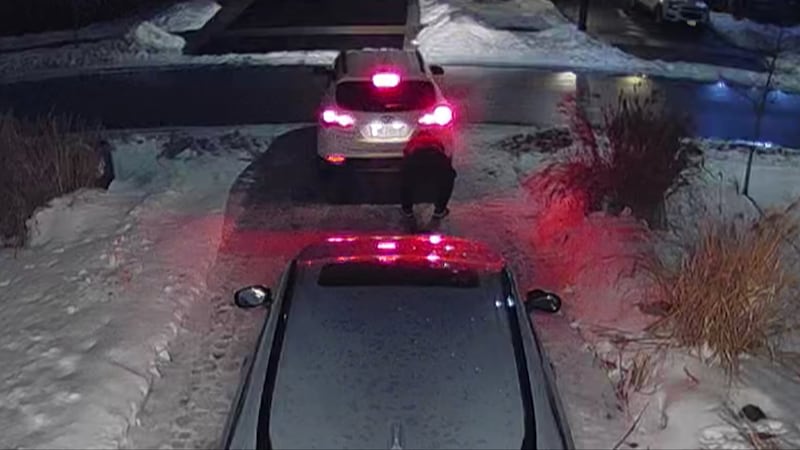
Chapman said that among the “repeated” offences being carried out by the group is something called the “dirty oil” scam, which CTV News has previously reported on.
He explained that suspects will contact individuals who are selling their vehicle and then deliberately damage the vehicle during the test drive or showing to negotiate a lower price.
In January, a couple from Paris, Ont., reported that they had been victims of the scam while trying to sell their 2016 Hyundai Santa Fe for $7,000.
Video surveillance from that incident revealed that one of the buyers had placed some type of liquid in the tailpipe, which caused it to smoke. Believing the engine had blown, the couple agreed to sell the car for $1,000.
In February, Ontario Provincial Police charged three people from the Greater Toronto Area after the scam was reported near Peterborough, Ont.
It’s unclear if either incident is connected to “Project Jetsetter.”
Other scams related to vehicle fraud included suspects rolling back the odometer to increase a car’s resale value. Police said the vehicles are “never” registered to a suspect’s own name, making them difficult to track.
Vehicle financing fraud was also one of the tactics used by the group, Chapman said.
“Suspects use fraudulent identities or documentation to obtain vehicles, which are then transferred to organized crime groups, and then often exported out of the country.”
Distraction-style thefts targeting seniors up 268%
Moreira described the criminal activity of the group as complex, and that seniors are being disproportionately victimized.
“In some cases, victims may not even be aware they’ve been targeted. For example, suspects may approach a senior asking for directions, and then offer a hug or gift, such as a necklace, while removing the victim’s real gold jewelry and replacing it with a fake,” he said.
CTV News has reported extensively on distraction-style thefts involving seniors, which Chapman said are up 268 per cent in the region year-over-year. He went on to say that in many of those cases, seniors are gardening on their own property when they are victimized.
In another investigation linked to “Project Jetsetter,” Chapman said that police discovered a group that was specifically targeting seniors in retail settings.
“These offenders use distraction techniques in retail settings to obtain bank cards and pin numbers, and then rapidly withdrew funds or made fraudulent purchases,” he said.
Moreira and Chapman both said it’s likely that these types of crimes are being underreported by older victims due to the “shame” they may feel after being victimized.
“If you’re a caregiver of a senior, we are asking that you share this information with them and stress to them: It is not rude to refuse to engage with or be in close contact with strangers,” Chapman said.
‘This activity is not unique to our region’
While police in Durham led the investigation, Chapman said he believes the criminal activity extends far beyond its borders.
“This activity is not unique to our region. We are seeing the same individuals, the same methods, and the same networks operating across the Greater Toronto Area and across Canada,” he said.
Chapman said the groups are mobile and, in many cases, connected to a broader organized crime group.
Moreira pointed out that this criminal network is “adaptive” and will likely “learn” from the methods investigators used in “Project Jetsetter,” as he pushed for more collaboration between provincial and federal policing agencies ahead of the FIFA World Cup and the summer months.
“It’s critical that we continue to modernize and innovate, so that we can identify emerging trends and methods used by organized criminals.”
Police believe bust is ‘just the tip of the iceberg’
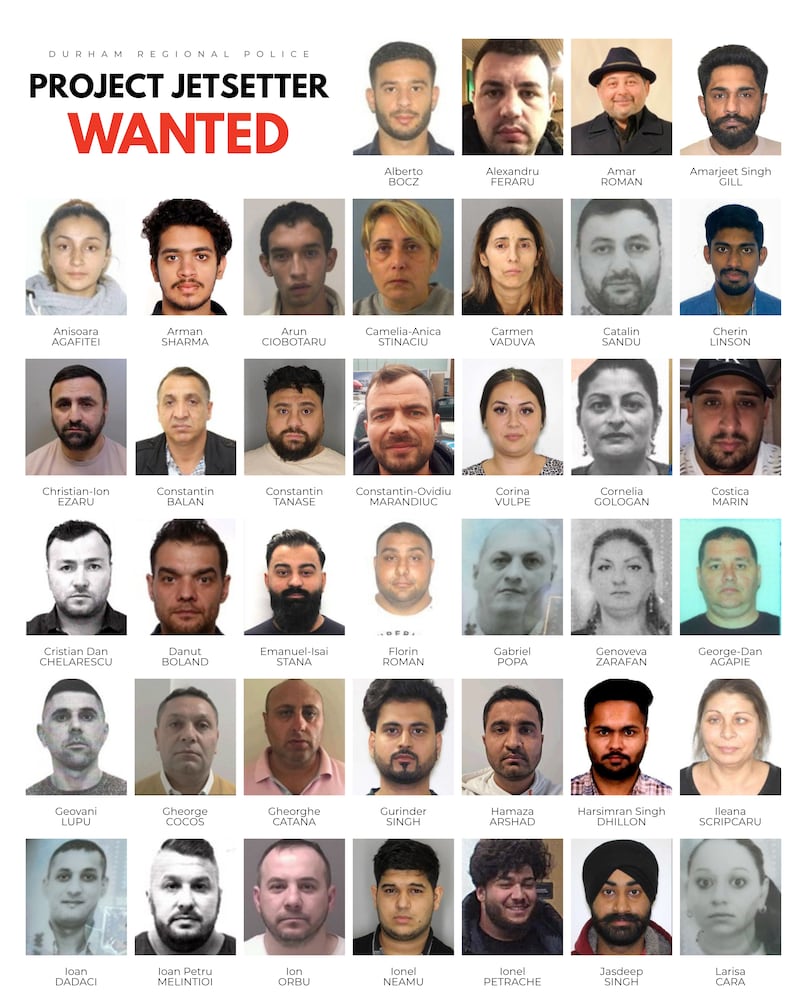
Police displayed pictures of 79 of the suspects they’re currently looking for, but noted that images of the remaining wanted 85 suspects are not available.
Moreira said that “further complicates” their investigation.
“People are exploiting and know our systems very, very well before they come and engage in this activity,” he said. “These organized groups are putting a ton of research into how to work through all of these gaps that exist, and they’re exploiting it and they’re being quite effective at it, and this is what’s adding to the complexity of investigating this.”
He then pointed the finger at the federal government, saying Canada doesn’t have a “robust” enough system to track who is leaving the country and said that the existing sentences for these crimes aren’t enough of a deterrent.
“When you think about the cumulative impact that this crime has, not just in terms of financial losses, but the loss in independence of some of our most vulnerable citizens. You know, it’s really despicable what’s left at the end of it, right? The damage that is done. And this is why we take this seriously, even if perhaps the sentences don’t reflect it.”
Chapman concluded Friday’s news conference by saying that while police have made significant progress in cracking down on criminal tourism, the results of the probe are just “the tip of the iceberg.”
“We remain committed to this work.”

