
Female professors in Toronto are earning as much as $23,000 less than their male counterparts, according to Statistics Canada.
A newly-published report pulled salary information from 78 of 109 public degree-granting institutions in Canada for the 2025/2026 academic year. Statistics Canada said a more “detailed portrait” of all post-secondary schools will be available in the fall.
Three Toronto universities, York University, the University of Toronto, and Toronto Metropolitan University, were all included in the research (the most recently-available data for the latter two was for the 2024/2025 school year). All three were found to have significant salary disparities between their male and female teachers.
The report does not specify rank.
The findings in Toronto are consistent with those of other post-secondary institutions across Canada. For example, male professors earned significantly more than female professors at the University of British Columbia, the University of Alberta, the University of Montreal, and Dalhousie University in the most recently-available data.
- READ MORE: Teachers at these universities are among Canada’s highest median salaries, new data reveals
In Ontario, every major university paid male professors more than female professors, with average wage gaps ranging from 5.7 per cent on the low end (University of Ottawa) to 13.5 per cent on the high end (McMaster University).
Here’s what the Toronto data shows, how the schools’ administrations are responding to the findings, and the reactions from their respective unions about the pay gaps:
University of Toronto
The University of Toronto had the largest population of teachers listed among the three schools in the city, with 2,901 total staff members, including professors and deans from medical and dental programs. Of those, 1,668 were male professors and 1,221 were female professors.
According to the data, the average salary for male teachers during the 2024/2025 school year was $206,575, while the average salary for females was $183,350 — marking a gulf of $23,225. Those numbers were identical in the 2023/2024 and 2022/2023 school years.
The disparity becomes more pronounced for median values, with men earning $201,400 and women earning $176,375 at the school last year.
In response to the data, a University of Toronto spokesperson said it has carefully reviewed the salaries of faculty members, conducting analysis to assess any differences between men and women.

“Faculty member salaries are primarily driven by experience and field of study. Once we control for these variables, there are no significant differences between male and female faculty members,” it said in an email.
In a joint statement, University of Toronto Faculty Association (UTFA) president Terezia Zorić and vice-president Jun Nogami, told CTV News that they “do not agree with or accept” the administration’s justification for the pay discrepancy.
The UTFA went on to say that it has raised concerns about “significant, pervasive, systemic, and persistent salary discrimination” experienced by its members for over a decade, but the administration has not taken their concerns seriously.
“While it is true that part of the gap can be accounted for by relevant factors such as experience, and to some extent discipline, accounting for these factors does not close what remains a significant gap that can only be explained by gender discrimination,” it said, adding that it filed a grievance on the issue in 2019 that has yet to be adjudicated.
The UTFA said it is seeking retroactive adjustments to base salaries for affected faculty and librarians, as well as the creation of a permanent fund to address the disparity going forward.
It also proposed the creation of a joint UTFA-administration committee to focus on “rooting out and preventing future discriminatory compensation practices.”
Data for U of T’s 2025/2026 school year is expected in the fall.
York University
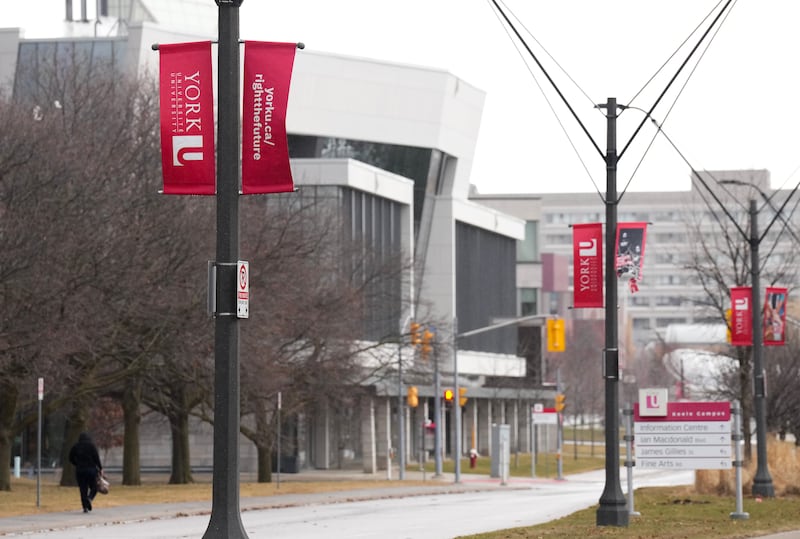
Statistics Canada found that York University had 1,470 teaching staff in 2025/2026, including 765 male and 702 female professors.
Male teachers earned an average salary of $208,750 while females earned $188,125, a difference of $20,625. A similar $20,000 disparity was observed in 2024/2025, which grew from a $17,000 gap in 2023/2024.
The difference in median salaries between men and women professors for this last academic year was $18,600.
In a statement from York’s administration, it said it has processes which regularly review faculty salaries for potential “anomalies.”
“York has undertaken two Equal Pay Exercises, which incorporate important contextual factors that influence salary variances, including academic rank, years of experience, discipline,” they said in an email.
York said that, following its most recent analysis, it identified “similar gender-based” gaps to the ones Statistics Canada found.
“To address this, salaries which demonstrated a gender-based anomaly were adjusted,” the school said.
In response, past York University Faculty Association president Ellie Perkins explained in a statement to CTV News that there are “several reasons” why pay inequities can exist, some of which can grow overtime.
Perkins pointed to inequities in starting salaries, which are negotiated with deans.
“Research shows that women may be less successful in negotiating competitive starting salaries, for a range of reasons which may include a later start in professorial positions related to child-bearing and family responsibilities and also gendered inexperience in negotiating skills,” she said in an email.
Perkins also highlighted that “marketability” adjustments, such as a pay raise for professors who can show they’ve received higher-paid job offers elsewhere, tend to be more often available to men than women who may be reluctant to move due to a “gendered higher priority on family responsibilities.”
She said that “gendered differentials” also persist between female-dominated disciplines and male-dominated disciplines.
Toronto Metropolitan University
Toronto Metropolitan University employed 1,044 professors, including deans, in 2024/2025. Of those, 555 were men and 486 were women.
The average salary for a male professor that year was $191,550, while the average salary for a female professor was $177,950, representing a $13,600 pay gap. In 2023/2024, the difference in salaries was more than $16,250.
Median salaries between the two genders were more stark, with $202,300 for men and $181,825 for women.
The school told CTV News in an email that it understands the importance of fair and equitable compensation and takes issues of salary equity “very seriously.”
“We know that the pay gap between men and women in academia becomes less pronounced when academic rank is taken into account,” they said.
It explained that, over the last five years it had made progress in addressing the “sector-wide” gender gap by supporting women who apply for and achieve full professor status.
They added that there is an equity advocate on every hiring committee, and equity training is required for all hiring committee members. The university also has a joint committee with its faculty association to ensure equity in hiring and retention.

In response to the findings, Toronto Metropolitan University Faculty Association (TFA) president Jesmen Mendoza told CTV News that the gender pay gap at TMU and other post-secondary institutions is the product of “decades of market difference” in salaries for new hires.
He said the union fought for and won a salary difference process to address the gaps, but argued that the process is only incremental, can be slow to negotiate, and does not resolve prior pay equity gaps.
“The TFA would like to see the TMU Administration show more leadership in addressing the gender pay gap at the University by committing to achieve pay equity through salary increases and accelerate its efforts with the Association to establish a gender-neutral comparison system, as required by pay equity legislation, so that such salary differences can be identified and remedied without delay,” he said.
Data not surprising, but complicated: pay equity expert
Pat Armstrong is a professor emeritus and distinguished research professor of sociology at York University and said that while she is “not totally surprised” by the pay disparity, the reasons behind the gaps are complicated, and could be driven by wage grids, fields of study and tenure policies.
“Part of it could be because nursing overall is valued less than some comparable medical profession, for instance, or that social sciences aren’t valued at all compared to medical professions that have to do with gender, because most of the people who do that work are women, but it’s also about larger social questions about what we value in terms of different kinds of work,” she said.
Armstrong explained most universities will allow professors to “stop the clock” during a maternity leave, referring to the number of years professors have to apply for tenure and promotion, but that raising a child after their return to work can make reaching higher seniority more challenging.
“If you’re a woman who has a baby, then that makes it more difficult for you to write a book, or you know, conduct research, and especially do it out of the country,” she said, adding that the disparity has become more amplified after men increasingly began to take advantage of the policy to raise their child.
“It was argued that men were starting to take that period too…but that they were more likely to be able to use that to continue their research than women were.”
Armstrong pointed to Ontario’s pay equity legislation, which subjects universities to conduct up-to-date pay equity assessments. However, she said it’s unclear if that work is happening or not on a large scale.
“In Ontario, the law requires that pay equity is established and maintained,” Janet Borowy, co-chair of the Equal Pay Coalition told CTV News when asked about the data in an email. “The law also requires that men and women doing similar work are paid the same (equal pay).”
“At various universities, pay equity studies have been conducted and often found profound discrepancies (e.g. 20-25 per cent+ differences - e.g. University of Regina). Following the initial studies, remedies were made. In other pay equity studies, challenges were brought to the wage comparison techniques and further remedies were required,” Borowy added.
“But, with systemic discrimination, constant vigilance and review is required or old patterns of discrimination creep back.”
Armstrong underscored that over the last few decades, there have been signs of improvement in addressing the disparity, but that much more work can be done.
“One of the things that will help further reduce it, I think, is the disclosure. Having the numbers helps you make the argument that there’s something going on here that needs to be investigated.”

