A man from Ontario says he is out $6,000 after falling victim to a scam phone call from a fraudster who he said sounded exactly like his son.
Neil, who asked CTV News to shield his identity, is sharing his story after he fell victim to what is known as an emergency scam.
“My son said ‘Do you know who this is?’ and I said ‘Yes, it’s Brian.’ He said, ‘That’s right,’” Neil told CTV News.
It was on a Wednesday in early June when Neil said he received a phone call from someone who sounded just like his son.
“I thought I was talking to him because it was his voice,” he said.
The caller claimed that he’d been involved in a serious accident and was facing charges for talking on his cellphone while driving.
Another man then jumped on the call and claimed to be his son’s lawyer, telling Neil he needed to pay for bail or his son would spend the night in jail.
“The lawyer said I needed to post bail of $6,000 to get Brian out of jail,” Neil said, adding that the person on the line told him that the courts were backed up right now and they could arrange for a rideshare driver to come and pick up the package.
Shortly after, an Uber driver arrived and he handed over the funds.
“I handed him the package with the $6,000 in it,” said Neil.
The following day, the man called his son to check on him. That’s when he discovered he’d fallen victim to a scam.
“I happened to call Brian the next day and asked how the meeting with the lawyer went and he said, ‘What lawyer’?” he said.
“I said ‘What about the accident you were in?’ and he said ‘What accident?’ and then I realized I had been scammed,” added Neil.
Emergency scams ‘wildly popular’: cybersecurity expert
“The emergency scam is becoming a wildly popular way to scam,” said cybersecurity expert Jane Arnett, of Check Point Software.
This type of scam has been around for decades and involves criminals pretending to be a loved one in trouble.
Now, with artificial intelligence (AI), criminals only need a snippet of a person’s voice to alter it, cloning someone’s voice.
“What they do is get 10 seconds of anyone’s voice then they can recreate it to sound exactly like the person,” Arnett said.
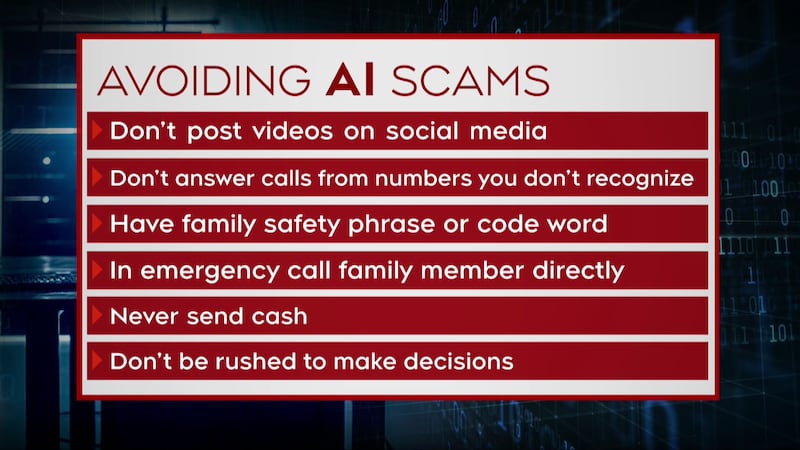
To avoid any type of AI scam, experts recommend not posting videos with your voice on social media. They also advise to not pick up any phone calls from numbers you don’t recognize and to have a safety phrase or a code word within your family that can prove who you are.
In an emergency, call family members directly, never send cash, and don’t be rushed to make any decisions.
To avoid having your voice cloned, you also can switch your voice mail to an automated greeting and make your social media accounts private. If someone calls and says they’re in trouble or need money, hang up and call them back using a trusted phone number.
Neil told CTV News he regrets losing $6,000 but said in that moment, he really thought the caller was his son.
“Well, I can tell you that now they have managed to simulate that voice and you believe it’s real,” he said, adding he hopes that by sharing his story, people will be more vigilant and won’t fall for these types of scams.
With files from Farah Chandani

