Ontario has lowered the eligibility age for colon cancer screening from 50 to 45, a move that cancer survivor Ashley Wiley says is a game changer as rates of the disease increase nationwide.
“That’s going to change lives,” the 42-year-old Toronto mother of four told CTV’s Your Morning on Monday.
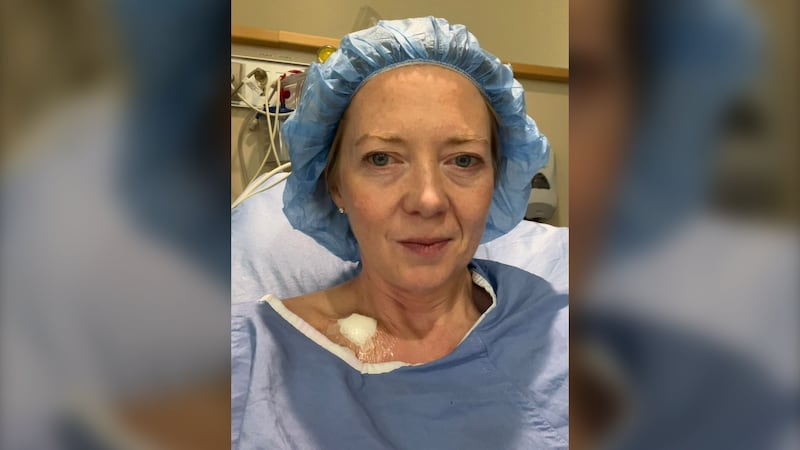
Diagnosed at 41, Wiley said she found blood in her stool, a symptom she admits feels “a little stigmatized” to discuss, but attributed it to hemorrhoids from multiple pregnancies.
The symptoms persisted following treatment of the hemorrhoids, so Wiley said she advocated for a colonoscopy, despite having no risk factors or family history of colon cancer.
When her colon cancer diagnosis was confirmed, Wiley said she felt like “the ground fell from underneath me.”
“It just didn’t seem possible. Pretty healthy lifestyle, and again, no genetic risk factors, no immediate family who dealt with something like this. It was really a punch in the gut,” she said.
“It was really, really scary to think about what might be around the corner, even just with four small children. Like, what’s treatment going to look like? Am I going to be able to be participating in their lives day-to-day? And then further to that, what’s the outcome going to be?”
As of July 1, Ontarians age 45 and older are eligible to receive an at-home fecal immunochemical screening test — or FIT — that detects traces of blood in the stool. Those with abnormal results can then can be referred for a colonoscopy.
Prince Edward Island was the first province to lower the screening age in March.
The changes follow a call from the Canadian Cancer Society (CCS) issued earlier this year to provinces and territories to lower the screening age. The group made the call as it noted that incidence of colorectal cancer has “significantly increased” among people younger than 50 in Canada, with the likelihood of a diagnosis now 2 to 2.5 times higher than previous generations of the same age.
“Recent modelling published this week by Canadian researchers shows that with this growing trend, lowering the start age to 45 would result in over 15,000 fewer colorectal cancer cases and 6,100 fewer deaths over the next 45 years,” the CCS said.
Last month, CTV News contacted each Canadian province and territory that still has its publicly-funded colon cancer screening age at 50, but none would commit to lowering the screening age to 45 or lower. British Columbia, however, said it is reviewing the starting age for screening.
As for Wiley, she said she’s feeling strong after completing her chemotherapy in November, a milestone she described as “extremely meaningful.”
“I’m being screened regularly now. It’s best thing we could have hoped for,” she said.

With files from Kamil Karamali and The Canadian Press

